Roller blinds, Roman blinds and Zebra blinds each solve the same window covering problem in a different way. The right choice depends on the room, the light conditions and how much visual softness or precision you want.
This comparison covers the practical differences so you can decide which type fits each room in your home before you spend on measuring and installation.
Roller blinds: the clean simple option
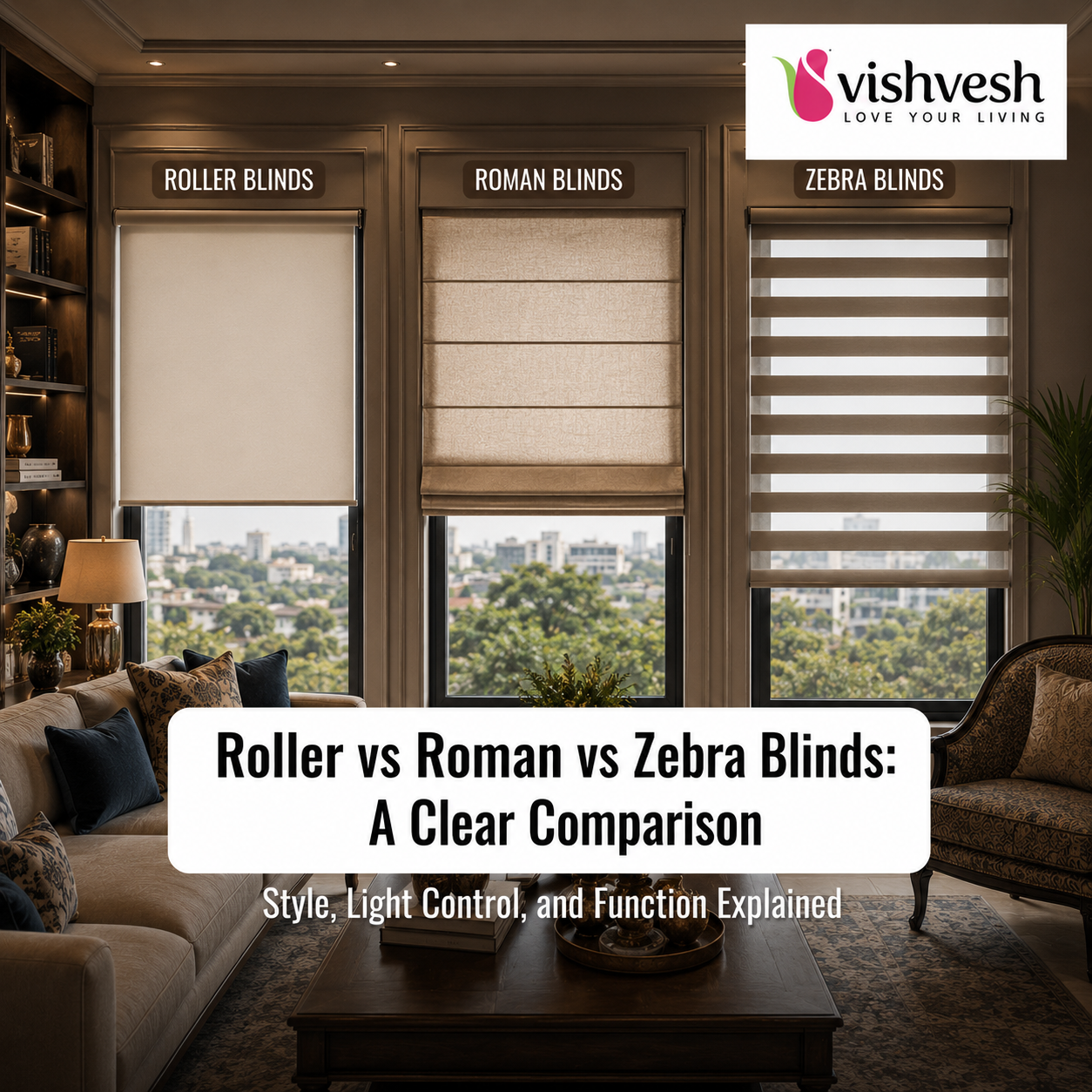
A roller blind is a single fabric panel that winds onto a tube. When raised it sits tightly rolled at the top of the window. When lowered it covers the glass in a flat unbroken surface.
The simplicity is an advantage. There are no folds or pleats to collect dust. The fabric comes in a wide range of opacities from fully transparent sheer to complete blackout. Cleaning is straightforward because the flat face wipes easily.
Roller blinds suit contemporary rooms, kitchens, bathrooms and spaces where you want the window covering to recede rather than add texture. They also suit very wide windows where a single large flat fabric works better than multiple pleated panels.
Roman blinds: the soft structured option
A Roman blind folds into horizontal pleats as it raises. When fully lowered it presents a flat fabric face with visible fold lines. The stacked folds at the top when raised create a structured gathered look that sits closer to curtains than other blind types.
The folded fabric adds texture and visual softness that roller and venetian blinds lack. This makes Roman blinds suitable for living rooms, bedrooms and dining rooms where a fabric look is wanted within the window recess.
Roman blinds are harder to clean than roller blinds because the folds collect dust. Smooth fabrics are easier to maintain than heavily textured ones. Lined Romans, with a backing fabric sewn behind the face fabric, hang more neatly and protect the front fabric from sun damage.

Zebra blinds: the flexible middle option
A zebra blind has alternating sheer and opaque horizontal bands on a single panel. Rolling the panel adjusts how the bands align. When the sheer bands sit opposite each other the blind filters light. When the opaque bands overlap the window is fully covered.
This gives a single blind the range of a sheer and a blackout without changing the blind. The mechanism is simple and operates smoothly. The result is a contemporary look that suits living rooms and bedrooms where you use the window at different light levels through the day.
Zebra blinds are thicker than standard roller blinds due to the double layer of alternating fabric. They suit medium sized windows well. For very wide windows, confirm the track width the mechanism can handle before ordering.
Light control compared
Roller blinds offer the most straightforward light choice because you choose one fabric opacity when you order. A sheer roller filters light. A blackout roller eliminates it. There is no in between adjustment unless you install two blinds on the same window.
Roman blinds offer the same light control options as roller blinds, since fabric opacity determines light entry. They do not adjust between filtered and blocked within a single blind.
Zebra blinds adjust between filtered and blocked in the same blind by rotating the panel. This makes them the most flexible single blind for rooms where you want options without installing two window treatments.

Maintenance and cleaning
Roller blinds are the easiest to maintain. The flat panel wipes clean with a damp cloth. Polyester and PVC coated fabrics are the easiest to clean.
Roman blinds require more care. The fold lines collect dust and the fabric may need dry cleaning if made from delicate material. Unclip and lay flat periodically to shake out dust rather than leaving it to accumulate in the pleats.
Zebra blinds fall between the two. The alternating band structure has more surface area than a flat roller but is simpler to maintain than Roman fold lines. Vacuuming with a soft brush attachment keeps the bands clean without removing the blind.
Which Blind Style Suits Your Room Best
Roller blinds suit contemporary and minimal interiors. Roman blinds suit traditional, transitional and eclectic rooms. Zebra blinds suit modern and contemporary rooms where the band pattern is treated as a design element rather than a neutral background.
All three can be motorized, though roller and zebra blinds are the most common choices for automation due to their simple mechanism. Roman blinds can be motorized but the fold stacking mechanism adds complexity compared to a straight roller.
Frequently Asked Questions: Roller, Roman and Zebra Blinds in Chennai
What is the main difference between roller and Roman blinds?
Roller blinds use a single flat panel that rolls onto a tube. Roman blinds fold into horizontal pleats as they raise. Romans give a softer fabric look. Rollers give a flatter cleaner appearance and are easier to maintain.
What is a zebra blind and how does it work?
A zebra blind has alternating horizontal bands of sheer and opaque fabric. Rolling the panel shifts the bands into alignment, changing between a filtered and a fully covered window. It gives one blind the flexibility of both a sheer and a blackout.
Which blind is easiest to clean?
Roller blinds are easiest because the flat surface wipes clean. Zebra blinds are straightforward to vacuum. Roman blinds require the most care because the fold lines collect dust and fine fabric may need dry cleaning.
Can I use Roman blinds in a bathroom or kitchen?
Roman blinds can work in bathrooms and kitchens if made from moisture resistant or treated fabric. A PVC coated roller blind is more practical in wet or greasy environments. Confirm fabric suitability with the supplier before ordering for these rooms.
Which blind type can be motorized?
All three types can be motorized, but roller and zebra blinds are most commonly automated because their mechanisms are simpler. Motorized Roman blinds are available but cost more due to the fold stacking mechanism. Motorization suits wide windows and rooms where manual operation is difficult.