Blinds suit many living rooms better than curtains, but choosing the wrong type leaves you with a window treatment that either lets in too much light, blocks views you want to keep or is difficult to clean.
This guide compares the main blind types on light control, maintenance and suitability for Indian homes so you can make a clear decision before you buy.
The main blind types for living rooms
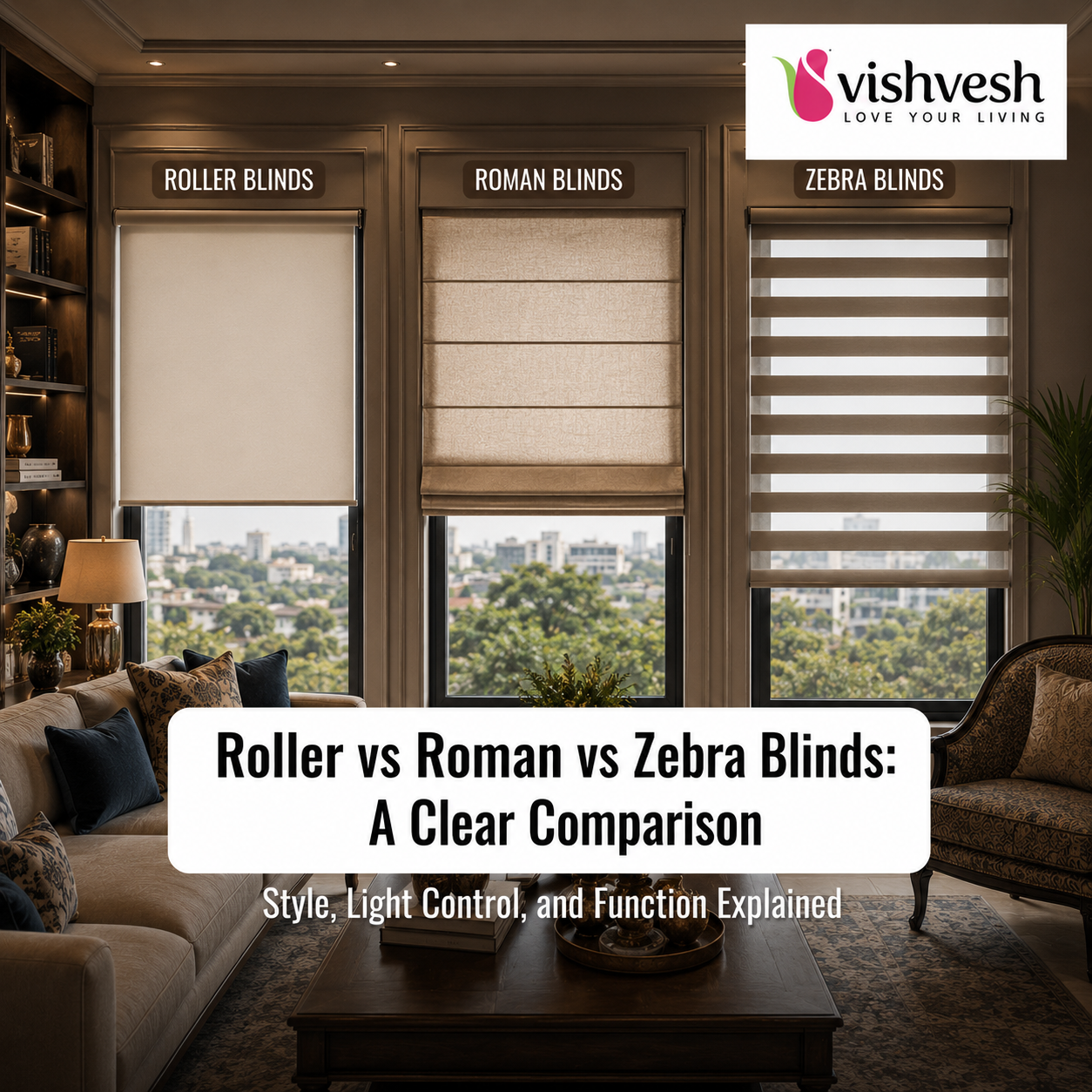
roller blinds are the simplest option. A single fabric panel rolls onto a tube. They suit contemporary rooms, come in a wide range of fabrics from sheer to blackout, and are easy to wipe clean. The plain flat face suits large windows without looking cluttered.
Roman blinds fold into neat horizontal pleats when raised. They give a soft fabric look closer to curtains while still fitting within the window recess. They suit traditional and transitional rooms and work well with patterned fabrics.
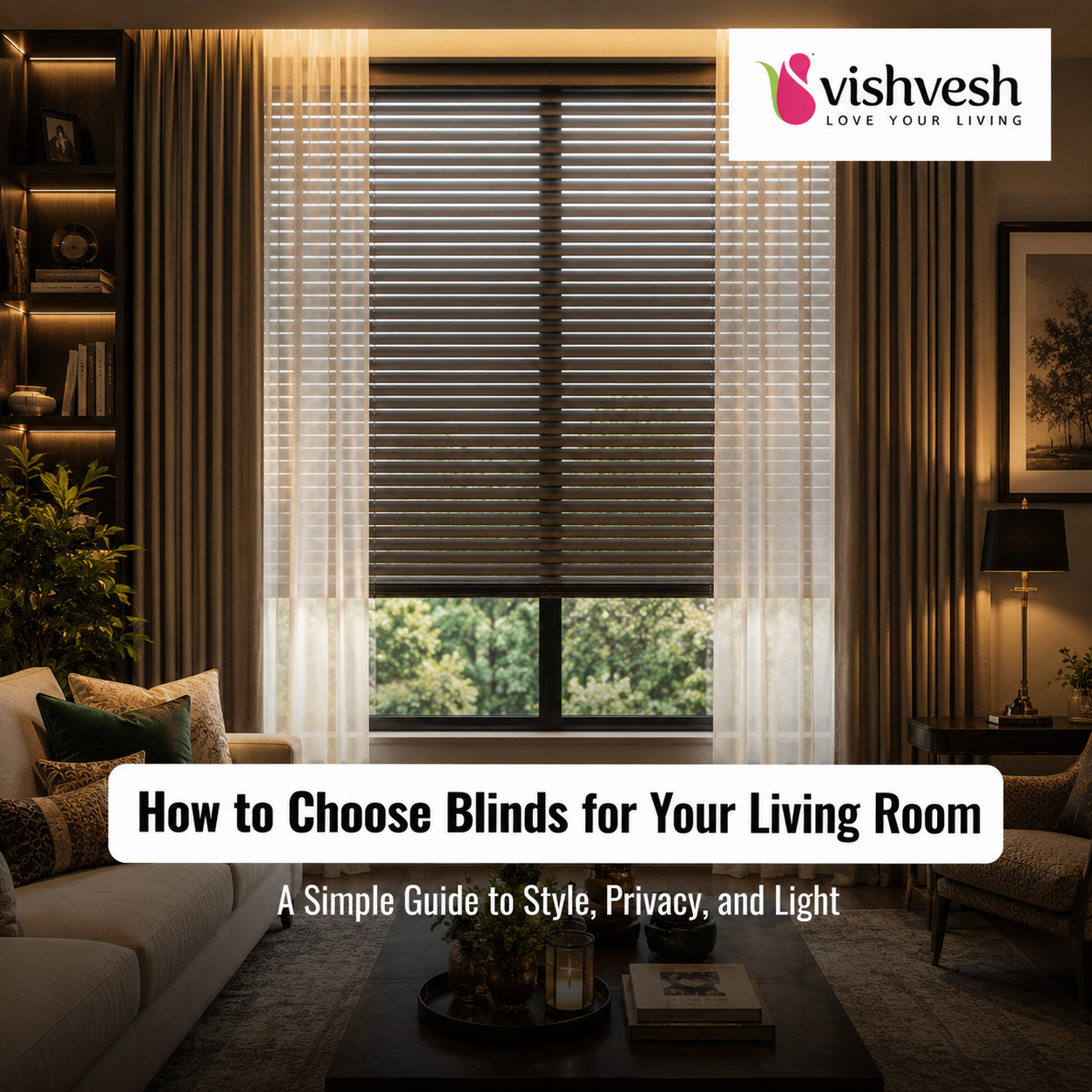
Venetian blinds use horizontal slats in aluminium, wood or faux wood. Tilting the slats adjusts light without raising the blind. They suit studies and rooms where precise light direction matters more than soft diffusion.
Vertical blinds hang as vertical slats and rotate to control light. They are practical for wide windows and patio doors but give a more functional than decorative look.
Light control for Indian living rooms
Chennai living rooms get strong direct sunlight for much of the year. Sheer roller blinds diffuse glare while keeping the view. Day and night zebra blinds alternate sheer and opaque bands so you can dial between filtered and fully blocked light.
Blackout fabric suits rooms that double as home theatres. For a main living room used through the day, a light filtering or sheer fabric is usually preferable to full blackout.

Privacy without blocking views
Sheer fabrics let you see out during the day while preventing people outside from seeing in. At night this reverses when interior lights are on, so consider a double blind system or heavier blind for evening privacy.
Bottom up blinds raise from the sill upward, covering the lower portion while leaving the top open for light. This suits ground floor rooms where you want to keep street level views private without blocking sky light.
Maintenance in a Chennai home
Dust settles on blinds quickly in Chennai. Roller blinds with smooth polyester fabric wipe clean with a damp cloth. Venetian aluminium blinds can be removed and washed. Roman blinds need periodic dry cleaning if made from delicate fabric.
Cord operated mechanisms collect dust in the working parts over time. Cordless and motorized options reduce mechanical wear and keep cords away from children and pets.

Measuring for a blind
Decide first whether you want the blind inside the window recess or mounted on the wall above it. Inside recess fitting gives a neat built in look but requires accurate measurements and a flat recess. Face fixing above the recess covers a larger area and is easier to install on uneven surfaces.
Measure width and drop in at least two places for each window. Recess widths vary by a few millimetres and the tightest measurement is the one to use for inside fitting.
Choosing a Blind Supplier and Installer in Chennai
A reliable supplier shows samples, takes measurements and offers a written quote before ordering. Ask about the warranty on the mechanism and the fabric separately. Confirm whether installation is included or charged separately.
Visiting a showroom lets you test how different fabrics look in light conditions similar to your room. A printed catalogue cannot show how a fabric diffuses light or how heavy a Roman blind feels when fully raised.
FAQs: Choosing Blinds for a Living Room in Chennai
Which type of blind suits a living room best?
It depends on the room style and light needs. Roller blinds suit contemporary rooms and are easiest to maintain. Roman blinds suit traditional and transitional rooms. Venetian blinds suit rooms needing directional light control. Zebra blinds suit rooms that need flexible light filtering through the day.
Are roller blinds or Roman blinds better for Indian homes?
Roller blinds are easier to clean and suit strong Chennai sunlight when made in light filtering or solar fabrics. Roman blinds give a softer look but require more maintenance. The right choice depends on room style, window size and how much direct sun the window receives.
What is a zebra blind?
A zebra blind has alternating sheer and opaque horizontal bands on a single fabric panel. Rolling the panel adjusts how the bands align, shifting between filtered light and full coverage. It sits between a sheer and a blackout blind and suits living rooms used through different light conditions.
Should blinds be inside or outside the window recess?
Inside recess fitting gives a neat built in look and suits deep uniform recesses. Outside face fixing suits shallow or uneven recesses and covers more of the wall, making windows appear larger. Both work well with the right fabric and mechanism.
How often do blinds need replacing?
A quality mechanism with standard fabric lasts eight to twelve years with regular light cleaning. Fading fabric near strong south or west facing windows may need replacing earlier. Choose UV resistant fabric for windows with direct afternoon sun.