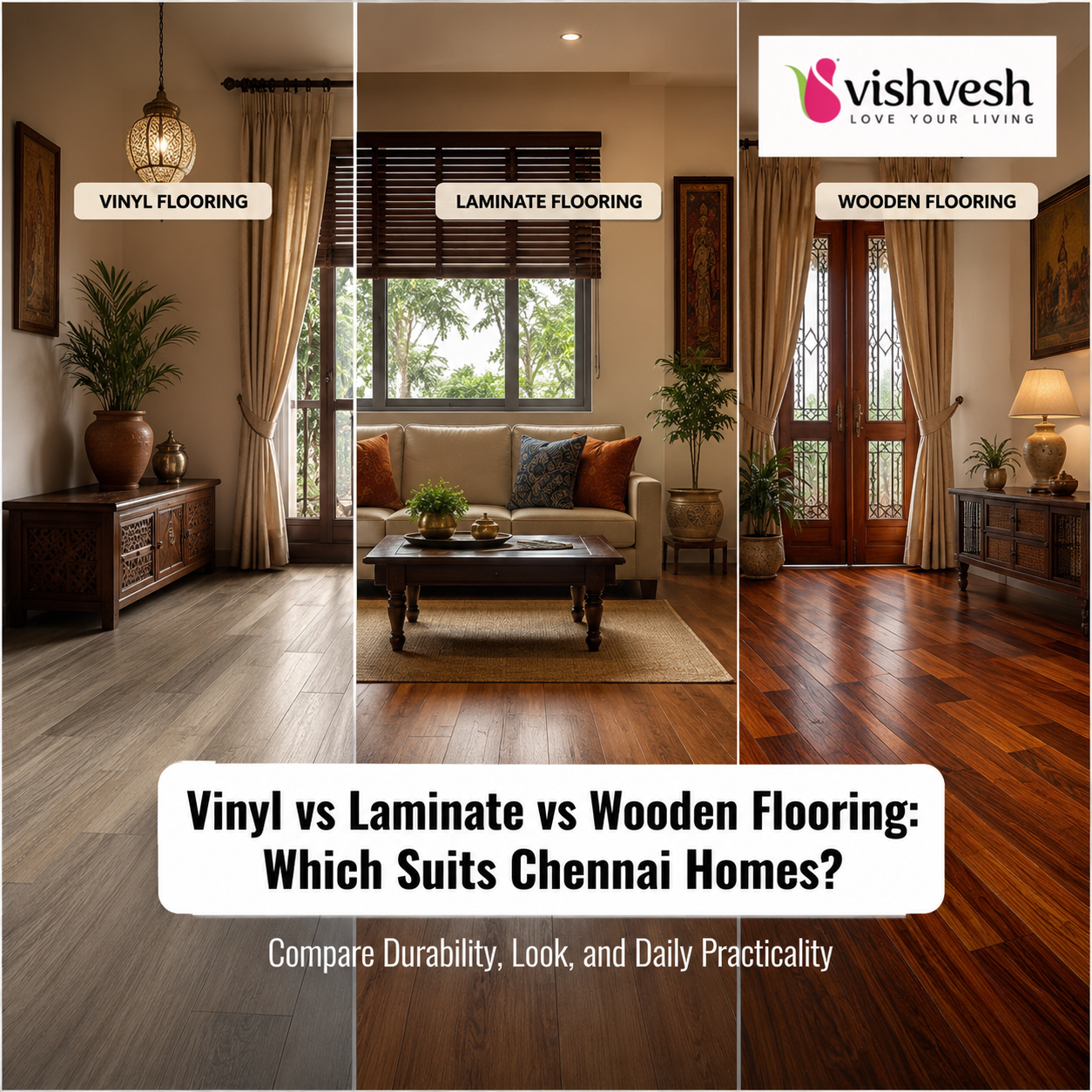
Choosing a floor is a long-term decision that affects the look, comfort, and maintenance of a home for years. Vinyl, laminate, and wooden flooring each offer a different balance of appearance, durability, water resistance, and cost. This comparison explains how they differ and which suits different rooms in Chennai’s warm, humid climate.
The three options in brief
Vinyl flooring is a synthetic floor made in planks or sheets, valued for water resistance and comfort underfoot. Laminate flooring is a layered floor with a printed wood-look surface under a tough wear layer. Wooden flooring is made from real timber, either solid wood or engineered wood with a real-wood top layer.
Each performs differently on the factors that matter most: water resistance, durability, feel, appearance, and cost.
Flooring comparison at a glance
| Factor | Vinyl | Laminate | Wooden |
|---|---|---|---|
| Water resistance | High | Moderate | Low to moderate |
| Scratch resistance | Good | High | Moderate |
| Feel underfoot | Soft, warm | Firm | Warm, premium |
| Appearance | Wood or stone look | Realistic wood look | Genuine wood |
| Maintenance | Very easy | Easy | More care needed |
| Best rooms | Wet zones, kitchens, baths | Living, bedrooms | Living, bedrooms |
| Relative cost | Lower | Lower to mid | Higher |
Water resistance
Water resistance is the deciding factor in humid Chennai and in any room exposed to moisture. Vinyl flooring resists water well and suits kitchens, bathrooms, and entryways.
Laminate tolerates occasional spills if wiped promptly, but standing water can cause its core to swell. It suits drier living and bedroom areas rather than wet zones.
Wooden flooring is the most sensitive to moisture and humidity. Solid wood can expand, contract, or warp in damp conditions, so it needs care and stable indoor humidity.
Durability and scratch resistance
Laminate flooring has a tough wear layer that resists scratches and daily wear well. It suits busy homes with children and pets.
Vinyl is durable and comfortable, resisting dents and scratches in most household use. Softer vinyl can mark under heavy furniture, so pads help.
Wooden flooring can scratch and dent over time, but solid and some engineered woods can be sanded and refinished. This lets a wood floor be restored rather than replaced.
Feel, appearance, and warmth
Wooden flooring offers genuine grain, warmth, and a premium look that many buyers prefer. No imitation fully matches the character of real timber.
Laminate reproduces a realistic wood look at lower cost, though it feels firmer and cooler underfoot than real wood. Modern laminates look convincing from a normal viewing distance.
Vinyl feels soft and warm underfoot and comes in wood and stone looks. It is comfortable for long standing, such as in kitchens.
Installation and maintenance
Vinyl and laminate often use click-lock planks that install quickly over a prepared subfloor. This makes them practical for renovations.
Wooden flooring installation varies with type and often needs more skill and time, especially for solid wood. Engineered wood is more stable and easier to fit than solid wood.
For maintenance, vinyl is the easiest, needing only regular cleaning. Laminate is easy but dislikes excess water. Wood needs the most care, including controlled humidity and periodic refinishing.
Cost considerations
Vinyl and laminate generally cost less than wooden flooring, both to buy and to install. They offer a wood look at a more accessible price.
Wooden flooring usually costs more but can add long-term value and can be refinished rather than replaced. Specific pricing is available on request and can be confirmed.
Consider lifetime cost, not just the purchase price. A floor that suits its room and climate lasts longer and costs less over time.
Which flooring suits which room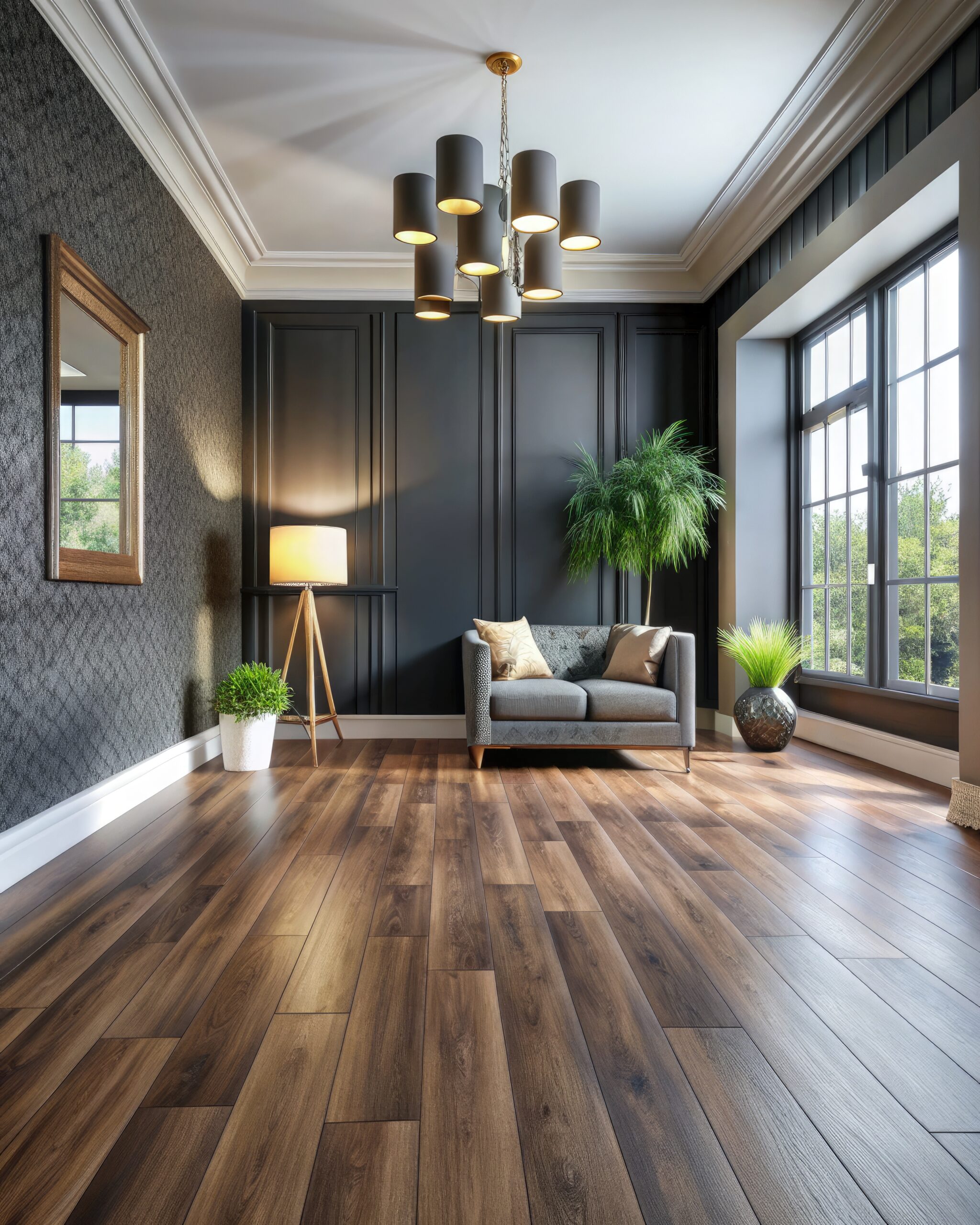
Kitchens, bathrooms, and entryways suit water-resistant vinyl. It handles spills and humidity that would damage laminate or wood.
Living rooms and bedrooms suit laminate or wooden flooring for warmth and a premium look. These drier rooms let wood and laminate perform at their best.
For a whole-home approach in Chennai, many homes combine vinyl in wet zones with laminate or engineered wood in living areas. This matches each floor to its conditions.
Choosing for Chennai’s climate
Chennai’s heat and humidity favour moisture-resistant flooring in exposed areas. Vinyl and quality laminate resist swelling better than untreated solid wood.
Engineered wood is more stable than solid wood in humid conditions, offering a real-wood surface with better resistance. It is a practical middle path for buyers who want genuine timber.
Whatever the choice, keeping indoor humidity stable and using entry mats to reduce grit helps any floor last longer.
Buying flooring in Chennai
Vishvesh Textiles offers flooring options in Chennai, including vinyl, laminate, and wooden flooring, with guidance on durability, moisture resistance, and finish. Range specifics and pricing are available on request and can be confirmed.
Seeing flooring samples in person helps you judge finish, texture, and colour under your own lighting. A short showroom visit makes it easier to match flooring to each room.
Engineered wood explained
Engineered wood deserves special attention in a humid climate. It has a real-wood top layer bonded to a stable core of layered timber or plywood.
This construction resists expansion and contraction better than solid wood. It offers the appearance and feel of genuine timber with improved stability in humidity.
For Chennai homes that want real wood, engineered wood is often the more practical choice. It can also be refinished, depending on the thickness of its top layer.
Subfloor and underlay
A good floor starts with a sound subfloor. The surface beneath must be clean, level, and dry before any flooring is laid.
Underlay sits between the subfloor and the flooring, adding cushioning, sound reduction, and in some cases moisture protection. The right underlay improves comfort and floor life.
Skipping subfloor preparation causes problems later, from uneven wear to squeaks and gaps. Time spent preparing the base is rarely wasted.
Sound and comfort underfoot
Flooring affects how a room sounds and feels. Hard floors can amplify footsteps and echo, while underlay and rugs soften both.
Vinyl feels warmer and quieter underfoot than laminate, which can sound firmer without good underlay. Adding rugs over hard floors improves both comfort and acoustics. Our rug buying guide explains how to choose one.
For upper floors and apartments, sound-reducing underlay helps limit noise transfer between levels. This is worth considering in multi-storey Chennai homes.
Durability and expected lifespan
Each flooring type has a different working life. Quality laminate and vinyl can last many years in the right rooms with good care.
Wooden flooring can last longest of all when maintained, partly because it can be sanded and refinished rather than replaced. This gives wood strong long-term value.
Lifespan depends heavily on matching the floor to its room and climate. A floor used in the wrong conditions fails early regardless of its quality.
Common flooring mistakes
The most common mistake is using a moisture-sensitive floor in a wet or humid area. Solid wood and standard laminate in bathrooms often lead to swelling and damage.
Another is neglecting subfloor preparation, which undermines even a premium floor. A poor base shows through as uneven wear and movement.
Choosing on purchase price alone is a third pitfall. A cheaper floor that fails early in the wrong room costs more over its short life than a suitable one.
Flooring and long-term value
Flooring influences how a home feels and, over time, its resale appeal. A quality, well-maintained floor suited to its rooms supports long-term value.
Wooden and engineered wood floors are often seen as premium and can be refinished, extending their life. Vinyl and laminate offer practical, attractive value in the right spaces.
Choosing flooring that lasts and suits the climate is a sound long-term decision. A floor that fails early is a poor investment regardless of its initial look.
Matching floors across open-plan spaces
Open-plan homes benefit from a consistent floor that flows between zones. A single floor type across connected areas makes a space feel larger and more cohesive.
Where different floors meet, such as vinyl in a kitchen and wood in a living area, neat transition strips give a clean join. Planning these transitions early avoids awkward finishes.
A pre-purchase checklist
Before buying flooring, confirm the room’s moisture exposure and traffic level. Match the floor type to those conditions rather than to looks alone.
Check subfloor condition and underlay needs, and plan transitions between rooms. Finally, view samples under your own lighting to judge true colour and finish before deciding.
Warranties and what to check
Flooring often carries a warranty, but terms vary widely. Read what a warranty actually covers, such as wear, fading, or moisture, and under what conditions.
Many warranties depend on correct installation and suitable use. Fitting a floor in the wrong room, such as laminate in a wet area, can void cover.
Keeping installation records and following care guidance protects any warranty. Specific warranty terms are available on request and should be confirmed with the supplier before buying.
Acclimatising and installing flooring
Wood and laminate flooring should acclimatise to a room before fitting. Leaving planks in the space allows them to adjust to its temperature and humidity.
Skipping this step can cause gaps or buckling after installation, as the floor settles. Acclimatisation is especially important in humid climates like Chennai.
A careful installer will also leave small expansion gaps at the edges. These allow the floor to move slightly with humidity without lifting or buckling. To finish a whole room, coordinate flooring with home linen and soft furnishings.
Key facts to remember
- Vinyl flooring is water-resistant and soft underfoot, suiting kitchens, bathrooms, and humid areas.
- Laminate flooring resists scratches well but can swell if exposed to standing water.
- Wooden flooring offers genuine warmth and can be refinished, but is most sensitive to moisture.
- Engineered wood is more stable than solid wood in humid climates like Chennai.
- Many Chennai homes combine vinyl in wet zones with laminate or wood in living areas.
Key takeaways
- Vinyl resists water best; laminate resists scratches; wood offers premium warmth.
- Vinyl suits wet zones; laminate and wood suit living and bedroom areas.
- Laminate dislikes standing water; solid wood is most moisture-sensitive.
- Engineered wood is a stable, real-wood option for humid climates.
- Match flooring to each room and Chennai’s humidity for longer life.
Frequently asked questions
Is vinyl or laminate flooring better?
Vinyl is more water-resistant and softer underfoot, suiting wet zones like kitchens and bathrooms. Laminate offers a harder, scratch-resistant, wood-like surface, suiting drier living and bedroom areas.
Which flooring is best for humid Chennai homes?
Water-resistant vinyl suits wet and humid areas, while quality laminate and engineered wood suit drier rooms. All resist swelling better than untreated solid wood in Chennai’s humid climate.
Does wooden flooring suit Chennai’s climate?
Wooden flooring adds warmth and a premium finish but is sensitive to humidity. Engineered wood is more stable than solid wood, making it a better real-wood choice for humid Chennai homes.
Which flooring is most scratch-resistant?
Laminate flooring has a tough wear layer that resists scratches well, suiting homes with children and pets. Vinyl is also durable, while wooden floors can scratch but can often be refinished.
Can laminate flooring get wet?
Laminate tolerates occasional spills if wiped promptly, but standing water can swell its core. It suits drier living and bedroom areas rather than bathrooms, kitchens, or entryways.
Which flooring is cheapest?
Vinyl and laminate generally cost less than wooden flooring, both to buy and install. Wooden flooring costs more but can be refinished. Specific pricing is available on request and should be confirmed.
Where can I buy flooring in Chennai?
Vishvesh Textiles offers vinyl, laminate, and wooden flooring at its Cathedral Road showroom in Chennai. Please contact us to confirm the exact address, opening hours, and pricing before visiting.