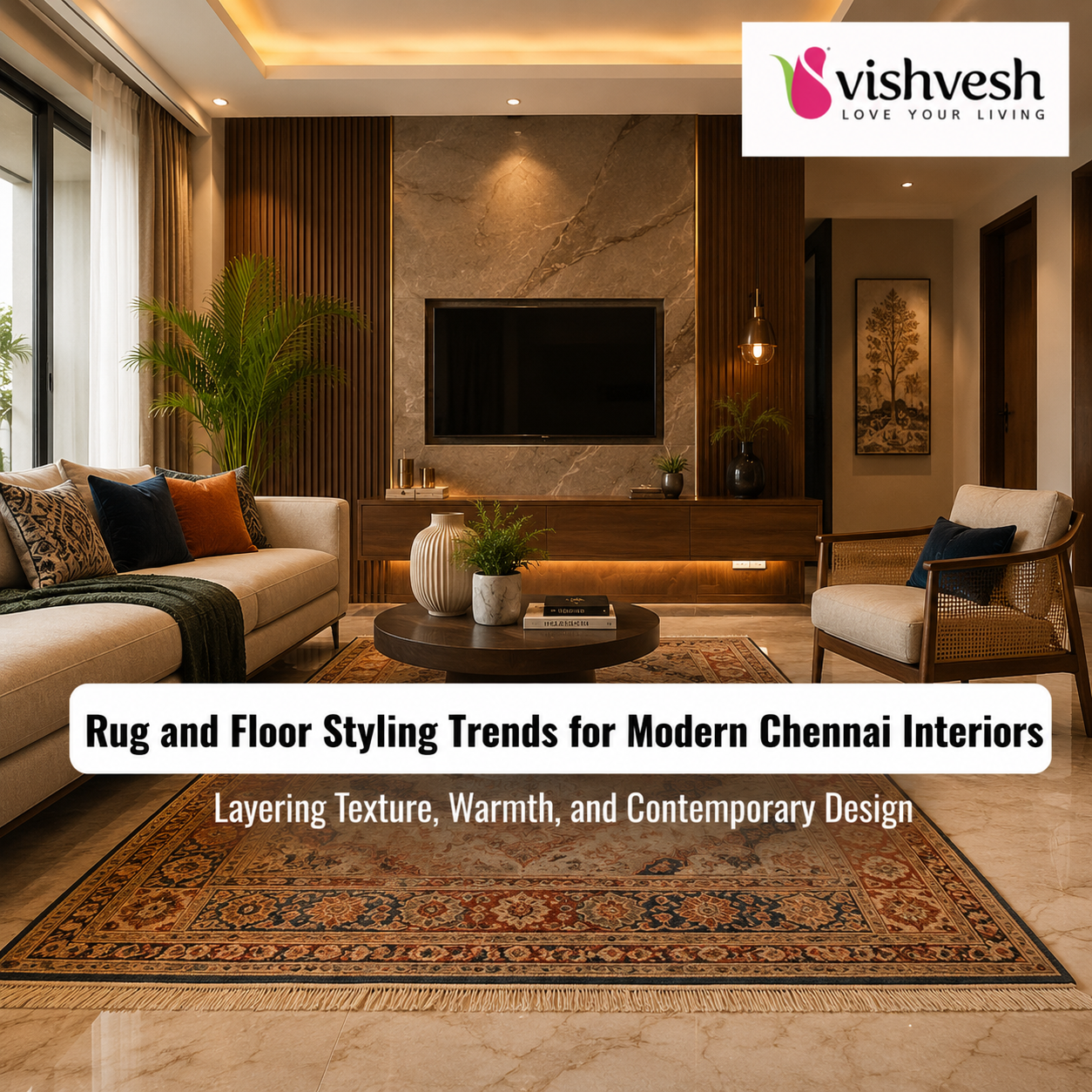
The floor is the largest surface in most rooms, yet it is often the last thing people style. Getting it right sets the tone for everything above it. This piece looks at current rug and floor styling trends and how to apply them in modern Chennai homes, where warmth, humidity, and open layouts shape what works.
Why the floor sets the tone
The floor and any rug on it form the base layer of a room’s design. Their colour and texture influence how warm, calm, or bright the whole space feels.
A well-chosen floor and rug pairing grounds furniture and gives a room a clear structure. Ignoring the floor leaves even well-furnished rooms feeling unfinished.
Because floors and large rugs are long-term investments, choosing timeless bases and updating through smaller layers is a practical approach. This lets a room evolve without major cost.
Trend: natural textures and materials
Natural texture is a defining trend in current interiors. Wool, jute, cotton, and wood-look surfaces bring an organic, tactile quality that feels warm and grounded.
Jute and sisal rugs add earthy texture that softens modern, minimal rooms. They pair well with wood-look flooring for a natural, layered base.
Wool rugs remain popular for their durability and soft, premium feel. Natural fibres suit the current move toward calm, organic interiors.
Trend: warm-toned wood-look floors
Warm and mid-toned wood looks are widely favoured over very dark or very grey floors. These tones feel inviting and flatter a range of furniture styles.
Wood-look vinyl and laminate make these tones accessible and practical for humid climates. They deliver the warmth of timber with easier maintenance. Our flooring comparison guide explains the differences.
Wide planks are a current preference, as they make floors feel more expansive and modern. Larger planks suit open-plan rooms common in newer Chennai homes.
Trend: layered rugs
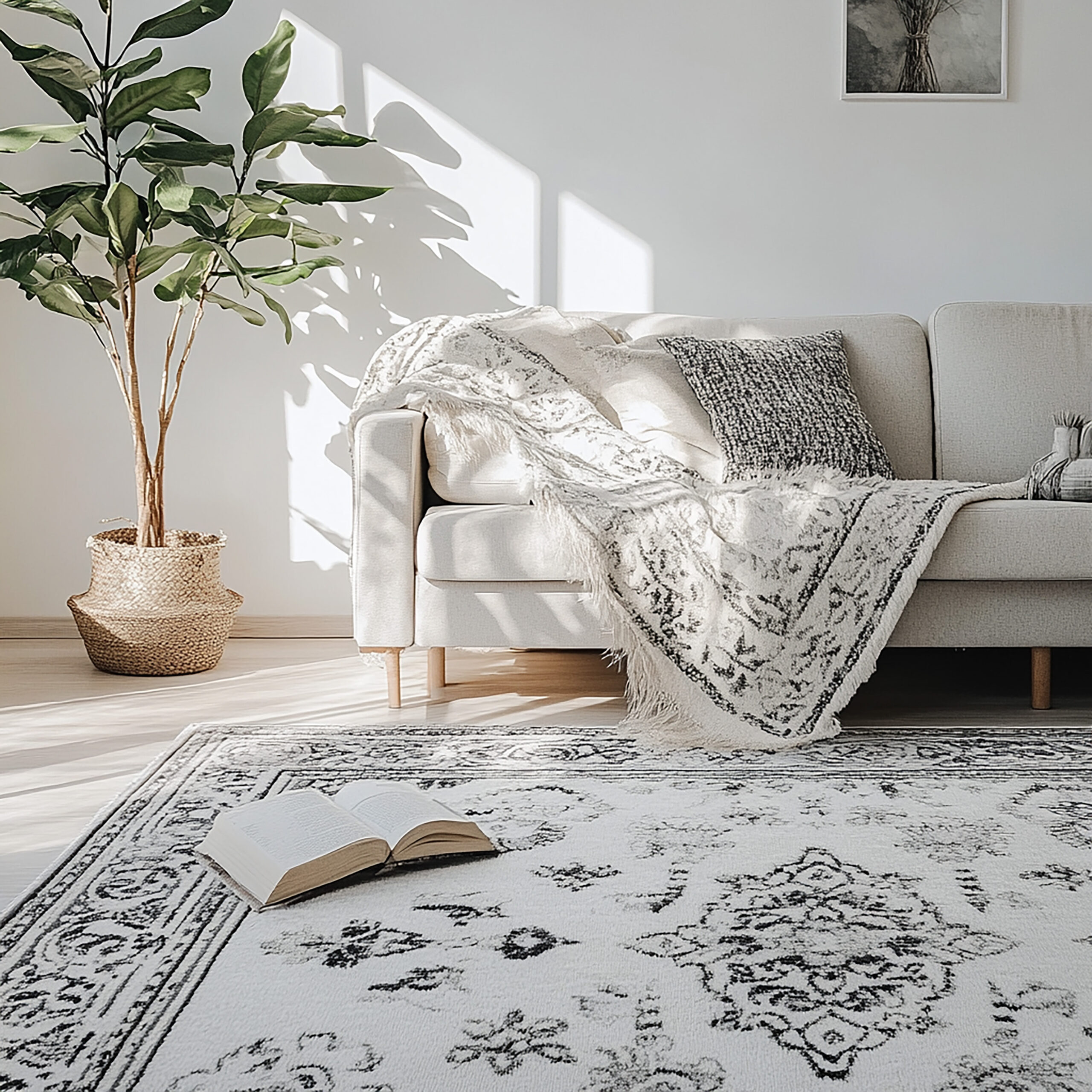
Layering rugs is a strong current styling trend. A smaller patterned or textured rug placed over a larger neutral one adds depth and a curated feel.
Layering also lets you introduce pattern or colour without committing a whole room to it. The base rug stays neutral while the top rug changes with the season or mood.
This approach works well in living rooms and bedrooms. It adds softness underfoot and visual interest without overwhelming the space.
Trend: using rugs to zone open-plan spaces
Open-plan living is common in modern homes, and rugs are a key tool for defining zones within them. A rug marks out the living area distinctly from the dining or work area.
Using separate rugs for each function gives an open space clear structure. It signals where one activity ends and another begins without walls.
Choosing rugs that share a colour family keeps zones distinct yet cohesive. This balances definition with a unified overall look.
Trend: colour and pattern on the floor
While neutral bases remain popular, colour and pattern are returning through rugs. A patterned rug can become a room’s focal point over a calm floor.
Pulling an accent colour from cushions, curtains, or art into a rug ties a scheme together. This links the floor layer to the rest of the room.
For high-traffic Chennai homes, patterned rugs also hide everyday marks. They combine style with the practicality of disguising wear.
Applying trends in Chennai homes 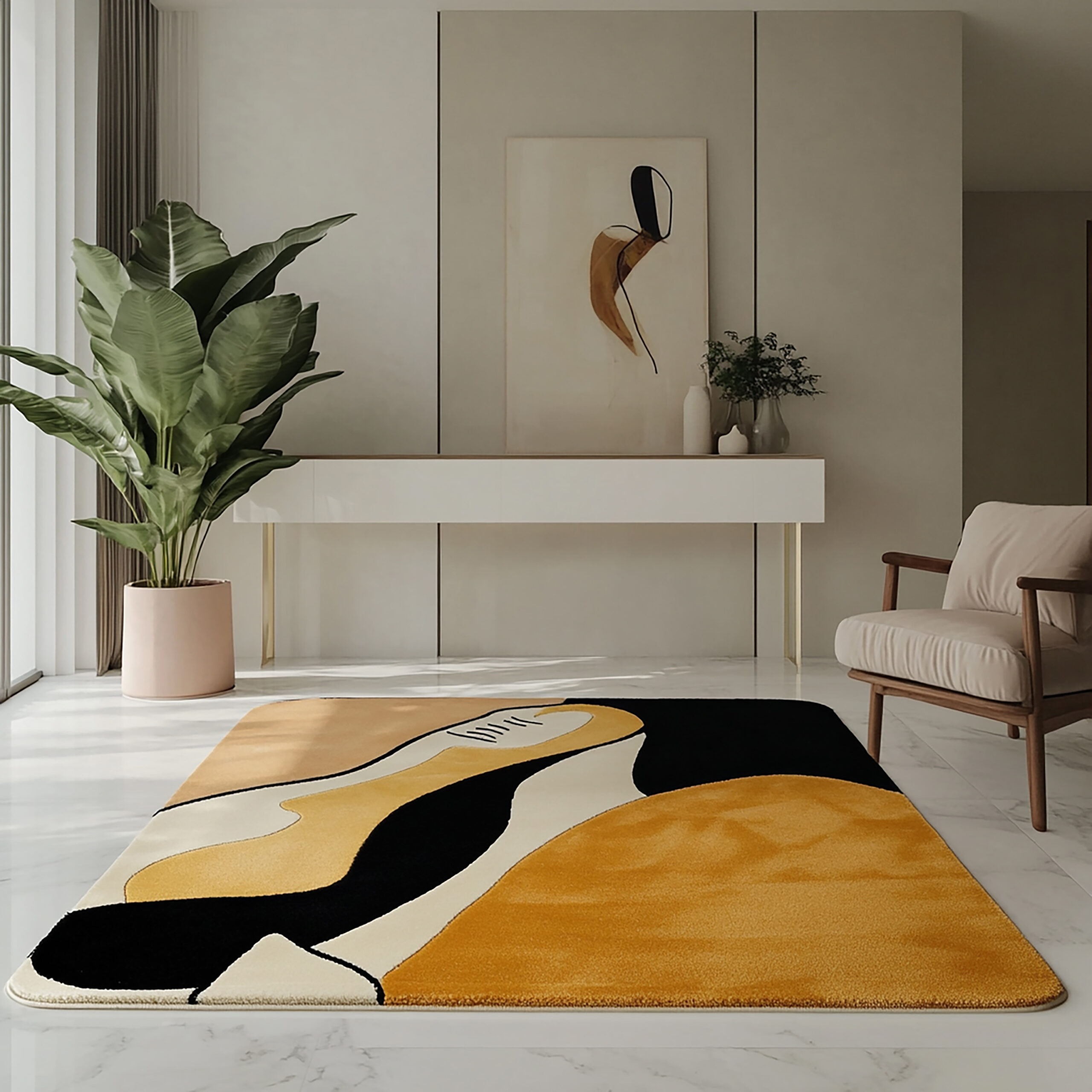
Chennai’s heat and humidity shape practical choices under these trends. Moisture-resistant wood-look vinyl and washable or synthetic rugs suit everyday and humid areas.
Reserve delicate natural fibres and premium wool for formal, lower-traffic rooms. This keeps styling both current and durable. The rug buying guide covers how to choose the right material.
Layering soft furnishings, from rugs to home linen to curtains, builds a warm, cohesive interior. Coordinating these across one showroom makes a consistent look easier to achieve.
Making trends last
Trends are most useful as a direction, not a rulebook. Choose timeless floors and large rugs, then update smaller layers as tastes change.
A neutral, quality base floor and rug will outlast passing colour trends. Cushions, throws, and top-layer rugs are the easiest, cheapest way to refresh a room.
Balancing a durable base with changeable accents keeps a home current without frequent major spending. This is the practical heart of good floor styling.
Getting design guidance in Chennai
Vishvesh Textiles offers rugs and flooring at its Cathedral Road, Chennai showroom, with design guidance on material, colour, and placement. Range specifics and pricing are available on request and can be confirmed.
Seeing rug texture and flooring finishes in person helps you judge how trends will feel in your own home. A short consultation makes it easier to build a floor layer that lasts. Book a design consultation to plan rugs and flooring together.
Trend: earthy, biophilic palettes
Interiors are moving toward earthy, nature-inspired palettes. Warm neutrals, terracotta, sand, and muted greens create calm, grounded rooms.
These tones work beautifully at floor level through wood-look flooring and natural-fibre rugs. They form a warm base that suits the current move toward biophilic, nature-led design.
Bringing these tones into the floor layer anchors the palette. Softer accents above then build on this grounded base.
Trend: mixing textures
Layering different textures is central to current styling. A smooth wood-look floor, a chunky jute or wool rug, and soft cushions create depth through contrast.
Mixing textures keeps neutral rooms from feeling flat. The interplay of smooth, woven, and soft surfaces adds richness without relying on strong colour.
Rugs are the easiest place to introduce texture at floor level. A textured rug over a smooth floor instantly adds warmth and interest.
Styling room by room
In living rooms, anchor the seating on a generous rug and layer a textured piece on top for depth. Keep the base floor warm and neutral.
In bedrooms, soften the floor with a large rug under the bed or runners at the sides. This adds comfort underfoot on cool mornings.
In entryways, a hard-wearing runner sets the tone and protects the floor from grit. In dining areas, a low-pile rug sized beyond the table keeps chairs stable and the zone defined.
Common styling mistakes
A frequent mistake is choosing rugs that are too small, which breaks the sense of a grounded, styled room. Sizing generously almost always improves the look.
Another is matching everything too tightly, which can feel flat. Mixing tone and texture, rather than repeating one finish, gives a room life.
Overlooking practicality is a third error. A beautiful but delicate rug in a high-traffic Chennai room will not stay beautiful for long.
Refreshing with the seasons
The floor layer offers an easy way to refresh a home. Swapping a top-layer rug or changing cushions and throws updates a room without major cost.
Keeping a neutral, durable base floor and large rug means these small changes always work. The base stays constant while accents evolve.
This approach keeps a home feeling current year-round. It balances a considered, lasting foundation with the freedom to change smaller layers often.
Trend: statement floors and borders
While neutral bases dominate, statement floors are re-emerging through bordered rugs and patterned zones. A defined border can frame a seating area with quiet elegance.
A bordered rug draws the eye and adds structure without a busy all-over pattern. It suits buyers who want interest at floor level while keeping a calm overall look.
Trend: sustainable and natural materials
Interest in natural and responsibly made materials is shaping floor choices. Wool, jute, and other natural fibres appeal to buyers seeking a grounded, honest aesthetic.
These materials bring texture and warmth that synthetic finishes struggle to match. Balancing natural materials with practical, durable options suits real family homes.
Coordinating floor, walls, and ceiling
Good styling treats the floor as part of a whole. A warm floor pairs well with soft, light walls, keeping a room balanced and bright.
Letting the floor and rug set a warm base allows walls and soft furnishings to build on it. Considering all surfaces together avoids a room that feels disconnected.
Avoiding trend overload
Trends work best used selectively. Applying every trend at once produces a busy, quickly dated room rather than a considered one.
Choosing one or two ideas, such as a layered rug over a warm wood-look floor, keeps a space current and calm. Restraint is what makes styling feel timeless.
Styling floors in small spaces
Small rooms benefit from careful floor styling. A single, well-sized rug and a continuous floor make a compact space feel larger and calmer.
Avoid too many small rugs, which chop a small room into pieces and shrink it visually. One considered rug grounds the space more effectively.
Lighter floors and rugs reflect more light, helping small rooms feel open. A simple, cohesive floor layer is often the best choice where space is limited.
Lighting and floor styling
Lighting changes how floors and rugs read. Warm light brings out the richness of wood-look floors and natural-fibre rugs, deepening their tones.
Layered lighting, from ambient to floor-level lamps, highlights texture in a rug and floor. This adds depth and warmth to a styled room in the evening.
Considering how a space is lit, both by day and at night, helps you choose floor tones that look right around the clock. Light and floor work as a pair.
Key facts to remember
- The floor and any rug form the base layer that sets a room’s overall tone.
- Natural textures such as wool, jute, and wood looks are a defining current interior trend.
- Layering a patterned rug over a larger neutral rug adds depth and a curated feel.
- Rugs are widely used to define zones within open-plan living spaces.
- Moisture-resistant wood-look flooring and washable rugs suit humid Chennai homes.
Key takeaways
- The floor is the base layer that sets a room’s tone.
- Natural textures and warm wood-look floors lead current trends.
- Layered rugs add depth and let you change pattern easily.
- Rugs define zones in open-plan spaces effectively.
- Choose timeless bases and refresh through smaller layers.
Frequently asked questions
What are the current rug and floor styling trends?
Current trends favour natural textures like wool and jute, warm wood-look floors, layered rugs, and using rugs to zone open-plan spaces. Neutral bases with accent pattern through rugs are popular.
What does layering rugs mean?
Layering rugs means placing a smaller patterned or textured rug over a larger neutral one. It adds depth, warmth, and a curated look, and lets you change pattern without redoing the whole room.
How do rugs define open-plan spaces?
Rugs mark out zones within an open plan by grounding each area, such as living or dining, on its own rug. Sharing a colour family across rugs keeps the zones distinct yet cohesive.
Which floor tones are trending?
Warm and mid-toned wood looks are widely favoured over very dark or grey floors. Wide planks are also popular, making rooms feel more spacious, and are available in vinyl and laminate.
How do I keep floor styling practical in Chennai?
Use moisture-resistant wood-look vinyl and washable or synthetic rugs in humid and high-traffic areas. Reserve delicate natural fibres and wool for formal, lower-traffic rooms to balance style and durability.
How can I refresh a room without changing the floor?
Update the smaller layers. Swap top-layer rugs, cushions, and throws while keeping a neutral, quality base floor and large rug. This refreshes a room without major cost or disruption.
Should the rug match the floor colour?
Not exactly. A rug should complement the floor, not match it precisely. A gentle contrast in tone or texture between rug and floor adds depth and stops the floor layer looking flat.