
Choosing upholstery fabric involves more than picking a colour or pattern. The weave, fibre content and finish determine how the fabric performs through years of daily use and how it holds up in the Indian climate.
This guide works through upholstery fabric choices room by room, covering durability, maintenance and what to look for when comparing options at a showroom or supplier.
What makes upholstery fabric different from curtain fabric
Upholstery fabric must withstand abrasion, compression and heat in ways curtain fabric does not. The rub count, sometimes called the Martindale score, measures how many times a fabric can be abraded before it shows wear. A higher rub count means longer life under use.
For light domestic use such as a bedroom armchair, a rub count of around fifteen thousand is adequate. For a family living room sofa used daily, look for twenty five thousand or higher. Commercial upholstery in waiting rooms or restaurants typically needs forty thousand or more.
Fabric choices for living room sofas
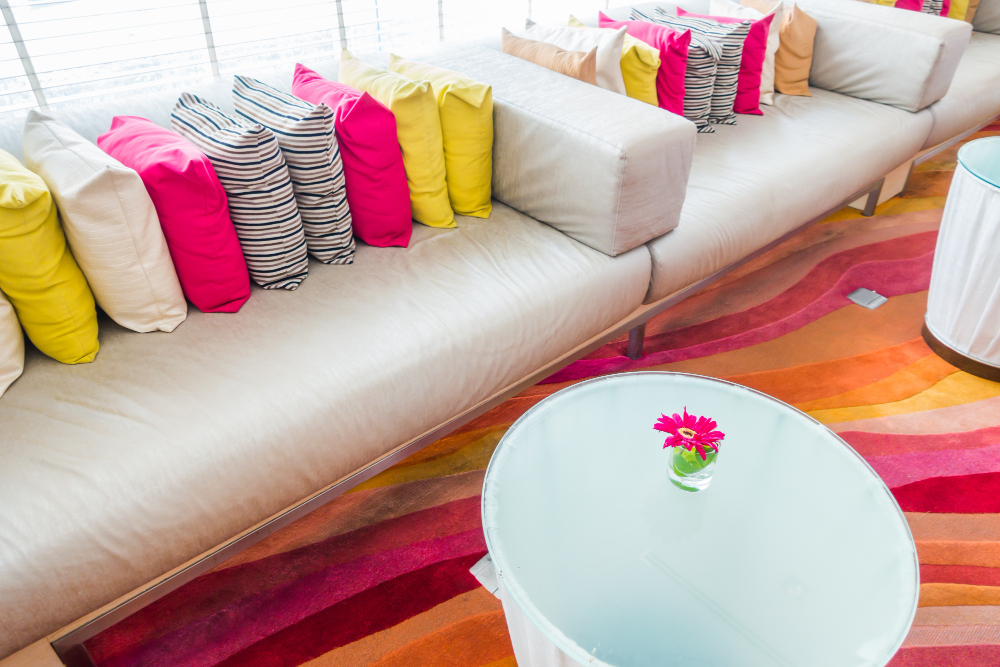
The living room sofa takes more use than any other upholstered piece in the home. Tightly woven fabrics resist snagging from everyday contact. Microfibre and polyester blends clean easily and resist spills. Plain weave cottons and linens are comfortable but show wear faster unless the weave is tight.
Velvet gives a premium look but attracts lint and shows compression marks from sitting in the same spot. Performance velvets with a synthetic pile handle this better than pure cotton velvet. Pattern weaves like jacquard hide minor soiling between cleans.
Fabric choices for dining chairs
Dining chairs face food spills, grease and repeated pressure from the seat edge. Vinyl and faux leather wipe clean instantly, making them practical for homes with young children. Performance fabrics treated with a stain repellent finish offer a softer feel with similar cleanability.
Avoid delicate weaves and light colours on dining chairs unless covers are used. Dark tones and tight weaves hide marks between thorough cleans and wear well at pressure points.
Fabric choices for bedrooms
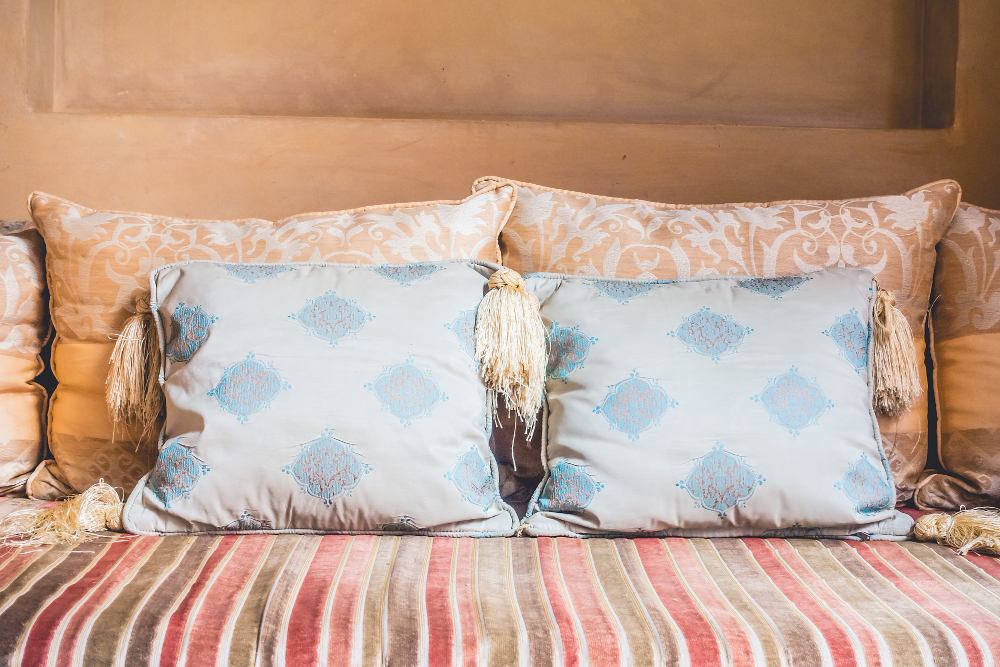
Bedroom upholstery, such as headboards and reading chairs, sees lighter use than living room pieces. Softer fabrics that feel comfortable against bare skin are appropriate. Linen and cotton blends work well in bedrooms. Velvet headboards are popular and hold up reasonably well given the limited abrasion.
Avoid heavily textured weaves on headboards as they can feel rough. A smooth upholstery fabric or a tight velvet pile is more comfortable in daily contact.
Performance fabrics for Indian homes
Heat, humidity and dust are everyday considerations in Chennai homes. Fabrics treated for moisture resistance and UV stability hold their colour and structure longer in air conditioned rooms that experience temperature swings when the system is off.
Outdoor upholstery fabrics, often made from solution dyed acrylic, are worth considering for balcony furniture and homes with large open windows. They resist mould, fading and moisture far better than indoor only weaves in exposed positions.
Colour and pattern considerations
Solid mid tones are the most forgiving upholstery colour for family homes. Very light colours show every mark. Very dark colours show dust and light coloured pet hair. A medium tone with a slight texture or woven pattern sits between the two extremes and cleans up well.
Large scale patterns need careful positioning to look balanced across a sofa. A professional upholsterer can show you how a pattern will centre on the cushions before work starts.
What to Check Before Ordering Upholstery Fabric in Chennai
Ask for a sample large enough to hold against your sofa frame or wall colour. A small cutting looks different at scale. Check the rub count, confirm the cleaning code and ask whether the fabric has been pre treated for stain resistance.
If the piece is being reupholstered, bring a photograph of the room and a note of the existing frame colour so the fabric supplier can help you check the combination works.
Frequently Asked Questions About Upholstery Fabrics in Chennai
What is the most durable upholstery fabric for a family sofa?
Tightly woven polyester blends and performance microfibre fabrics offer the best combination of durability, cleanability and comfort for a family living room sofa. Look for a Martindale rub count of twenty five thousand or higher for daily use.
What does the rub count on upholstery fabric mean?
The rub count measures abrasion resistance. It counts how many times a fabric can be rubbed against a standard abrasive before it shows wear. Higher is better. Fifteen thousand suits occasional use, twenty five thousand suits daily domestic use, and forty thousand suits commercial environments.
Can I use curtain fabric for upholstery?
Most curtain fabrics are not suitable for upholstery because they lack the abrasion resistance of upholstery weaves. Using curtain fabric on a sofa will result in early pilling, tearing and wear at seams. Always use fabric specified for upholstery use.
How do I clean upholstery fabric?
Cleaning method depends on the fabric. Most synthetic upholstery fabrics can be spot cleaned with a mild detergent and water. Natural fibres like cotton and linen may need dry cleaning. Check the cleaning code on the fabric label: W means water clean, S means solvent clean, WS means either, and X means vacuum only.
How long does upholstery fabric last?
Well chosen upholstery fabric on a sofa used daily lasts eight to fifteen years before showing significant wear. Fabric life depends on rub count, fibre content, cleaning frequency and whether the sofa is used by children or pets. Rotating cushions and covering with throws in heavy use areas extends life.