
What accessories do curtains and blinds actually need?
Curtain accessories are the hardware components, rods, tracks, tiebacks, rings and hooks, that hang, operate and finish a window covering. The right combination depends on fabric weight, window size, and whether the system will be manual or motorised. Choosing hardware alongside the curtain or blind itself, rather than as an afterthought, is what determines how well the final installation looks and functions.
Most homeowners spend weeks choosing curtain fabric, colour and style, then treat the hardware as an afterthought decided in the last five minutes of an order. That is a mistake. The rod, track or motorised system a curtain hangs on affects how it drapes, how smoothly it opens and closes, and how long it stays looking new. This guide walks through the accessory decisions that matter, from a simple decorative rod to a fully motorised curtain track, so the hardware gets the same attention as the fabric.
Rods vs Tracks: Which Suits Your Curtains
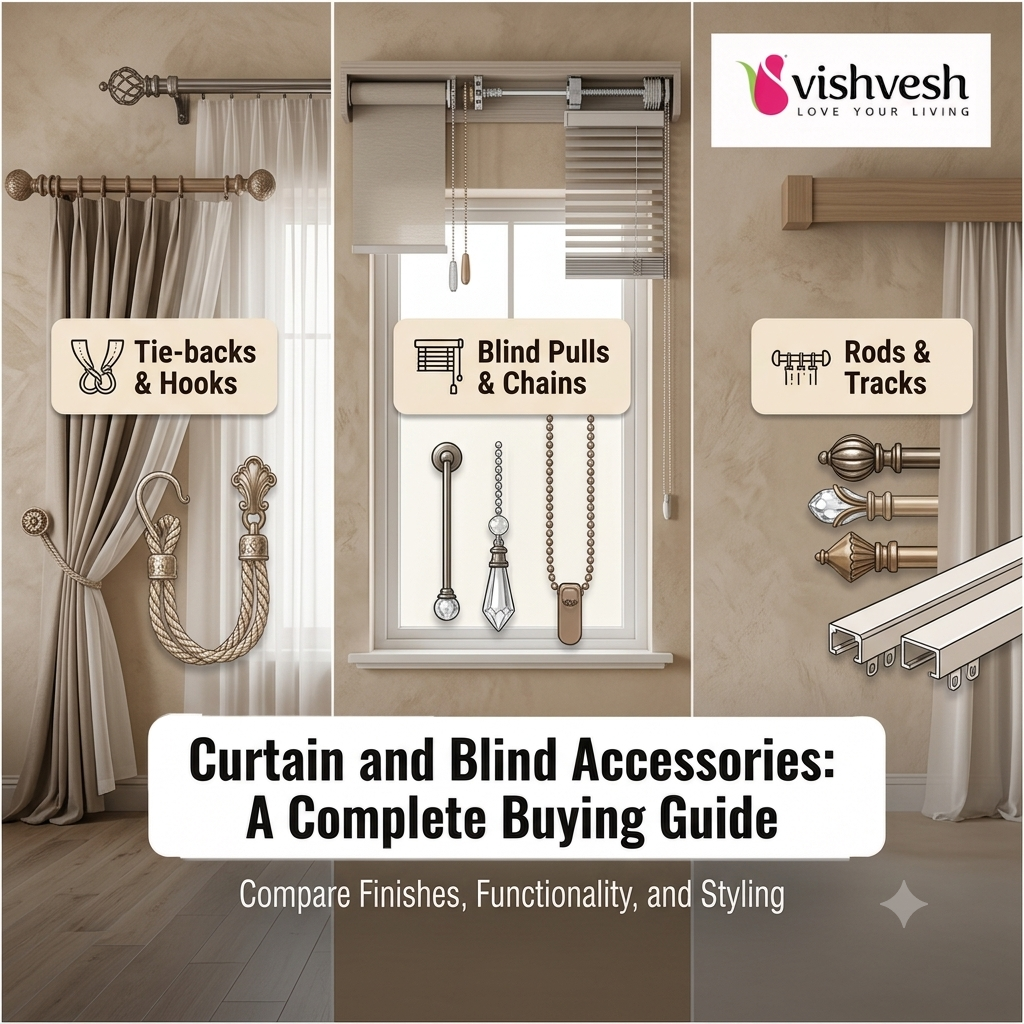
A curtain rod is a decorative pole the curtain hangs from directly, usually visible as part of the room’s overall look. Rods suit lighter fabrics and styles where the hardware itself is meant to be seen and admired, not hidden.
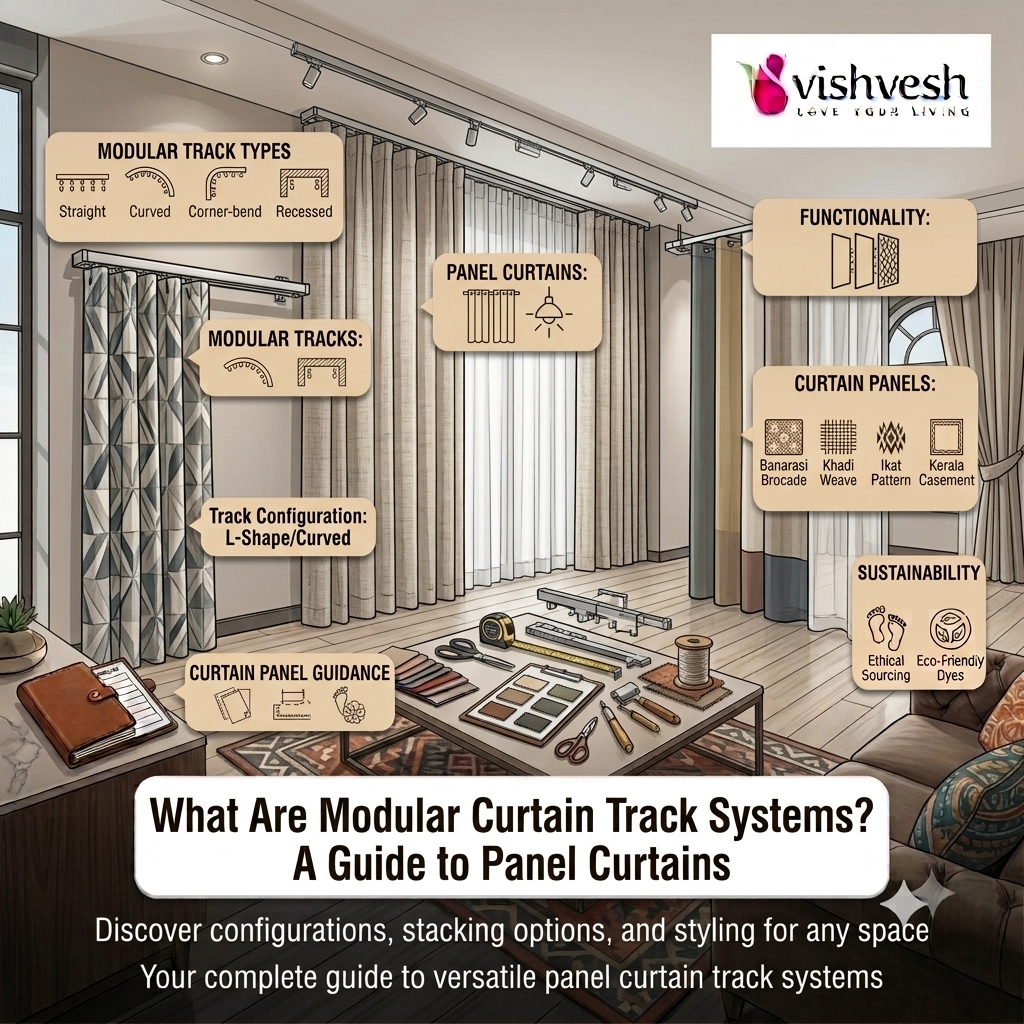
A curtain track is a channel system, often concealed behind a pelmet or valance, and is commonly used for heavier fabrics or when a cleaner, hardware-free look is preferred. Tracks are also the standard base system for motorised curtain setups, since a motor needs a track to drive along rather than a simple pole to hang from.
The choice between the two usually comes down to fabric weight and the look a homeowner wants. Lightweight sheer curtains generally pair well with a decorative rod, since the fabric is light enough not to strain the fixing points. Heavier blackout or lined curtains often perform better on a track, which distributes weight more evenly across the width of the window and reduces sagging over time.
Consider a west-facing bedroom fitted with heavy blackout curtains for afternoon light control. On a decorative rod, that much fabric weight can pull unevenly at the brackets over months of daily opening and closing. On a track, the same fabric glides on multiple gliders spread across the full width, sharing the load and keeping the curtain moving smoothly for years.
Room style also plays into the decision. A traditional or classic room often suits a visible decorative rod with an ornamental finial, while a modern, minimalist room tends to look cleaner with a concealed track and no visible hardware at all. Window width and shape matter too: very wide windows or bay windows often need a bendable or custom-shaped track rather than a straight rod, so the curtain follows the window’s actual line without gaps. For a full range of curtain options to pair with the right hardware, browse our curtain range.
Tiebacks, Holdbacks and Rings
Tiebacks and holdbacks are used to gather curtains to one side, adding shape to a window and letting more light into a room when the curtains are open. A tieback is typically a fabric or cord loop that wraps around the gathered curtain, while a holdback is a fixed hook or bracket mounted to the wall that the curtain rests against.
Both accomplish the same basic goal but read differently in a room. A fabric tieback tends to look softer and more traditional, often matching or contrasting with the curtain fabric itself. A metal or wooden holdback reads as a more architectural, permanent detail, and generally suits a room with other visible hardware, such as a decorative rod.
Rings and hooks connect the fabric to the rod or track and affect how smoothly a curtain glides when opened or closed. Metal rings tend to glide more quietly and smoothly on a rod than fabric loops or tabs, which can catch or drag slightly with repeated use. For a curtain that gets opened and closed daily, this small hardware detail has a real effect on how the whole system feels to live with.
Finials, the decorative end pieces on a curtain rod, are a small but visible styling detail that can shift a room’s overall look, from a simple modern cap to a more ornate traditional finish.
Choosing a finial that matches the room’s other hardware, door handles, light fixtures, or furniture legs, is a detail interior designers often flag as an easy way to tie a room together.
Accessories for Motorised Curtains and Blinds
Compatible Tracks
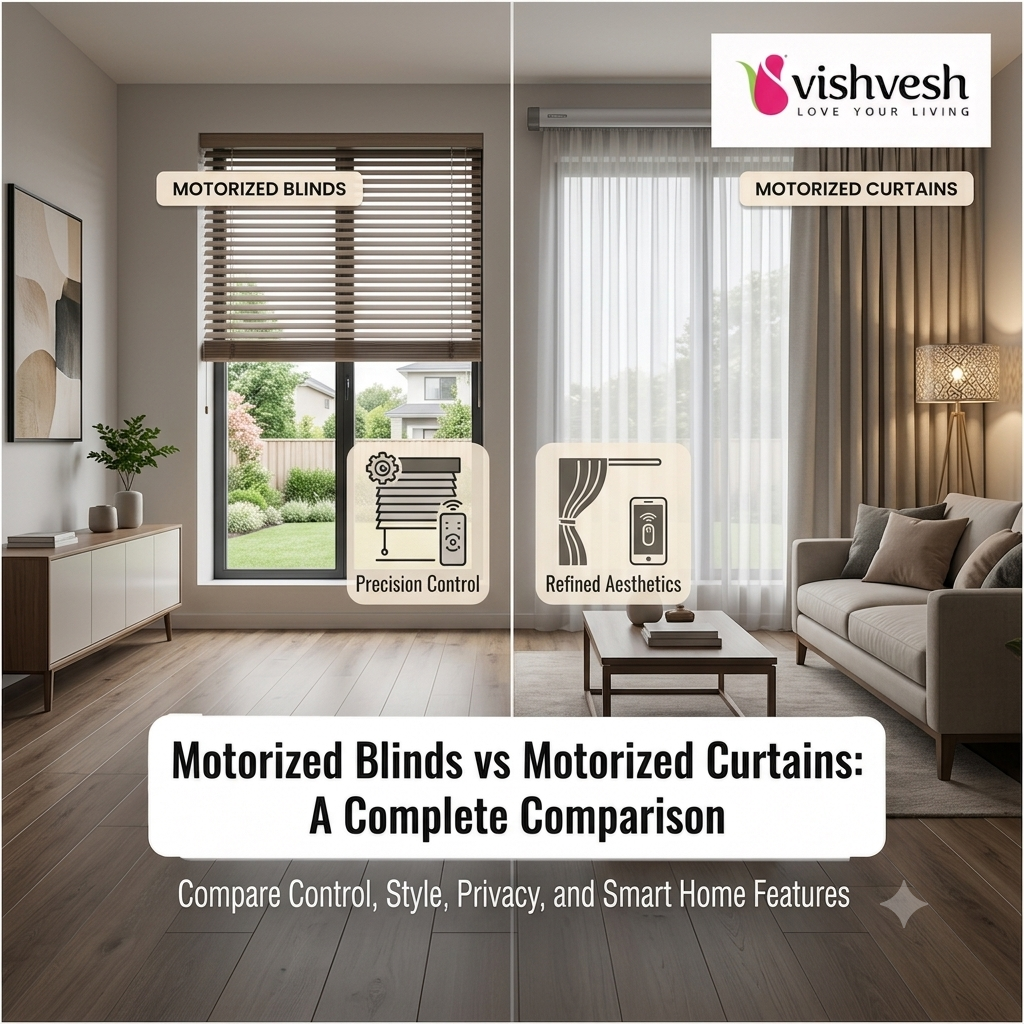
Motorised curtains allow users to control window coverings using a remote or smart automation, and this requires a motor-compatible track rather than a standard rod or manual track. The motor connects to this track and drives the curtain along it electronically, which means the track itself has to be built to a different specification than a simple decorative pole.
Motorised blinds similarly rely on their own compatible mounting hardware, distinct from manual blind fittings. Homeowners considering a switch from manual to motorised operation should check hardware compatibility before assuming an existing rod or track can simply be upgraded, since in most cases it cannot; the track itself needs to be replaced as part of the automation project. For a detailed side-by-side look at the two systems, compare motorised blinds and motorised curtains.
Power and Control Hardware
Beyond the track itself, a motorised system needs a power source, either battery powered or wired, and some form of control hardware: a remote, a smartphone app connected over Wi-Fi or a hub, or a voice assistant integration. Planning this cabling, power supply and any hub or bridge device needed for app or voice control is best discussed during the same consultation as the curtain selection itself, not treated as a separate electrical afterthought.
For a homeowner retrofitting an existing room, battery-powered systems generally avoid the disruption of running new wiring, while a full renovation or new-build project can plan wiring in from the start for a cleaner, more permanent installation.
Choosing Accessories During a Vishvesh Consultation
At Vishvesh’s Cathedral Road showroom, accessory selection is handled as part of the same consultation as curtain or blind selection, rather than as a separate decision made afterwards. This ensures the rod, track or motorised hardware chosen actually matches the fabric weight, window size and style of the curtains or blinds being installed, instead of being picked in isolation.
Because accessories are fitted alongside the curtains or blinds themselves, any adjustments needed, whether that is a track length change or a different finial style, can be resolved before installation day rather than discovered after the fact. For homeowners furnishing multiple rooms at once, coordinating accessory finishes, using the same hardware finish throughout a home, for example, is often discussed at this stage to keep the overall look consistent from room to room.
Bringing a sense of the room’s existing hardware finishes, door handles, light fixtures, cabinet pulls, to the consultation can help a consultant recommend a rod, track or finial finish that complements what is already in the space rather than clashing with it.
Homeowners furnishing an entire home at once often benefit from working through accessories room by room during the same overall consultation, so decisions about finish and hardware type stay consistent from the living room through to the bedrooms, rather than being made separately for each space. To see this consultation process in person, visit our Cathedral Road showroom.
Common Accessory Mistakes to Avoid
Choosing a track or rod based on appearance alone, without checking its weight rating against the chosen fabric, is a common mistake that can lead to sagging or uneven gliding over time, particularly with heavier lined or blackout curtains. A track rated for lightweight sheers simply was not built to carry the ongoing weight of a heavily lined fabric, and the difference becomes visible within months rather than years.
Buying accessories separately from the curtains or blinds themselves, rather than as part of one coordinated consultation, can also lead to mismatched finishes or hardware that does not suit the final fabric choice. It is a false economy in most cases, since the cost of correcting a mismatched or undersized track later generally exceeds the cost of getting it right the first time.
Underestimating how much a finial or hardware finish affects a room’s overall look is another frequent oversight. A beautifully chosen curtain fabric can still look unfinished if the visible hardware clashes with the room’s other metal or wood tones, which is why finish coordination deserves the same attention as fabric selection.
Assuming all motorised systems use the same type of track or the same control app is a further common misconception. Different automation brands and systems are not always interoperable, so confirming compatibility across a whole-home automation plan before ordering hardware room by room avoids a costly and frustrating mismatch later.
Accessories by Room Type
Living rooms and other frequently visible, high-use spaces generally justify investing more attention into accessory choice, since the hardware is on permanent display as part of the room’s overall design. A decorative rod with a well-chosen finial, or a track finish that matches nearby light fixtures, does real work in tying a living room together.
Bedrooms often favour a cleaner, more concealed approach, since the priority is usually full light control and a restful, uncluttered look rather than decorative hardware as a focal point. A concealed track paired with blackout-compatible fabric is a common bedroom combination for exactly this reason.
Kitchens and utility spaces, where curtains or blinds are less common but still used occasionally over a window above a sink or utility area, generally call for simpler, easy-to-clean hardware, since these spaces see more airborne moisture and grease than a living room or bedroom.
Home offices and study rooms often benefit from accessories that support fine light control, since screen glare management matters more here than pure decoration. A track that supports layered sheer-and-blackout curtains, or accessories compatible with a motorised blind for scheduled glare control, both suit this kind of room well.
Verandahs, balconies and semi-outdoor spaces need accessories built to handle more direct weather exposure than an interior room, which generally means prioritising corrosion-resistant metal finishes over more delicate decorative options that were designed for indoor use only.
Sustainability and Long-Term Value in Accessory Choice
Well-made curtain hardware, properly matched to the fabric it supports, tends to last for many years without needing replacement, which makes the upfront accessory decision a longer-term investment than it might first appear. A track or rod that is undersized for its fabric wears out faster and needs replacing sooner, effectively costing more over the life of the curtain even if it seemed like the cheaper option initially.
Choosing accessories that can accommodate a future style change, such as a track that could support a heavier fabric later, or hardware finished in a timeless rather than trend-led metal tone, can also reduce the need for a full hardware replacement if a homeowner updates their curtain fabric again in the future.
A Practical Accessory Checklist
Before finalising a curtain or blind order, it is worth confirming five things: the fabric weight and whether it needs a track rather than a rod, the heading style and how it affects hardware choice, whether motorisation is wanted now or planned for later, the finish that will coordinate with the room’s other hardware, and whether tiebacks or holdbacks are wanted for styling.
Working through this list during the initial consultation, rather than treating it as an afterthought once fabric is already chosen, is what separates a coordinated, well-finished installation from one that feels assembled piecemeal after the fact.
Homeowners who take this approach consistently report a smoother installation day and a final result that looks considered rather than improvised, since every hardware decision was made with the full picture in view from the start. Ready to browse hardware options? Explore our full accessories range.
Key takeaways
A rod suits lighter fabrics and a visible decorative look; a track suits heavier fabrics, a concealed finish, or any motorised system.
Tiebacks and holdbacks both gather curtains to one side, but a fabric tieback reads softer while a fixed holdback reads more architectural.
Motorised curtains and motorised blinds each need their own compatible track and mounting hardware; existing manual fittings generally cannot simply be automated.
Accessory selection at Vishvesh happens in the same consultation as curtain or blind selection, so hardware and fabric decisions stay coordinated from the start.
Frequently asked questions
What is the difference between a curtain rod and a track?
A rod is a decorative pole the curtain hangs from directly, while a track is a channel system, often concealed by a pelmet, used for heavier fabrics or motorised operation.
Do heavier curtains need a specific type of hardware?
Yes. Heavier fabrics such as blackout or lined curtains generally perform better on a track, which distributes weight evenly across multiple gliders, rather than a single decorative rod that concentrates the load at a few fixing points.
Can existing curtains be retrofitted with motorised hardware?
Motorising an existing curtain typically requires replacing the current rod or track with a motor-compatible track, since standard hardware generally cannot simply be upgraded with a motor attachment.
What is the difference between a tieback and a holdback?
A tieback is typically a fabric or cord loop used to gather a curtain, while a holdback is a fixed hook or bracket mounted to the wall for the same purpose, giving a more architectural look.
How are accessories matched to a room’s style?
Accessories are generally matched to a room’s other hardware finishes, such as door handles or light fixtures, and to the curtain fabric’s weight and formality, a decision best made during an in-person consultation.
Do motorised curtains and motorised blinds use the same hardware?
No. Motorised curtains require a motor-compatible track, while motorised blinds use their own compatible mounting hardware distinct from a curtain track.
What finial styles are typically available?
Finials range from simple modern caps to more ornate traditional finishes; the right style is generally chosen to match a room’s other visible hardware and overall design direction.
Can accessories be upgraded later without replacing the curtains?
In many cases yes, particularly for tiebacks, holdbacks and finials, though upgrading to a motorised system generally requires replacing the track itself rather than adding to an existing one.
How do I know if my current track can support heavier curtains?
This is best checked with a consultant rather than assumed, since tracks are generally rated for a specific fabric weight range and an undersized track can sag or fail prematurely under a heavier load than it was designed for.
Do accessories need to match across every room in a home?
Not necessarily; matching hardware throughout a home creates visual continuity, but many homeowners deliberately vary finishes room by room to suit each space’s distinct style, provided the choice is intentional rather than accidental.