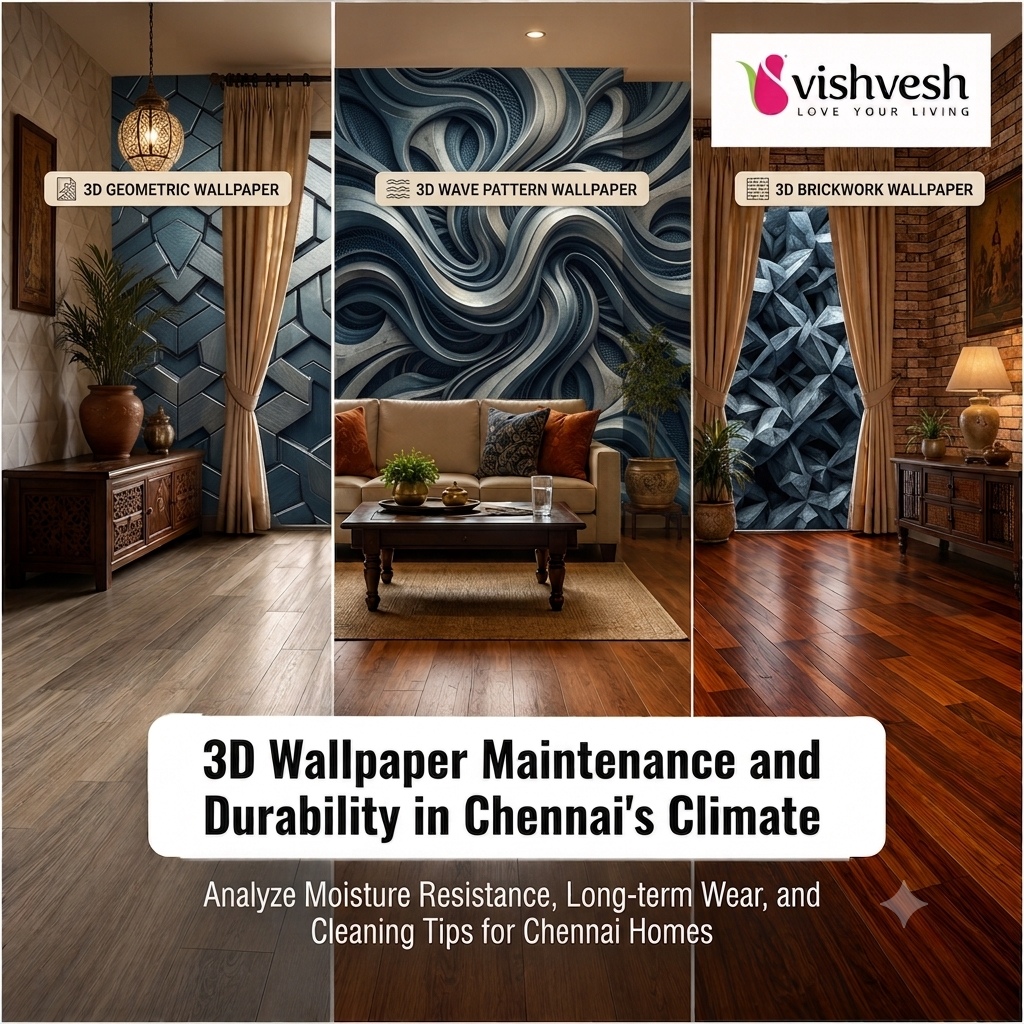
Is 3D wallpaper durable in Chennai’s humid climate?
3D wallpaper made from non-woven or vinyl material generally handles Chennai’s humidity well, provided the wall is properly prepared before installation. Non-woven and vinyl types resist moisture absorption better than paper-based or natural-fibre wallpaper, and with correct wall preparation and basic ongoing care, 3D wallpaper can hold up well through Chennai’s seasonal humidity swings.
3D wallpaper is one of the most requested feature-wall treatments among Chennai homeowners right now, but it is also one of the most common questions a showroom hears: will it actually hold up in this climate, or will it peel and bubble within a year? This guide answers that question directly, working through which wallpaper types handle humidity best, what causes wallpaper to fail in a humid climate, and how to maintain 3D wallpaper once it is installed.
Does Humidity Affect 3D Wallpaper?
Excess moisture in the air or on the wall surface can weaken wallpaper adhesive over time, which is the core mechanism behind most humidity-related wallpaper failures. This is true of wallpaper generally, not something unique to 3D or textured styles specifically. The raised or dimensional surface of 3D wallpaper does not make it inherently more vulnerable to humidity than a flat printed wallpaper of the same base material.
What actually determines humidity resistance is the wallpaper’s construction, its base material, backing and adhesive type, combined with how well the wall was prepared before installation. A well-prepared wall with a suitable material generally performs consistently well through Chennai’s humid months, including the wettest weeks of the monsoon season.
Seasonal humidity swings are a useful stress test in practice. A wallpaper installation that shows no visible lifting at the seams during the peak of monsoon season is a reasonably strong indicator that both the material choice and the installation preparation were done correctly.
Wallpaper Types and Humidity Resistance
Non-Woven
Non-woven wallpaper is breathable and dimensionally stable, meaning it resists shrinking or stretching as humidity changes, which makes it one of the more forgiving wallpaper types for Chennai’s climate. It is also generally easier to remove or replace than traditional paper-backed wallpaper, since it tends to come away from the wall in full strips rather than requiring extensive soaking or scraping.
Vinyl
Vinyl wallpaper has a durable, washable surface layer, which makes it a practical choice for rooms that see regular contact, cleaning or moderate humidity, such as living rooms, hallways and dining areas. The washable surface is a particular advantage for 3D vinyl wallpaper, since the raised texture can otherwise be harder to dust than a flat surface, and an occasional gentle wipe keeps the detail visible.
Natural Fibre
Natural fibre and paper-based wallpapers generally handle Chennai’s humidity less well than vinyl or non-woven options, since these materials absorb moisture more readily. This does not mean natural fibre wallpaper cannot be used in Chennai, but it does mean it needs a well-ventilated or air-conditioned room, careful wall preparation, and realistic expectations about longevity compared to a more moisture-resistant material.
How to Clean and Maintain 3D Wallpaper
Once installed, wallpaper generally needs light dusting or gentle wiping to stay clean, with vinyl types tolerating more direct cleaning than delicate textured or natural-fibre options. For 3D wallpaper specifically, a soft brush attachment on a vacuum, used on a low setting, is often the easiest way to clear dust from raised texture without disturbing the surface.
Direct sunlight exposure over long periods can fade some wallpaper colours and patterns faster than others, which is worth considering for feature walls that receive strong afternoon light through an uncovered window. Pairing a sun-exposed feature wall with a sheer curtain on the nearby window can help protect the wallpaper’s colour over time without blocking the room’s natural light entirely.
Consider a living room feature wall installed using vinyl 3D wallpaper, positioned away from direct sun and cleaned with a monthly light dusting. Under normal conditions, this kind of setup is generally the lowest-maintenance, most durable 3D wallpaper scenario a Chennai home can have, since the material resists humidity well and the light exposure is managed.
Signs of Wear and When to Reapply
Early signs of humidity-related wear typically include slight lifting at the seams or edges, a change in surface texture near a window or exterior wall, or visible discolouration in one section of the wallpaper before the rest. Catching these signs early, rather than waiting for a full section to peel, generally makes any necessary repair smaller and less disruptive.
How long quality wallpaper lasts varies by type, wall preparation and room conditions; unspecified pending confirmation from the product team as an exact figure, though vinyl and non-woven types generally outlast paper-based wallpaper in humid conditions based on their material properties. If a section does begin to show wear, addressing the underlying wall moisture issue before reapplying new wallpaper is important, or the same problem is likely to recur.
Getting Wall Preparation Right the First Time
Wall preparation is the single factor that most determines whether 3D wallpaper succeeds or struggles in Chennai’s climate, more than the specific pattern, texture or brand chosen. A wall showing any sign of existing dampness should be fully addressed and dried before wallpaper is applied, since installing over a damp surface all but guarantees adhesive problems later regardless of how moisture-resistant the wallpaper material is.
Rooms with air conditioning or consistent ventilation give wallpaper the best long-term outcome, since stable indoor humidity reduces the seasonal expansion and contraction that puts the most stress on adhesive over time. For rooms without air conditioning, a well-ventilated space with good airflow is the next best option.
Working with an installer who properly checks and treats the wall surface before applying 3D wallpaper, rather than papering directly over an untested wall, is generally the single most reliable predictor of how well an installation will hold up through Chennai’s full range of seasonal humidity.
Popular 3D Wallpaper Styles for Chennai Homes
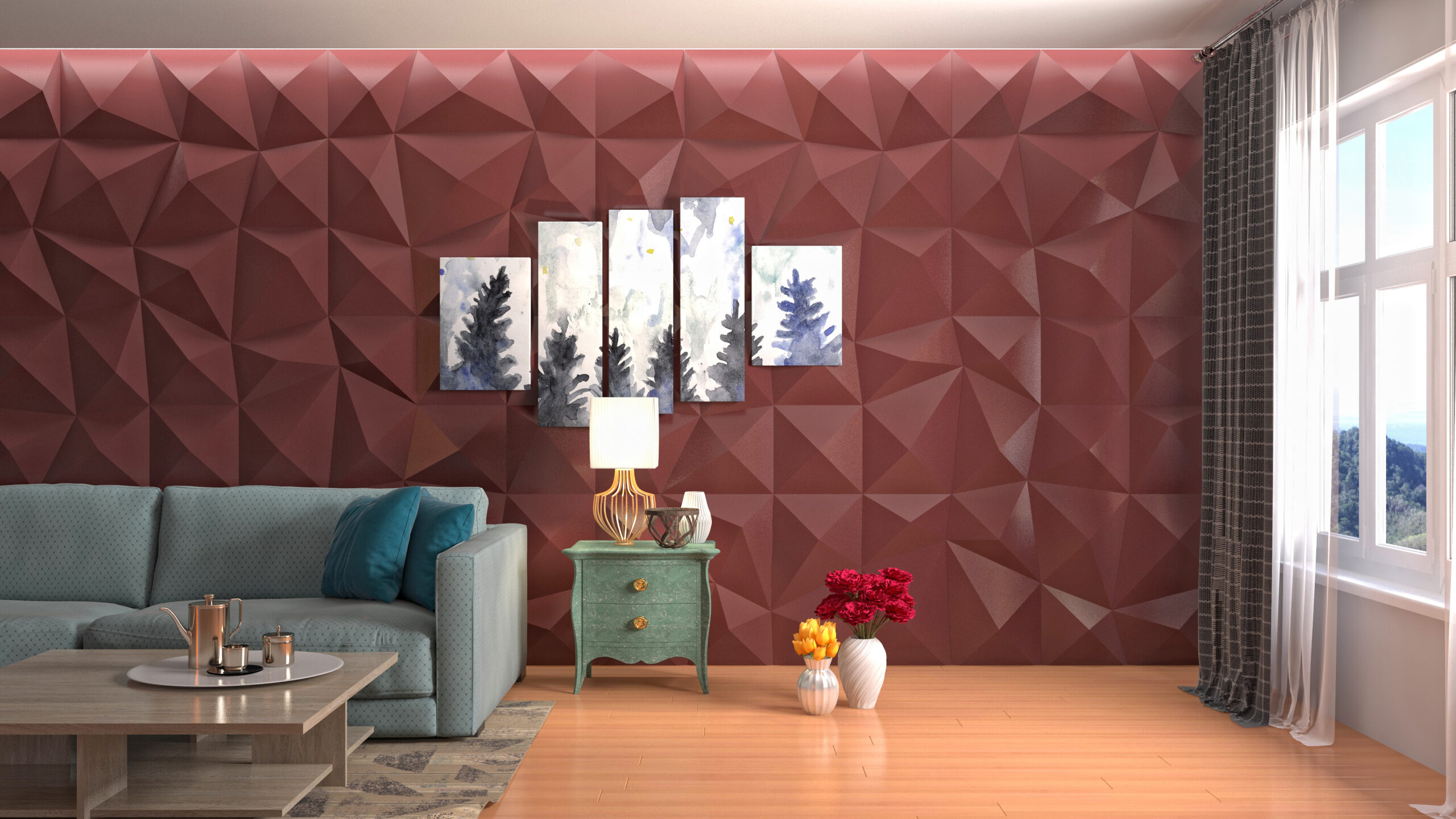
3D wood-effect and geometric-relief patterns are among the more requested 3D wallpaper styles for Chennai living rooms, often used to create a single feature wall behind a sofa or television unit rather than covering an entire room.
Nature-inspired textures, botanical prints and grasscloth-look weaves have also grown in popularity, bringing organic warmth into a space, and are frequently paired with simpler furnishings elsewhere in the room so the wallpaper itself remains the visual focus rather than competing with other patterned elements. For more design inspiration, see how modern wallpaper can refresh your home.
Choosing a style based on the room’s lighting is worth considering alongside the pattern itself, since raised 3D texture catches light and shadow differently depending on whether a room receives strong direct sunlight or softer, indirect light through the day.
The 3D Wallpaper Installation Process
Installation typically begins with an assessment of the wall surface, checking for any existing dampness, unevenness or previous wallpaper residue that needs to be addressed before the new material can be applied. Skipping this assessment is one of the more common reasons an otherwise good wallpaper choice underperforms.
Surface preparation follows, which may include cleaning, smoothing, or applying a primer suited to the wall condition and the wallpaper type being installed. This step takes time but is not one worth rushing, since it directly determines how well the adhesive bonds and how the finished wallpaper looks once applied.
For 3D and textured wallpaper specifically, careful attention to seam alignment matters more than with a flat pattern, since a raised texture makes any misalignment more visually obvious than it would be on a smooth surface. An experienced installer will dry-fit sections before committing adhesive, checking pattern alignment against the room’s actual dimensions.
Once applied, 3D wallpaper generally needs a short curing period before any cleaning or heavy contact, allowing the adhesive to fully set. Avoiding direct sunlight or strong airflow across a freshly installed wall during this period also helps the adhesive cure evenly.
Comparing 3D Wallpaper to Other Feature Wall Options
3D wallpaper is one of several ways to create a feature wall, alongside options like paint in a contrasting colour, wood panelling, or a textured plaster finish. Compared to paint, 3D wallpaper offers a level of tactile depth and pattern detail that a flat colour cannot replicate, though it generally represents a longer-term design commitment than a colour that can be repainted relatively easily.
Compared to wood panelling, 3D wallpaper is typically a lighter, less structurally involved installation, without the additional wall preparation or weight-bearing considerations that panelling can require, making it a more accessible option for a rented home or a homeowner not ready for a more permanent architectural change.
For homeowners weighing these options, the deciding factor often comes down to how permanent a change they want and how much tactile texture they want the wall to carry, both questions worth discussing with a design consultant before committing to any single feature wall treatment.
Choosing the Right Room for 3D Wallpaper
Living rooms and dining rooms, generally the most climate-controlled and consistently ventilated spaces in a Chennai home, tend to give 3D wallpaper the best long-term performance, since these rooms rarely experience the humidity spikes that bathrooms or poorly ventilated utility spaces can see.
Bedrooms are also a strong candidate for a 3D wallpaper feature wall, particularly behind a headboard, provided the room has reasonable ventilation or air conditioning; the relatively lower daily traffic in a bedroom compared to a living room also means less handling wear on the textured surface over time.
Rooms directly exposed to the exterior, such as a wall backing onto an open verandah or a wall with a history of dampness during past monsoon seasons, deserve extra scrutiny before committing to 3D wallpaper; in some cases, addressing the underlying moisture source or choosing a different wall treatment altogether is the more sensible path.
A north or east-facing room that receives less intense direct sunlight through the day is generally kinder to wallpaper colour retention than a west-facing room with strong afternoon sun, which is a useful factor to weigh alongside humidity when deciding where to install a feature wall.
Working with Vishvesh on a Wallpaper Project
Vishvesh’s approach to wallpaper projects begins with an assessment of the specific room, its ventilation, sun exposure and existing wall condition, before any pattern or texture discussion, since the practical fit of the space should shape the aesthetic decision rather than the other way around. Ready to see the options in person? visit our Cathedral Road showroom.
For homeowners who are uncertain whether 3D wallpaper suits their specific room, bringing photographs of the wall and a sense of the room’s typical humidity and airflow to a consultation allows a more informed recommendation than choosing a pattern from a catalogue in isolation. To browse the full collection, explore our wallpaper range.
This assessment-first approach is also why Vishvesh’s showroom team can speak confidently to how a specific wallpaper choice is likely to perform in a specific Chennai home, rather than offering only generic durability claims that may not hold true for every room, every wall condition and every installation across the city.
For homeowners still deciding whether 3D wallpaper is the right choice for their space, this room-by-room, assessment-led approach generally gives a more reliable answer than a general online search, since Chennai’s own climate variation from one part of the city to another can genuinely affect how any given wall performs over time.
Key takeaways
3D wallpaper is not inherently more vulnerable to humidity than flat wallpaper; the base material and wall preparation matter far more than the texture itself.
Vinyl and non-woven wallpaper generally handle Chennai’s humidity better than paper-based or natural-fibre alternatives.
A soft brush vacuum attachment is an effective way to clean dust from 3D wallpaper’s raised texture without disturbing the surface.
Early signs of wear, such as lifting at the seams, are worth addressing quickly, since fixing the underlying moisture issue prevents the problem from recurring after a reapplication.
Frequently asked questions
Is 3D wallpaper suitable for a humid climate like Chennai’s?
Non-woven and vinyl wallpaper types generally handle humidity better than natural-fibre wallpapers, making them a more suitable choice for Chennai’s climate, provided the wall is properly prepared before installation.
How do I clean 3D wallpaper without damaging the texture?
A soft brush vacuum attachment used on a low setting is generally the easiest way to clear dust from 3D wallpaper’s raised texture; vinyl types can also tolerate a gentle wipe.
How long does 3D wallpaper typically last?
Lifespan varies by material, wall preparation and room conditions; unspecified pending confirmation from the product team, though vinyl and non-woven types generally outlast paper-based wallpaper in humid conditions.
What causes wallpaper to peel in humid conditions?
Excess moisture in the air or on the wall surface can weaken wallpaper adhesive over time, which is why proper wall preparation matters as much as the wallpaper type itself.
Does 3D texture make wallpaper more prone to humidity damage?
No, the raised texture of 3D wallpaper does not make it inherently more vulnerable to humidity; the base material and installation quality are the main factors that determine durability.
Should I avoid wallpaper near a bathroom or kitchen?
Kitchens and bathrooms are generally less suited to wallpaper unless a specifically moisture-resistant vinyl option is used, given the higher humidity and cleaning demands of these rooms compared to a living room or bedroom.
Does air conditioning help wallpaper last longer?
Yes, rooms with air conditioning or consistent ventilation give wallpaper the best long-term outcome, since stable indoor humidity reduces the seasonal expansion and contraction that stresses adhesive over time.
Can 3D wallpaper be installed over a previously damp wall?
No, any existing dampness should be fully addressed and dried before wallpaper is applied, since installing over a damp surface generally leads to adhesive problems regardless of how moisture-resistant the wallpaper material is.
How is 3D wallpaper different to install compared to flat wallpaper?
Seam alignment matters more with 3D and textured wallpaper, since a raised texture makes any misalignment more visually obvious than on a flat pattern, so careful dry-fitting before adhesive is applied is especially important.
How does 3D wallpaper compare to wood panelling for a feature wall?
3D wallpaper is typically a lighter, less structurally involved installation than wood panelling, without the additional wall preparation or weight-bearing considerations panelling can require, making it a more accessible option for many homes.
Which rooms perform best for 3D wallpaper in Chennai?
Living rooms, dining rooms and bedrooms with reasonable ventilation generally give 3D wallpaper the best long-term performance, since these spaces avoid the humidity spikes more common in bathrooms or poorly ventilated utility areas.
Does the direction a room faces affect wallpaper colour retention?
Yes, a north or east-facing room with less intense direct sunlight is generally kinder to wallpaper colour retention over time than a west-facing room that receives strong, direct afternoon sun through an uncovered window.