Quick Answer
Choose living room curtains by balancing light control, privacy and decor. Layer sheer and blackout fabrics for flexibility, match colours to the room palette, and size curtains to fall just above or touch the floor. The result should feel tailored, soften daylight, and frame the room with a premium finish.
The living room is where most homes make a first impression. Curtains shape its light, comfort and style. This guide explains how to choose curtains that look intentional, suit your space, and handle Chennai’s bright, warm days.
Start With the Job the Curtains Must Do
Before fabric or colour, decide what the curtains need to achieve. Living room curtains balance light control, privacy and decorative style.
A street-facing room needs more privacy. A bright west-facing room needs glare control in the afternoon. A north-facing room may only need soft styling. Naming the job first makes every other choice easier.
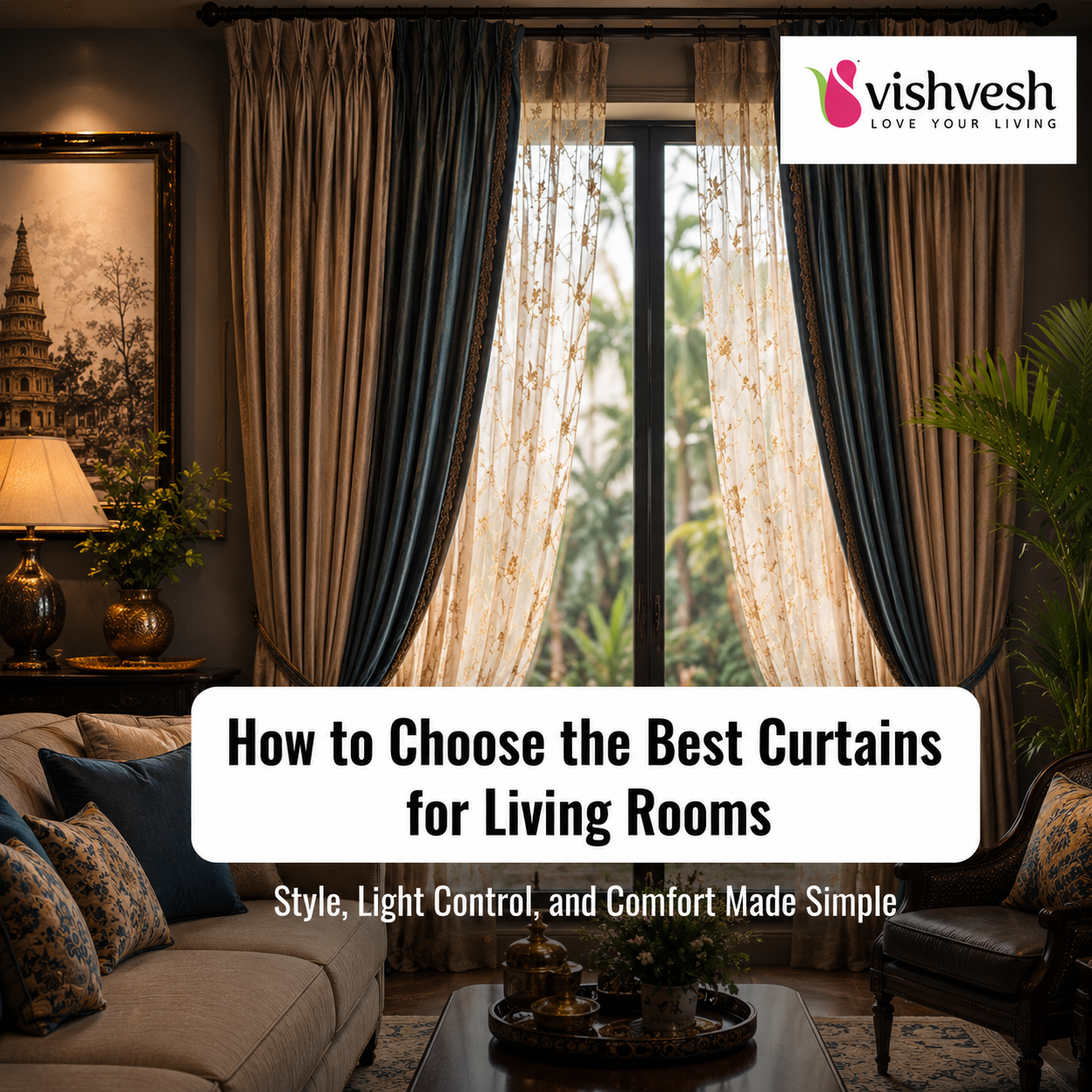
For homes that want flexibility, layering is the answer. Layering sheer and blackout curtains allows flexible daytime and evening light control. One layer softens daylight, the other blocks it when needed.
Choosing the Right Fabric
Fabric decides how curtains drape, filter light and last. It is the most important choice for a premium look.
Curtain fabric weight affects how it drapes and filters light. Heavier fabrics fall in clean folds and block more light. Lighter fabrics float and let daylight through.
For Chennai living rooms, breathability matters. Natural fabrics breathe well and suit warm Chennai living rooms. Cotton and linen blends allow airflow while looking refined. Add a lining where you need more light control or insulation.

Sheer, Dim-Out or Blackout
The level of light control defines the curtain type. Most living rooms use one or a combination of three.
- Sheer: Soft, translucent fabric that diffuses light and keeps daytime privacy.
- Dim-out: Reduces light without full darkness, good for everyday living rooms.
- Blackout: Blocks light fully, useful for media corners and bright windows.
Blackout curtains reduce glare on screens and improve afternoon comfort. If your living room doubles as a media space, a blackout layer is worth it.
Getting Curtain Length Right
Length is where many living rooms go wrong. The fix is simple once you know the rule.
Living room curtains usually look best when they reach the floor or just touch it. Floor length curtains make ceilings appear higher and rooms feel larger. Short curtains can leave a room looking unfinished.
For a crisp look, let curtains hover a centimetre above the floor. For a softer, draped look, let them just touch or pool slightly. Avoid lengths that stop mid-wall.
Where to Hang the Rod
Rod placement quietly changes how big a window looks. It is an easy win for a premium effect.
Mounting curtain rods higher and wider increases the sense of window size. Hang the rod close to the ceiling, not just above the frame. Extend it beyond the window on each side.
This lets curtains clear the glass when open, so more daylight enters. It also makes modest windows look grander, a useful trick for compact living rooms.
Choosing Colour and Pattern
Colour ties the curtains to the rest of the room. The safest approach is to anchor to what is already there.
Light coloured curtains make small living rooms feel more spacious. Neutral tones such as beige, grey and ivory adapt to changing decor. They also resist looking dated.
Match curtains to the largest decor element, such as the sofa or rug. Bold colours and a new curtain design work well as a deliberate accent. A patterned panel can become the room’s focal point.
Curtains for Balconies and Door Windows
Living rooms often open to balconies and large door windows. These need a slightly different approach.
Balcony curtains should handle sunlight, breeze and frequent use. Lighter, washable fabrics work well here. They move gently and resist fading from direct sun.
For door windows, choose curtains that clear the door swing and slide easily. Door window curtains should be easy to draw and tie back. A wider track helps the panels stack neatly when open.
Layering for a Premium Finish
Layering is the single best upgrade for a living room window. It adds depth and control.
A double track holds a sheer layer and a heavier layer together. By day, the sheer softens light and keeps privacy. By evening, the heavier layer adds warmth and blocks light.
The latest window curtain design trends lean on this layered look. It feels considered, hotel-like and suited to premium homes.
Plan Your Living Room Curtains With Vishvesh
The easiest way to choose well is to see fabrics in person. Showroom guidance prevents costly errors.
At Vishvesh, you can compare fabrics in daylight, test linings and view full drops. Our team advises on length, heading and rod placement. We measure on site and stitch curtains to fit.
Explore our curtains collection to see styles and fabrics. To plan in person, visit our Cathedral Road showroom in Chennai.
Curtain Heading Styles Explained
The heading is the top of the curtain where it meets the rod. It shapes how the fabric gathers and hangs.
- Eyelet: Metal rings give clean, even folds and a modern look.
- Pinch pleat: Tailored pleats create a structured, formal finish.
- Pencil pleat: Tight gathers suit both traditional and casual rooms.
- Tab top: Fabric loops give a relaxed, informal style.
Pinch pleat headings suit premium living rooms with tall windows. Eyelet headings work well for everyday rooms and easy operation. A showroom can show how each heading drapes in your chosen fabric.
Common Curtain Mistakes to Avoid
A few simple errors spoil otherwise good curtains. Knowing them helps you avoid them.
The most common mistake is hanging curtains too short or too narrow. This makes windows look small and the room unfinished. Another is choosing fabric by colour alone, ignoring weight and drape.
Buyers also forget linings, which improve light control and longevity. Finally, mounting the rod just above the frame wastes height. Hang it higher and wider for a more generous look.
Caring for Living Room Curtains
Living room curtains face daily light and dust. Simple care keeps them looking new.
Vacuum curtains gently to lift dust before it settles into the weave. Rotate or draw curtains evenly so sun exposure is balanced. Follow the fabric’s cleaning guidance, since some need dry cleaning.
Lined curtains resist fading and hold their shape longer. A little routine care protects the investment in premium fabric.
Quick Facts
- Living room curtains balance light control, privacy and decorative style.
- Layering sheer and blackout curtains allows flexible daytime and evening light control.
- Floor length curtains make ceilings appear higher and rooms feel larger.
- Light coloured curtains make small living rooms feel more spacious.
- Blackout curtains reduce glare on screens and improve afternoon comfort.
- Curtain fabric weight affects how it drapes and filters light.
- Mounting curtain rods higher and wider increases the sense of window size.
- Natural fabrics breathe well and suit warm Chennai living rooms.
Frequently Asked Questions
What colour curtains suit a living room?
Neutral tones such as beige, grey and ivory suit most living rooms and adapt to changing decor. Bold colours work as accents. Match curtains to the largest decor element, like the sofa or rug, for a coordinated look.
Should living room curtains be sheer or blackout?
Both serve different needs. Sheer curtains soften daylight and keep privacy, while blackout curtains block light and glare. Layering both on a double rod gives full control over light through the day.
How high should I hang living room curtains?
Mount the rod close to the ceiling and extend it beyond the window on each side. This makes windows appear taller and wider. It also lets curtains clear the glass when fully opened.
What is the best curtain fabric for Chennai living rooms?
Breathable natural blends such as cotton and linen suit Chennai’s warm, humid climate. For light control, add a blackout lining. These fabrics drape well, allow airflow and resist fading from strong sunlight.
What curtain length looks best in a living room?
Floor length curtains usually look best, reaching the floor or just touching it. They make ceilings feel higher and rooms larger. Avoid short curtains that stop mid-wall, as they can look unfinished.
How do I choose curtains for a balcony door?
Choose lighter, washable fabrics that handle sun and breeze. Make sure the curtains clear the door swing and draw easily. A wider track helps panels stack neatly when the door is in use.
How many curtain panels do I need per window?
Most windows look best with two panels that meet in the centre. Wider windows may need more fabric width for full, even folds. A showroom calculates panel width based on your window and heading style.
Do living room curtains need a lining?
A lining is recommended for most living rooms. It improves drape, blocks more light and protects the face fabric from sun. Lined curtains also hang better and last longer than unlined panels.
Want help choosing the best curtains for your living room? Visit the Vishvesh showroom on Cathedral Road in Chennai, or book a fabric consultation.