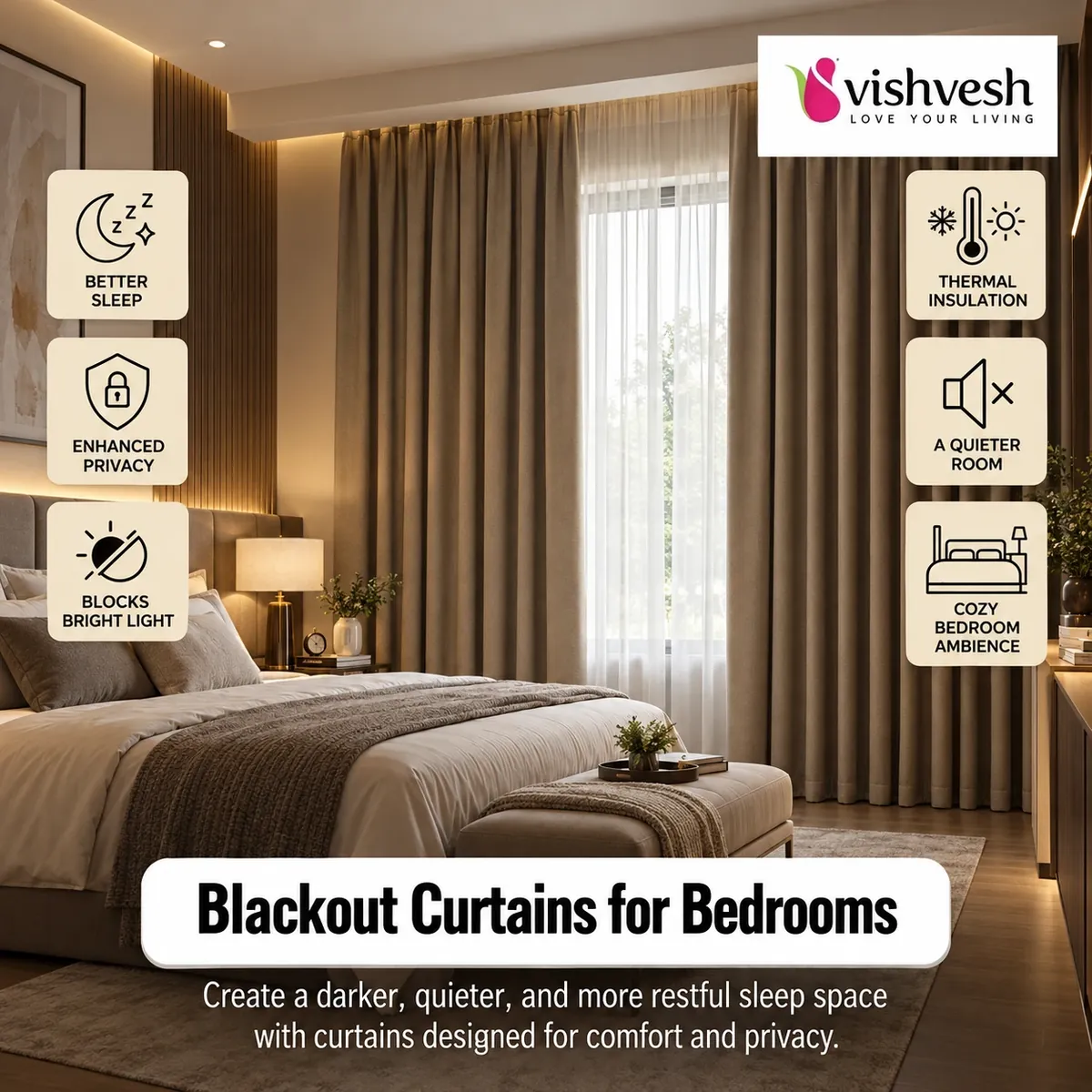
A dark bedroom helps you sleep in, nap in the afternoon or rest after a night shift. Many people buy “blackout” curtains and still wake up to light at the edges. The fabric is only part of the answer.
This guide explains what blackout curtains are, how they block light and how to fit them so the room actually goes dark.
Quick answer: Blackout curtains are curtains made with a light-blocking fabric or a blackout lining that stops most external light from passing through. For a truly dark bedroom, the curtain must also fit well: mounted close to the ceiling, wider than the window, long enough to reach the floor and overlapping in the centre.
What are blackout curtains?
Blackout curtains are window coverings designed to block light from entering a room. They use either a dense, coated or multi-layer fabric, or a regular face fabric backed by a separate blackout lining. They are most common in bedrooms, nurseries and home theatres.
Many blackout curtains also reduce heat from direct sun and help soften outside noise, because they are heavier than unlined curtains.
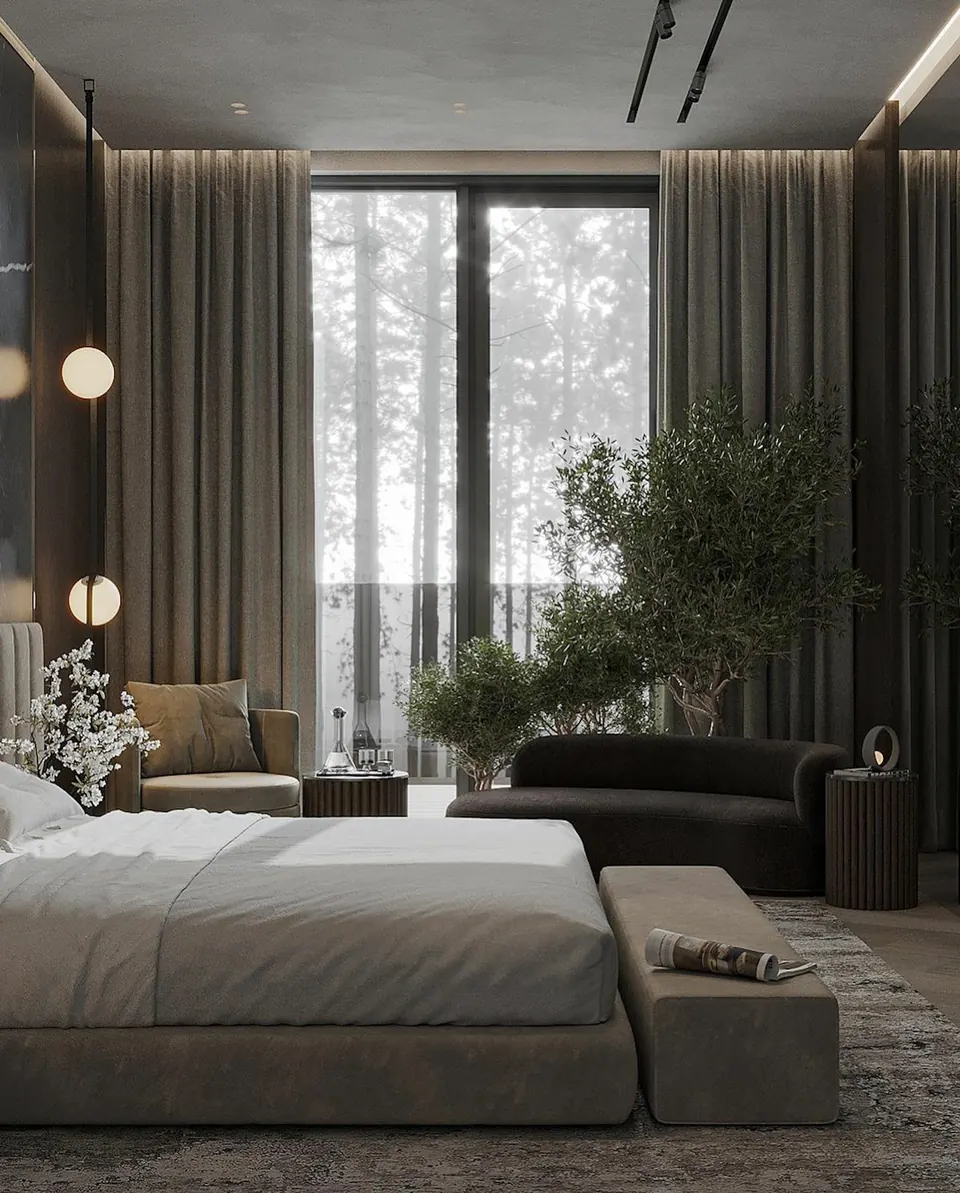
Blackout vs room darkening curtains
The two terms are often used interchangeably, but they describe different levels of light control.
| Type | Light blocked | Best for |
|---|---|---|
| Blackout | Blocks most light through the fabric | Bedrooms, nurseries, home theatres, shift workers |
| Room darkening | Reduces light significantly but lets some through | Bedrooms where some morning light is welcome |
| Lined (standard lining) | Softens light and protects fabric | Living and dining rooms |
| Unlined | Filters light | Daytime spaces |
Ask to hold any fabric up to a light source in the showroom. This shows how much light it really blocks.
How blackout curtains block light
There are two main ways to make a curtain blackout.
Blackout fabric
Some fabrics are made to block light on their own. They may use a dense multi-layer weave or a coating on the back. This keeps the curtain to a single layer, which suits simpler, lighter-looking curtains.
Blackout lining
A blackout lining is a separate light-blocking layer attached behind your chosen face fabric. This lets you use almost any fabric, including linens, velvets and prints, while still darkening the room.
| Option | Advantages | Considerations |
|---|---|---|
| Blackout fabric | Single layer; simpler construction | Fabric choice is narrower |
| Sewn-in blackout lining | Any face fabric; fuller drape; protects fabric from sun | Heavier curtain; cleaning as one piece |
| Detachable blackout lining | Lining can be removed for cleaning or seasons | Needs compatible heading and fixing |
Why blackout curtains still let light in
When a bedroom is not fully dark, light usually enters around the curtain, not through it. These are the common gaps:
- Top gap: light shines over a rod mounted just above the window.
- Side gaps: curtains that end at the frame let light spill round the edges.
- Centre gap: two panels that meet without overlapping leave a line of light.
- Bottom gap: curtains that stop at the sill or well above the floor let light under.
How to fit blackout curtains for a dark bedroom
- Mount high: use a ceiling track or a pelmet to stop light at the top.
- Go wide: extend the track past the window on both sides so fabric covers the wall edges.
- Overlap in the centre: ask for overlapping carriers or a centre overlap so the panels meet without a gap.
- Choose full length: let the curtain reach the floor.
- Add returns: wrap the curtain edges back to the wall to close side gaps.
These fitting details often make more difference than the fabric itself. Discuss them at measurement, not after installation.
Test blackout fabrics against light at our Cathedral Road showroom.
Blackout curtains for Chennai bedrooms
Chennai bedrooms often face strong morning and afternoon sun. Blackout curtains help keep these rooms darker and can reduce heat entering through the glass, which supports a more comfortable air-conditioned room.
Humidity matters too. Air the room regularly, avoid closing curtains over damp windows for long periods and follow the fabric’s care instructions. For bedding suited to the climate, see our guide on mattresses and linens for Chennai’s heat.
Choosing colour and fabric
With a blackout lining, the face fabric can be any colour. The lining blocks the light, not the shade of the fabric.
- Light colours keep a bedroom fresh by day while still darkening it at night.
- Deep colours create a cocooning, hotel-like feel.
- Textured fabrics add depth and hide creases from frequent use.
For a layered look, pair blackout curtains with a daytime sheer on a double track. See our sheer curtains for the front layer.
Who benefits most from blackout curtains?
- Light sleepers and early sunrises: rooms facing east.
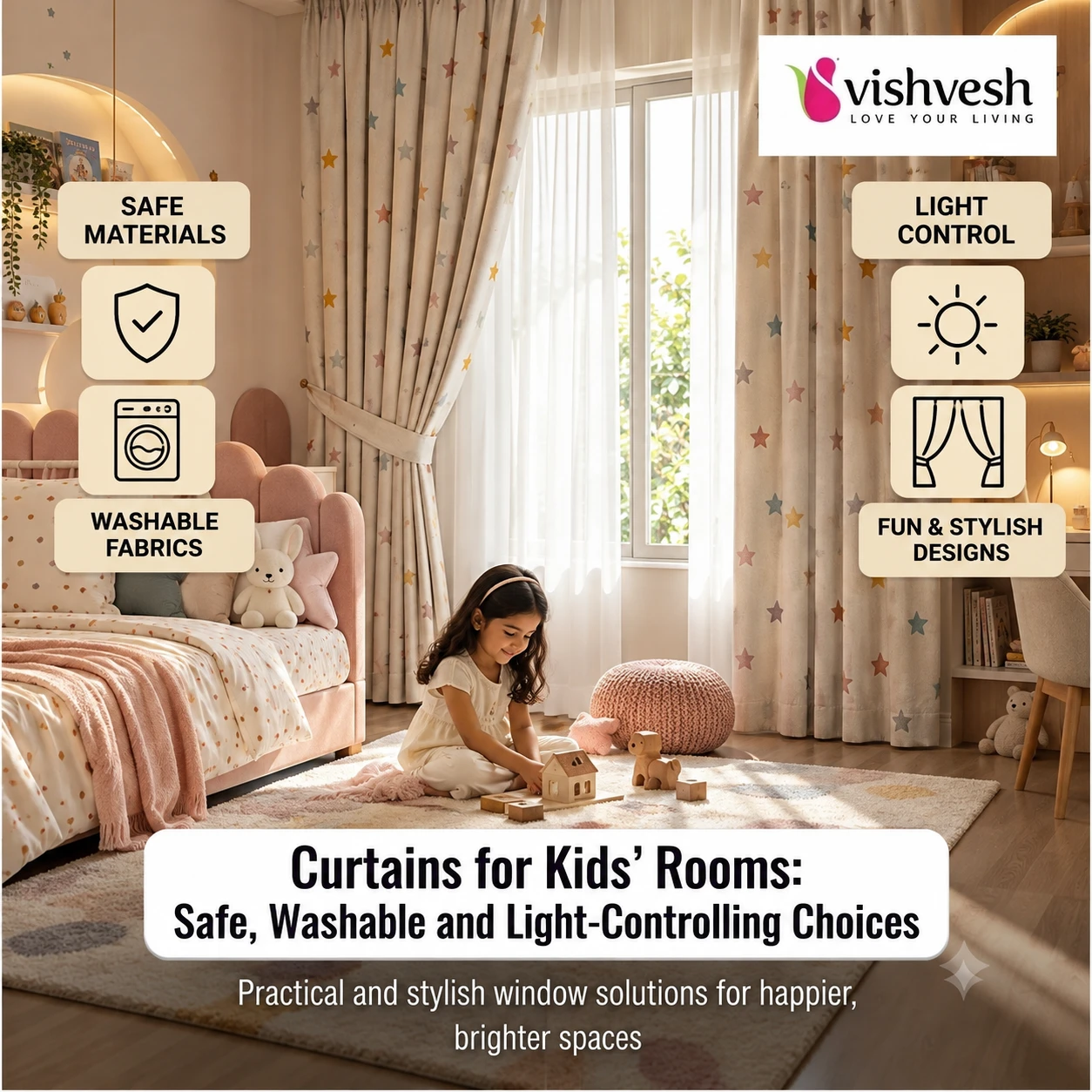
- Children: daytime naps and earlier bedtimes. See our guide to curtains for kids’ rooms.
- Shift workers: daytime sleep.
- Home theatres: screen viewing without reflections.
- NRI and travel-heavy households: rest after long flights and time-zone changes.
Blackout curtains vs blackout blinds
Blackout blinds sit closer to the glass and suit compact windows. Blackout curtains cover a wider area and add softness and some sound absorption. Many bedrooms use both: a blackout roller blind against the glass and curtains in front. Compare blind options in our Roman vs roller blinds guide.
Common mistakes
- Buying fabric, ignoring fit: most light leaks come from gaps, not fabric.
- Short curtains: sill-length curtains leave a bright line under the window.
- No centre overlap: panels that only meet leave a gap.
- Rod just above the frame: lets light over the top.
- Washing lined curtains wrongly: follow care instructions for lined and coated fabrics.
Planning checklist
- Decide how dark the room needs to be: blackout or room darkening.
- Choose blackout fabric or a face fabric with blackout lining.
- Plan a ceiling track or pelmet.
- Extend the track past both sides of the window.
- Ask for a centre overlap.
- Choose floor length.
- Consider a sheer on a second track for daytime.
Find blackout curtains at Vishvesh
The best way to choose blackout curtains is to test fabrics against light and discuss fit with an expert. Visit the Vishvesh showroom on Cathedral Road, Chennai, to compare fabrics and linings. Explore our curtains and book a consultation to plan a darker bedroom.
Test blackout fabrics against light at our Cathedral Road showroom, and plan a fit that closes every gap.
Questions before you visit? Contact us.
Address: 22A, Prince Arcade, Cathedral Road, next to Stella Maris College, Chennai 600086
Phone: +91 99622 99699 | +91 98844 44550
Showroom hours: Monday to Saturday, 10:30 am to 8:30 pm. Closed on Sunday.
Frequently Asked Questions
What are blackout curtains?
Blackout curtains are curtains designed to block external light from entering a room. They use a dense or coated light-blocking fabric, or a regular fabric backed by a blackout lining. They are common in bedrooms, nurseries and home theatres.
Why do my blackout curtains still let light in?
Light usually enters around the curtain rather than through it. Common gaps are over the top, at the sides, between the two panels and under the hem. A ceiling track, wider track, centre overlap and floor-length curtains close most of these gaps.
What is the difference between blackout and room darkening curtains?
Blackout curtains block most light passing through the fabric. Room darkening curtains reduce light significantly but let some through. Choose blackout for bedrooms that must be very dark, and room darkening where a little morning light is welcome.
Is blackout lining as good as blackout fabric?
Both can block light effectively when made well. Blackout lining lets you use almost any face fabric and adds body to the drape. Blackout fabric keeps the curtain to one layer. The fit of the curtain matters as much as either choice.
Do blackout curtains help keep a room cool?
Blackout curtains can reduce heat from direct sun entering through windows, especially when closed during the hottest hours. Results depend on the fabric, lining, window orientation and how well the curtain covers the glass.
Can light-coloured curtains be blackout?
Yes. When a blackout lining is used, the lining blocks the light, so the face fabric can be any colour. This lets you keep a bright bedroom look by day while still darkening the room at night.
Should I use blackout curtains or blackout blinds?
Blackout blinds sit close to the glass and suit compact windows. Blackout curtains cover more area and add softness. Many bedrooms combine a blackout blind against the glass with curtains in front for the darkest result.