A good rug anchors a room. It defines seating areas, softens hard floors and adds colour and texture. In Chennai, it also has to cope with heat, humidity and a heavy monsoon.
The right material and the right care make the difference between a rug that lasts and one that smells damp after its first rainy season. This guide explains how to choose.
Quick answer: For Chennai homes, choose rug materials that breathe and dry easily. Cotton and flatweave rugs suit everyday rooms and are simple to clean. Wool suits living rooms and air-conditioned bedrooms when aired regularly. Synthetic rugs handle moisture well. Keep jute and viscose rugs in dry, low-traffic areas.
Why climate matters when choosing a rug
Rugs absorb moisture from the air. In humid weather, natural fibres can hold dampness, which may lead to odour or mould if the rug cannot dry. Heat also matters: thick, dense rugs feel warm underfoot, while flatweaves feel cooler.
Matching material to room conditions keeps a rug looking good for longer.
Rug materials compared
| Material | Feel | Humidity tolerance | Care level | Best rooms |
|---|---|---|---|---|
| Wool | Soft, springy, warm | Moderate; needs airing | Medium | Living rooms, AC bedrooms |
| Cotton | Light, flat, cool | Good if dried properly | Low; many are washable | Kids’ rooms, dining, everyday spaces |
| Jute and sisal | Natural, textured, firm | Low; avoid damp areas | Medium; spot clean only | Dry living areas, low traffic |
| Viscose (art silk) | Silky sheen | Low; water can mark it | High | Formal low-traffic rooms |
| Synthetic (polypropylene, polyester) | Varies, often soft | High | Low | Entrances, dining, kids’ rooms, covered verandas |
Always follow the manufacturer’s care label for the specific rug.
Wool rugs
Wool is naturally resilient and springs back under furniture and footsteps. It suits living rooms where you want softness and long life. In Chennai, wool rugs do best in rooms with good airflow or air conditioning. Air them in shade and vacuum regularly during the monsoon.
Cotton rugs and dhurries
Cotton rugs are light, breathable and feel cool. Flatwoven cotton dhurries are a traditional Indian choice and suit warm climates well. Many smaller cotton rugs can be washed, which helps in kitchens, kids’ rooms and dining areas. Check the label before washing.
Jute and sisal rugs
Jute and sisal bring natural texture and an earthy look. They are best kept away from moisture, since water can stain or weaken the fibres. Use them in dry living areas rather than near entrances, kitchens or bathrooms.
Viscose rugs
Viscose, also sold as art silk, gives a soft sheen similar to silk at a lower price. It is delicate with water and spills. Choose viscose for formal, low-traffic rooms, and avoid dining areas and homes with young children or pets.
Synthetic rugs
Polypropylene and polyester rugs resist moisture and are usually easy to clean. They suit entrances, dining rooms, kids’ rooms and covered outdoor spaces. Quality varies widely, so feel the pile and check the backing before buying.
Weave types: hand-knotted, hand-tufted and flatweave
| Weave | How it is made | What it means for you |
|---|---|---|
| Hand-knotted | Each knot tied by hand onto the warp | Dense, durable, often a long-term piece |
| Hand-tufted | Yarn punched through a backing, then secured | Plush look, generally more affordable than hand-knotted |
| Flatweave | Woven on a loom with no pile | Thin, light, reversible in many cases, easy to move |
Flatweaves dry faster than pile rugs, which helps in humid months.
What size rug do you need?
A rug that is too small makes a room look disjointed. Use these placement rules:
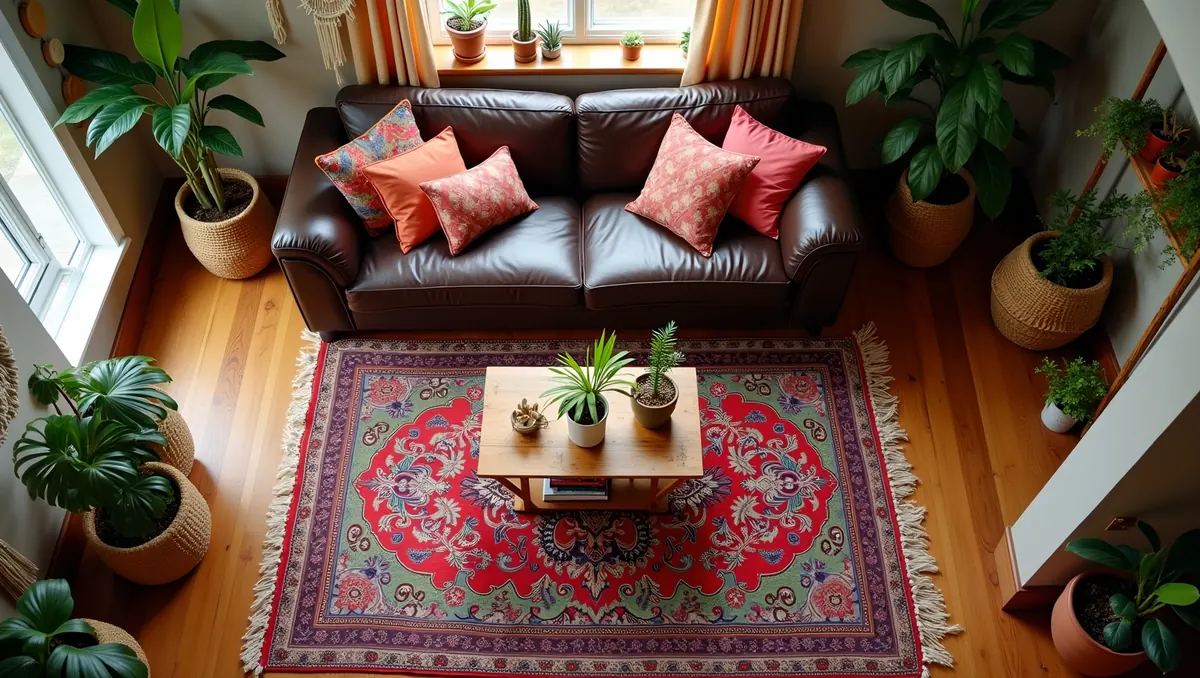
- Living room: at least the front legs of every sofa and chair rest on the rug.
- Dining room: the rug extends far enough that chairs stay on it when pulled out.
- Bedroom: the rug sits under the lower part of the bed and extends on both sides so feet land on it.
- Hallway or passage: a runner leaves a strip of floor visible on both sides.
Measure your furniture layout, not just the room, before choosing a size.
Rugs for each room in a Chennai home
| Room | Suggested material | Why |
|---|---|---|
| Living room | Wool or hand-tufted wool blend | Softness and resilience under furniture |
| Bedroom (AC) | Wool or cotton | Comfort underfoot |
| Dining room | Flatweave cotton or synthetic | Easy to clean after spills |
| Kids’ room | Cotton or synthetic | Washable or easy to wipe |
| Puja room | Cotton dhurrie or woven mat | Breathable and easy to clean; see puja room mats |
| Entrance | Synthetic | Handles moisture and footfall |
| Formal sitting room | Viscose or fine wool | Visual richness, low traffic |
| Covered balcony or veranda | Synthetic flatweave | Moisture tolerant |
Feel rug textures in person at our Cathedral Road showroom.
Caring for rugs in Chennai's humidity
- Vacuum regularly to remove dust and grit that wear fibres.
- Air rugs in shade on dry days, especially during and after the monsoon.
- Use a rug pad to improve airflow underneath, prevent slipping and protect floors.
- Rotate rugs every few months for even wear and sun exposure.
- Blot spills immediately rather than rubbing.
- Avoid damp floors: let mopped floors dry before replacing rugs.
- Use professional cleaning for wool, jute, viscose and hand-knotted rugs.
Common mistakes
- Jute near entrances or kitchens: moisture can damage natural fibres.
- Viscose in dining areas: spills can permanently mark the surface.
- Rugs too small for the seating: furniture floats and the room feels smaller.
- No rug pad: rugs slip and trap moisture against the floor.
- Rugs laid on damp floors: a common cause of odour in humid months.
Choose rugs at Vishvesh
Texture, pile and colour are hard to judge from a photo. Visit the Vishvesh showroom on Cathedral Road, Chennai, to feel rug materials in person and match them with your curtains and upholstery. Browse our rugs and book a consultation to choose the right size and material for each room.
Feel rug textures in person at our Cathedral Road showroom, and pair them with curtains and upholstery for a complete room.
Questions before you visit? Contact us.
Address: 22A, Prince Arcade, Cathedral Road, next to Stella Maris College, Chennai 600086
Phone: +91 99622 99699 | +91 98844 44550
Showroom hours: Monday to Saturday, 10:30 am to 8:30 pm. Closed on Sunday.
Frequently Asked Questions
What is the best rug material for a humid climate like Chennai?
Breathable materials that dry easily work best. Cotton and flatweave rugs suit everyday rooms, and synthetic rugs handle moisture well. Wool works in airy or air-conditioned rooms with regular airing. Keep jute and viscose rugs in dry, low-traffic areas.
Are wool rugs suitable for Chennai homes?
Yes, in the right rooms. Wool is soft and resilient, and suits living rooms and air-conditioned bedrooms. In humid months, vacuum regularly, air the rug in shade on dry days and avoid placing it on damp floors.
Which rug is best for a dining room?
Flatweave cotton or synthetic rugs are practical for dining rooms because spills are easier to clean. Choose a size that keeps chairs on the rug when pulled out. Avoid viscose and jute, which react badly to spills.
What size rug do I need for my living room?
Choose a rug large enough that at least the front legs of every sofa and chair sit on it. This ties the seating together. Measure the furniture layout rather than the whole room before choosing a size.
How do I stop rugs smelling damp in the monsoon?
Vacuum regularly, air rugs in shade on dry days and use a rug pad for airflow underneath. Let mopped floors dry fully before replacing rugs. For wool, jute or hand-knotted rugs, use professional cleaning if dampness persists.
What is the difference between hand-knotted and hand-tufted rugs?
Hand-knotted rugs have each knot tied by hand, making them dense and durable. Hand-tufted rugs are made by punching yarn through a backing and securing it, giving a plush look, usually at a lower cost.
Can I put a rug on a covered balcony?
Yes, if you choose a moisture-tolerant material. Synthetic flatweave rugs suit covered balconies and verandas. Avoid natural fibres like jute and viscose in spaces exposed to rain or humidity.