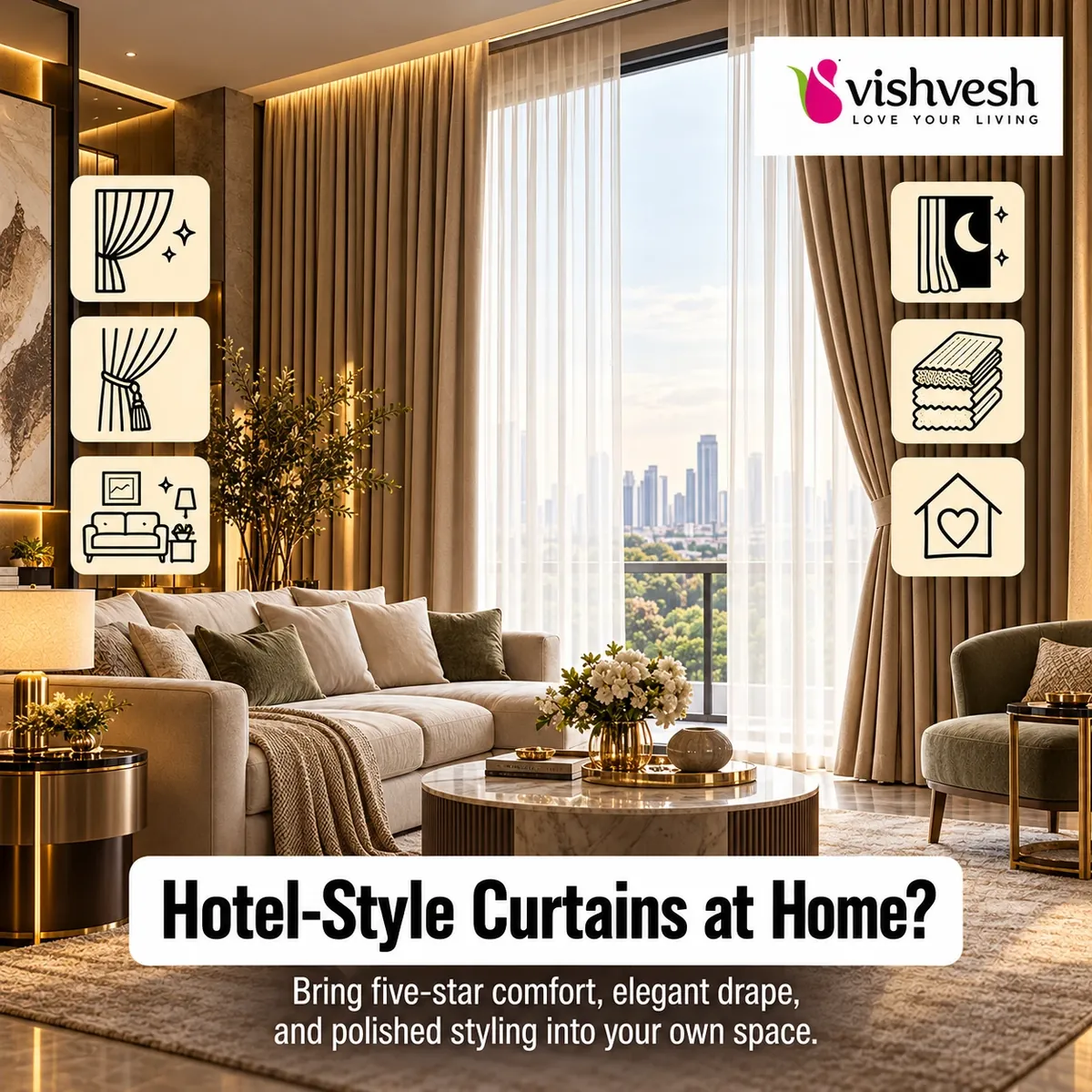
Most people remember the curtains in a good hotel room. They rise from the ceiling, fall in even folds and shut out the morning light completely. The effect feels expensive, yet it comes from a handful of clear design choices.
This guide breaks down those choices so you can bring the same look to your living room or bedroom.
Quick answer: Hotel-style curtains are floor-to-ceiling curtains hung from a ceiling track or a rod mounted close to the ceiling. They use generous fabric fullness, an even heading such as ripple fold or pinch pleat, and usually two layers: a sheer for daytime and a lined or blackout curtain for privacy and darkness.
What makes a curtain look "hotel style"?
Hotel-style curtains are defined by proportion and finish rather than by any one fabric. Five elements create the look:
- Height: curtains start at or near the ceiling.
- Width: curtains extend past the window frame on both sides.
- Fullness: enough fabric to form deep, regular folds.
- Heading: a structured heading that keeps folds even.
- Layering: a sheer and a heavier curtain on separate tracks.
Get these five right and even a simple plain fabric looks tailored.
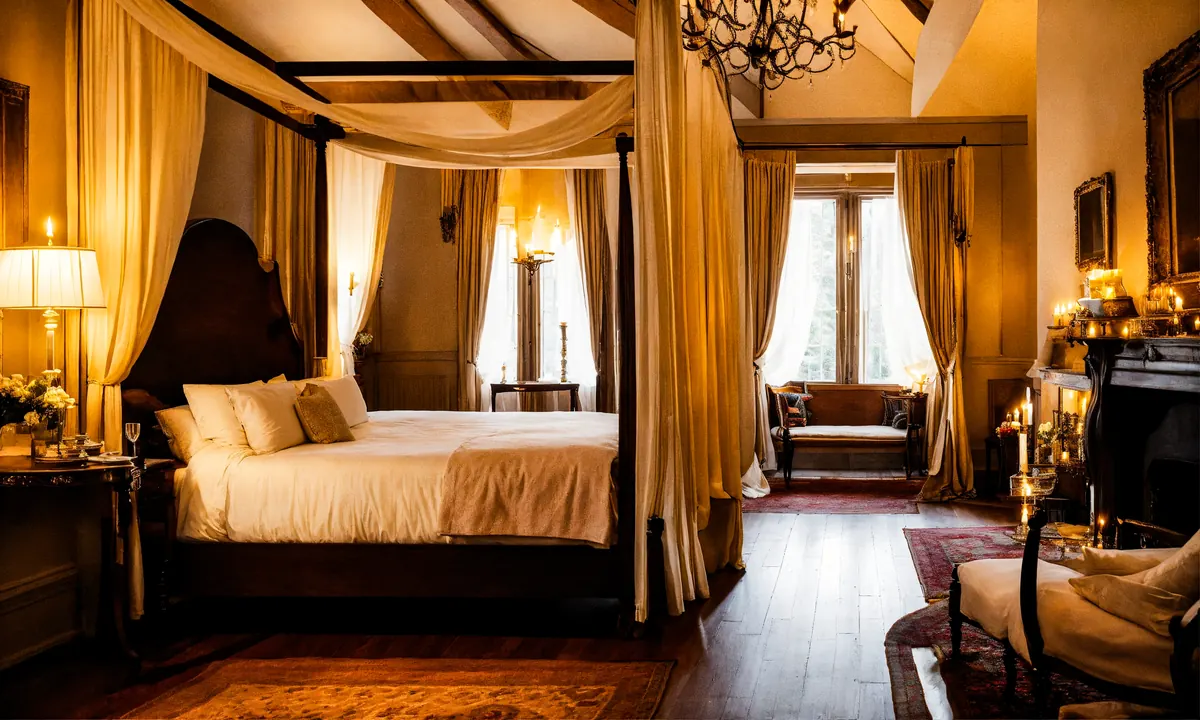
Hang curtains high: start at the ceiling
Hotels mount curtains as high as possible because it makes rooms feel taller. A track fixed to the ceiling, or a rod placed just below it, draws the eye upward.
Ceiling tracks also hide the hardware. In many hotel rooms the track sits in a recess or behind a pelmet, so only fabric is visible. If you are planning a false ceiling, ask your interior designer to include a curtain recess.
Hang curtains wide: let them clear the glass
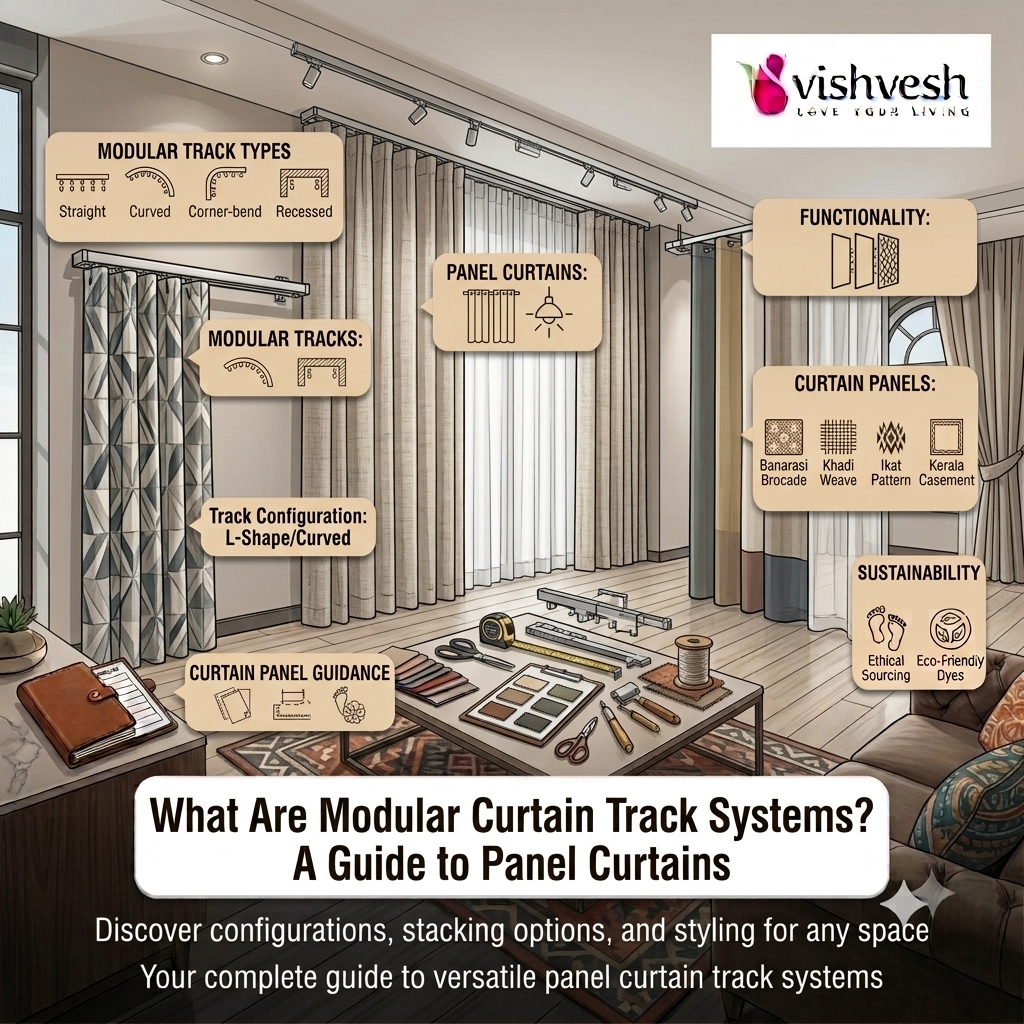
When curtains open, the gathered fabric needs somewhere to sit. This is called the stack. Extending the track past the window lets the stack rest on the wall instead of covering the glass.
The result is more daylight and a window that looks wider than it is.
Use enough fabric fullness
Fullness is the ratio of fabric width to track width. Skimped curtains look flat when closed, which is the opposite of the hotel effect.
Choose a structured heading
The heading is the top of the curtain, where it attaches to the track. It controls how the folds form.
| Heading | Look | Best for |
|---|---|---|
| Ripple fold (wave) | Soft, continuous S-shaped waves | Modern rooms, ceiling tracks, motorized systems |
| Pinch pleat | Tailored pleats in neat groups | Classic and formal rooms |
| Eyelet | Large folds through metal rings | Casual rooms, rods |
| Rod pocket | Gathered, relaxed top | Light sheers, informal spaces |
Ripple fold and pinch pleat give the most “hotel” result. Both need the matching track or gliders, so choose heading and hardware together.
Layer a sheer with a heavier curtain
Layering is the signature hotel detail. A double track holds two curtains that open independently.
- Front or back layer, sheer: softens daylight and gives daytime privacy. See our sheer curtains range.
- Second layer, lined or blackout: blocks light at night and adds weight to the drape.
In bedrooms, the heavier layer is often blackout lined. In living rooms, a lined curtain without full blackout is often enough.
Compare sheers, linings and headings at our Cathedral Road showroom.
Pick fabrics and colours that read as calm
Hotel rooms favour quiet, solid fabrics that suit many guests. At home, you can follow the same idea or add more personality.
- Solid neutrals: ivory, stone, taupe and grey feel calm and timeless. Explore plain and solid curtains.
- Textured weaves: linen-look and slub textures add depth without pattern.
- Velvet and heavier weaves: add a richer, formal finish in living rooms.
- Matching tones: keep the sheer and the heavier layer in related shades.
Get the length right
Hotel curtains usually end just above the floor, so they hang cleanly and do not collect dust. This is sometimes called a float or kiss length.
Puddled curtains, which pool on the floor, look romantic but need more care. For daily use in Chennai homes, a clean floor finish is easier to maintain.
Add lining for weight and shape
Lining makes a curtain hang straighter and fold more evenly. It also protects the face fabric from sunlight. For strong afternoon sun, lining is one of the most practical upgrades you can make.
Consider motorization for wide windows
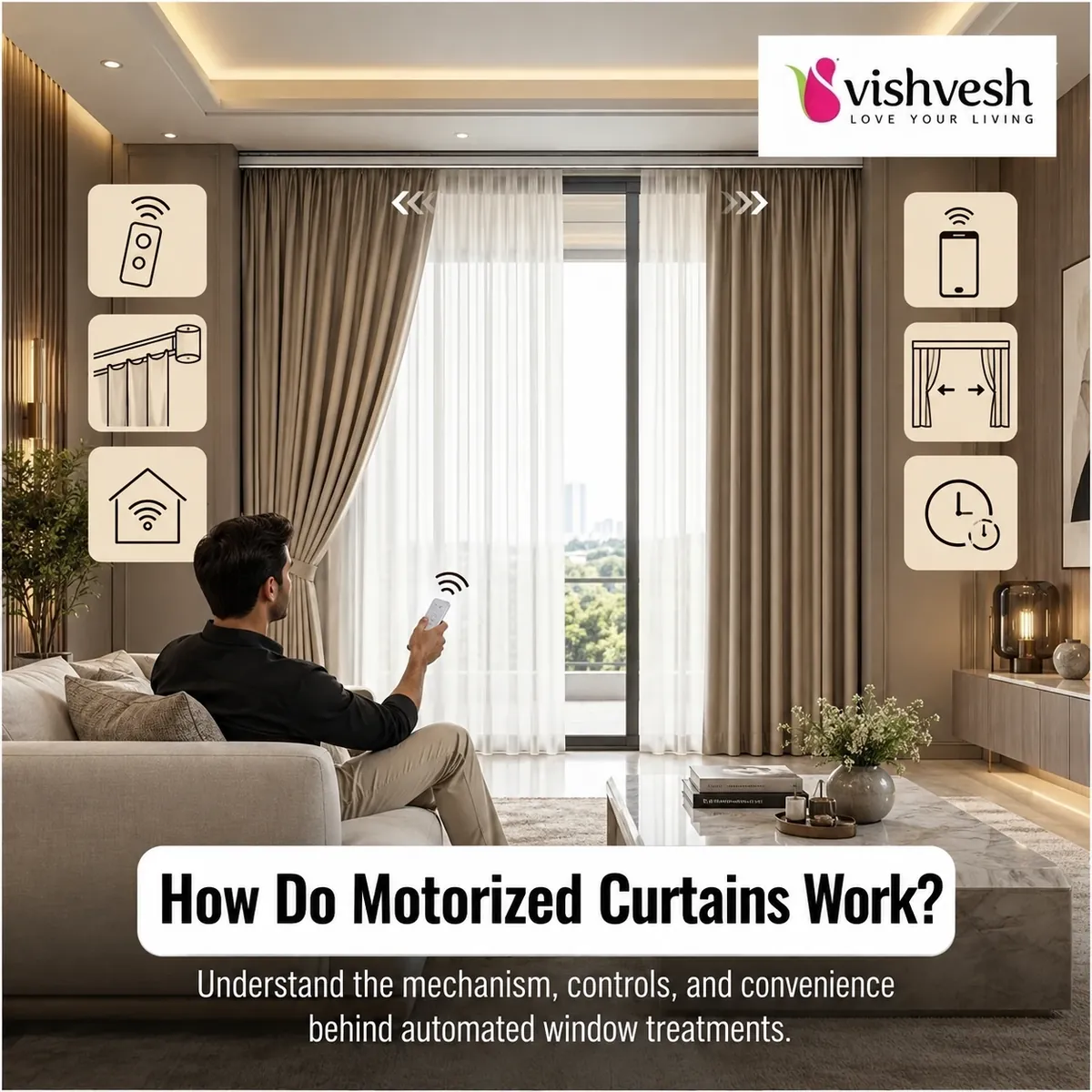
Many luxury hotels use motorized tracks for wide glass walls. At home, automation is most useful for large living room windows and bedrooms where curtains open at the same time daily. Read how motorized curtains work before deciding.
Hotel-style curtains by room
| Room | Layers | Heading | Notes |
|---|---|---|---|
| Master bedroom | Sheer plus blackout lined curtain | Ripple fold or pinch pleat | Prioritise darkness and quiet |
| Living room | Sheer plus lined curtain | Ripple fold | Width and height matter most |
| Guest room | Sheer plus lined curtain | Pinch pleat | Calm neutral tones suit all guests |
| Children’s room | Sheer plus blackout or room-darkening lined curtain | Ripple fold | Keep it cord-free; see our guide to curtains for children’s rooms |
| Home office | Sheer only, or sheer plus blind | Ripple fold | Glare control for screens |
Common mistakes that break the hotel look
- Mounting the rod just above the window frame: the room looks shorter.
- Too little fabric: curtains look stretched when closed.
- One layer only: the room is either too bright or too dark.
- Visible, bulky hardware: draws attention away from the fabric.
- Mismatched heights: curtains in one room at different levels.
Planning checklist
- Measure from ceiling to floor, not window top to sill.
- Plan track width beyond the window frame.
- Choose heading and track together.
- Decide which rooms need blackout lining.
- Pick sheer and main fabrics in related tones.
- Ask about a ceiling recess if a false ceiling is planned.
Create the hotel look with Vishvesh
The hotel look depends on measurement and making, not only on fabric choice. Visit the Vishvesh showroom on Cathedral Road, Chennai, to compare sheers, lined fabrics and headings side by side. Browse our curtains and book a consultation to plan height, fullness and layering for each room.
Plan hotel-style curtains for your home. Visit our Cathedral Road showroom to compare sheers, linings and headings.
Questions before you visit? Contact us.
Address: 22A, Prince Arcade, Cathedral Road, next to Stella Maris College, Chennai 600086
Phone: +91 99622 99699 | +91 98844 44550
Showroom hours: Monday to Saturday, 10:30 am to 8:30 pm. Closed on Sunday.
Frequently Asked Questions
How do I make my curtains look like a hotel?
Mount the track at or near the ceiling, extend it past the window frame and use enough fabric for deep folds. Choose a ripple fold or pinch pleat heading, and layer a sheer with a lined or blackout curtain on a double track.
How high should curtains be hung for a hotel look?
Hang them as close to the ceiling as the structure allows, ideally from a ceiling-mounted track. This draws the eye upward and makes the room feel taller. If a false ceiling is planned, a recess can hide the track completely.
What curtain heading do hotels use?
Ripple fold and pinch pleat are the most common choices because both keep folds even and regular. Ripple fold suits modern rooms and motorized tracks. Pinch pleat suits classic and formal interiors.
Do hotel-style curtains need two layers?
Two layers create the full hotel effect. A sheer softens daylight and gives privacy during the day, while a lined or blackout curtain darkens the room at night. One layer can work, but it limits light control.
What fabric is best for hotel-style curtains?
Solid or softly textured fabrics in calm tones give the most hotel-like result. Lined medium to heavy fabrics hang well. Pair them with a sheer in a related shade so the two layers look planned together.
Should hotel-style curtains touch the floor?
Most hotel curtains end just above the floor or lightly touch it. This keeps the line clean and reduces dust collection. Pooled curtains look softer but need more frequent care.