Motorized curtains have become a standard request in premium homes. Large windows, double-height living rooms and layered drapes are hard to open by hand. Automation solves that, but most buyers have never seen what sits inside the track.
This guide explains each part of a motorized curtain system. It also covers power, controls and the planning decisions that matter before installation.
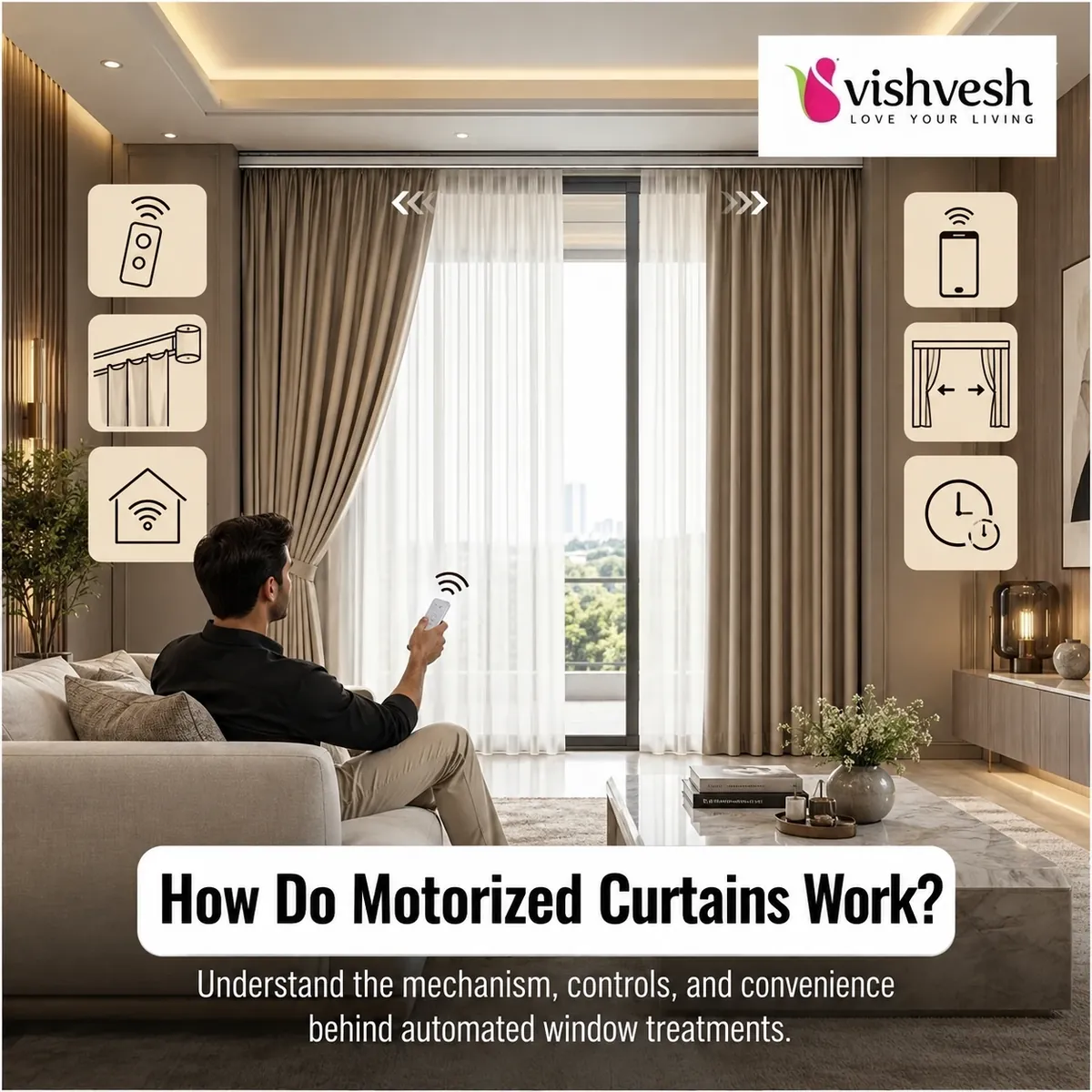
Quick answer: Motorized curtains work by pairing an electric motor with a curtain track. The motor drives a belt or cord inside the track, which pulls the curtain gliders open or closed. A remote, wall switch, app or voice assistant sends the command, and the motor stops at preset open and closed limits.
What are motorized curtains?
Motorized curtains are curtains hung on an electrically driven track that opens and closes them on command. The fabric, stitching and heading are the same as regular curtains. The difference is the track and motor, which replace hand pulling or a manual cord.
Motorized curtains suit wide windows, tall windows, hard-to-reach windows and rooms where light is controlled several times a day.
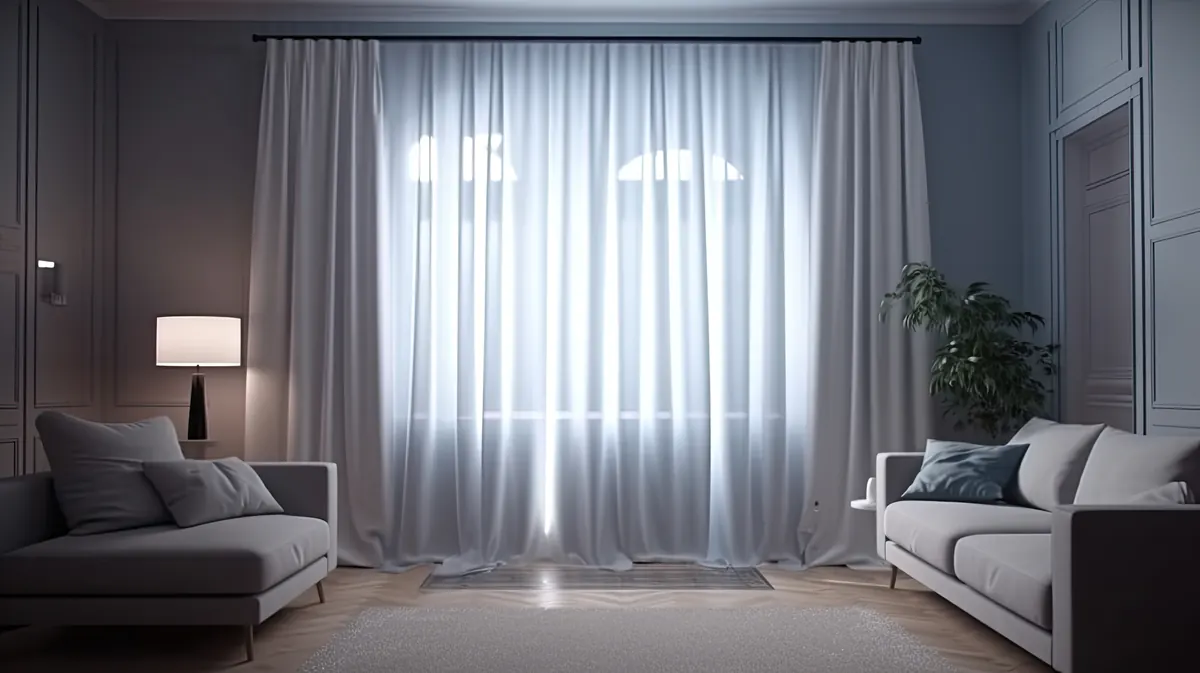
The four parts of a motorized curtain system
Every system, whatever the brand, has four parts working together.
| Part | What it does | What to ask about |
|---|---|---|
| Motor | Converts electricity into the movement that pulls the curtain | Weight capacity, noise, power type |
| Track | Holds the gliders and houses the drive belt or cord | Length, mounting, curved or straight |
| Gliders and carriers | Small runners that hold the curtain heading and slide inside the track | Compatibility with your heading style |
| Controls | Send open, close and stop commands to the motor | Remote, wall switch, app, voice, timer |
1. The motor
The motor usually sits at one end of the track. When it receives a command, it turns a pulley that moves a belt running the length of the track. The lead carriers are attached to that belt, so the curtain travels with it.
Motors are rated for a maximum curtain weight and track length. Heavy lined drapes in a wide living room need a stronger motor than a light sheer in a bedroom.
2. The track
The track is the backbone of the system. It must be straight, level and firmly fixed, because any bend or sag makes the motor work harder.
Tracks can be mounted on the ceiling or the wall. Ceiling mounting is common when curtains run floor to ceiling. Wall mounting suits rooms where the ceiling cannot take fixings. For a deeper look at track styles, see our modular curtain track systems guide.
3. Gliders and carriers
Gliders hold the curtain at evenly spaced points. The lead carriers at the centre or end are the parts that the belt actually pulls. Gliders spaced correctly help the fabric fold evenly every time it opens.
Ripple fold and pinch pleat headings both work on motorized tracks. Your installer should confirm the glider type matches the heading you choose.
4. The controls
Controls tell the motor what to do. Most systems offer more than one option, so a household can use whichever suits each person.
- Remote control: a handheld remote sends a radio signal to the motor.
- Wall switch: a fixed switch beside the window, useful for guests and staff.
- App control: a phone app connects through a hub or Wi-Fi bridge.
- Voice control: a smart speaker sends commands through a compatible hub.
- Timers and scenes: curtains open or close at set times, or together with lights.
How the motor knows where to stop
During installation, the technician sets two limits: fully open and fully closed. The motor stores these positions and stops at them automatically. Many motors also allow a favourite middle position, such as half open for afternoon glare.
This is why setup by a trained installer matters. Wrong limits can strain the motor or leave a gap at the window edge.
Wired vs battery curtain motors
Power is the first decision to make, because it affects electrical work.
| Factor | Wired (mains) motor | Battery or rechargeable motor |
|---|---|---|
| Power source | Electrical point near the track | Built-in or external battery |
| Wiring needed | Yes, ideally planned before false ceiling or painting | No new wiring |
| Best for | New builds, renovations, large heavy curtains | Existing homes, rentals, lighter curtains |
| Maintenance | None for power | Periodic recharging |
If you are building or renovating, ask your architect to leave a power point at the track end. Adding wiring later usually means opening finished walls or ceilings.
See curtain automation working at our Cathedral Road showroom.
Do motorized curtains work during power cuts?
Wired motors stop when the power supply stops, unless the circuit is on inverter backup. Battery motors keep working during a power cut until the battery runs down.
Most systems also allow the curtain to be moved by hand when needed. Confirm the manual operation method with your installer before choosing a motor. For Chennai homes, it is worth deciding whether the curtain circuit should be on inverter backup.
How smart home integration works
A motor on its own responds to its remote. To join a smart home, it needs a hub or bridge that translates app and voice commands into signals the motor understands.
Before buying, check three things:
- Which hub the motor brand uses.
- Whether that hub works with your existing smart home platform.
- Whether blinds and curtains from the same brand can share one hub.
One hub for all window coverings keeps scenes simple, such as one command that closes every curtain at night.
Where motorized curtains make the most sense
- Double-height living rooms: windows too tall to reach comfortably.
- Wide glass walls: long, heavy curtain runs that are tiring to pull.
- Home theatres: blackout curtains that close with one command.
- Bedrooms: timed opening for natural morning light.
- NRI and second homes: scheduled opening and closing while the home is empty.
Common mistakes to avoid
- Choosing the motor after the fabric: motor capacity must match curtain weight, so decide both together.
- Skipping the power plan: wiring added after finishing work costs more and looks less neat.
- Ignoring track straightness: an uneven ceiling needs packing or a different fixing method.
- Mixing incompatible systems: a hub from one brand may not control a motor from another.
- No manual plan: know how the curtain moves if the motor or power fails.
Planning checklist before you buy
- Measure each window’s width and drop.
- Decide on fabric and lining, since these set curtain weight.
- Choose ceiling or wall mounting.
- Choose wired or battery power.
- List the controls each household member will use.
- Confirm smart home compatibility.
- Ask how manual operation works.
See motorized curtains in person
The easiest way to understand curtain automation is to watch a track move. Visit the Vishvesh showroom on Cathedral Road, Chennai, to see curtain automation options and compare brands such as Somfy and Toso. Our team can help you plan the motor, track and fabric together.
See curtain automation working at our Cathedral Road showroom.
Explore our motorized curtains in Chennai, or contact us to plan your motor, track and fabric together.
Address: 22A, Prince Arcade, Cathedral Road, next to Stella Maris College, Chennai 600086
Phone: +91 99622 99699 | +91 98844 44550
Showroom hours: Monday to Saturday, 10:30 am to 8:30 pm. Closed on Sunday.
Frequently Asked Questions
How do motorized curtains work?
A motor at the end of the curtain track drives a belt inside it. The curtain’s lead carriers are attached to the belt, so the curtain moves when the motor turns. Commands come from a remote, wall switch, app or voice assistant, and the motor stops at preset open and closed positions.
Can I convert my existing curtains to motorized curtains?
Often, yes. The fabric can usually be reused if its heading suits motorized gliders. The track normally needs replacing with a motor-compatible track. An installer should check the curtain weight, heading type and fixing surface before confirming.
Do motorized curtains need electrical wiring?
Wired motors need a power point near the track. Battery or rechargeable motors do not need new wiring. Wired motors suit new builds and renovations, while battery motors suit finished homes where opening walls or ceilings is not practical.
What happens to motorized curtains during a power cut?
Wired motors stop without power unless their circuit is on inverter backup. Battery motors keep working until the battery runs low. Ask your installer how the curtain can be moved by hand, and decide whether to connect the curtain circuit to backup power.
Are motorized curtains noisy?
Motor noise varies by brand, motor type and track quality. A straight, well-fixed track reduces strain and sound. The best way to judge is to hear a working system in a showroom before you choose.
Can motorized curtains work with Alexa or Google Home?
Many motorized curtain systems support voice assistants through a compatible hub or bridge. Compatibility depends on the motor brand and hub model. Confirm that the hub works with your smart home platform before purchase.
Are motorized curtains suitable for heavy blackout curtains?
Yes, if the motor is rated for the curtain’s weight and track length. Lined and blackout fabrics are heavier than sheers, so choose the fabric first and then select a motor with enough capacity.