The heading is the top part of a curtain, where it attaches to the track or rod. It decides how the folds fall, how much fabric the curtain uses and how smoothly it opens and closes. Two curtains in the same fabric can look completely different because of the heading.
This guide explains the most common curtain pleat and heading styles. It covers how each one looks, how much fabric it typically needs and which rooms and tracks it suits.
Learn more about custom curtain stitching.
What is a curtain heading?
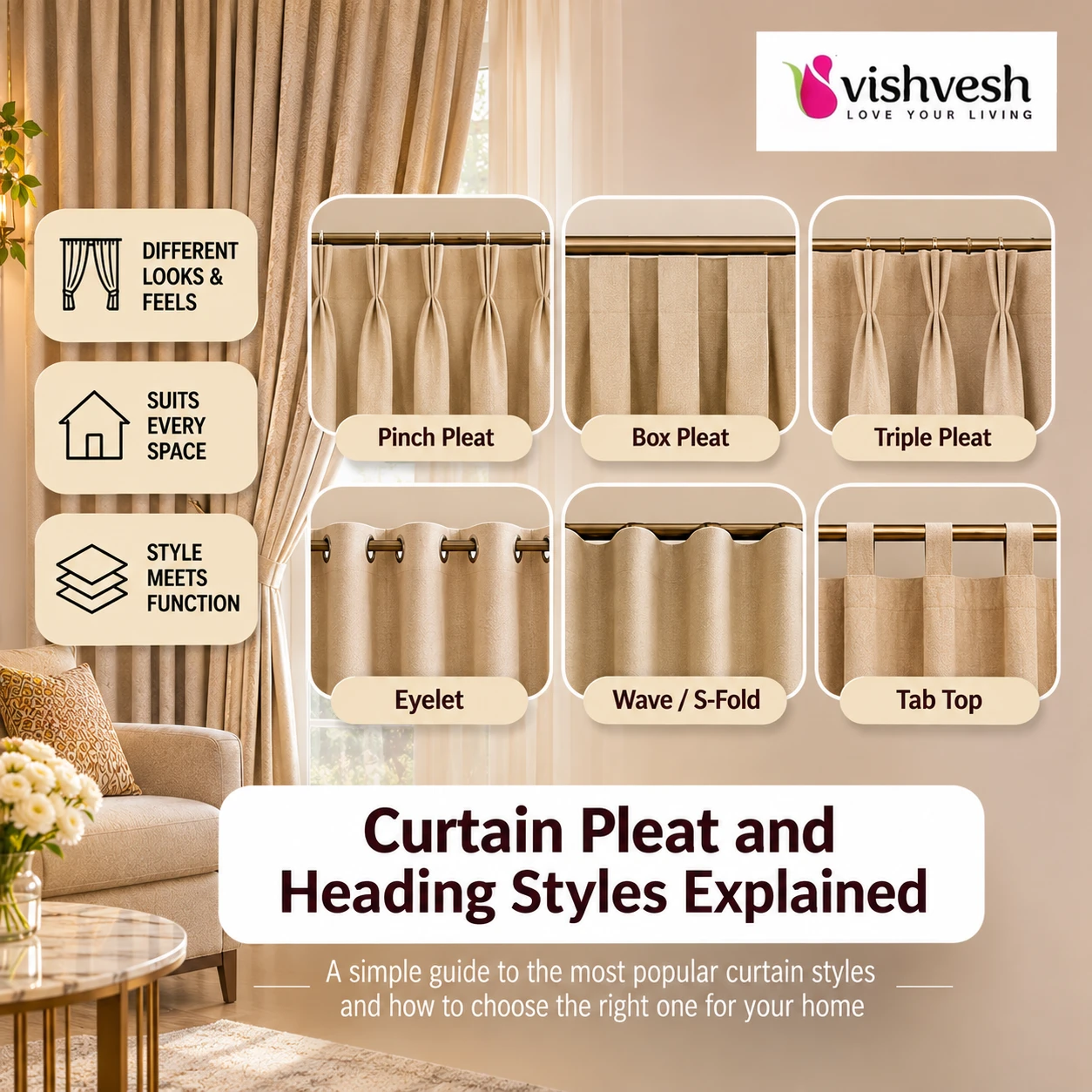
A curtain heading is the stitched top section of a curtain that attaches it to a track, pole or rod. The heading style creates the pattern of folds down the curtain. Common styles include pinch pleat, eyelet, wave, box pleat, pencil pleat, goblet, tab top and rod pocket.
Why the heading style matters
- Look: headings range from formal and tailored to relaxed and casual.
- Fabric quantity: fuller headings need more fabric, which affects how rich the curtain looks.
- Hardware: some headings need tracks, others need poles or rods.
- Operation: some headings glide more smoothly, which matters for motorized tracks.
- Stack: the heading affects how compactly curtains gather when open.
Understanding fullness
Fullness is the ratio of fabric width to track width. A fullness of 2 means the fabric is twice as wide as the track. Higher fullness creates deeper, richer folds. Lower fullness creates a flatter, more modern look.
Typical fullness ranges are shown in the comparison table below. Exact amounts depend on the fabric weight and the look you want, so curtain makers confirm fullness after measuring.
The main curtain heading styles
Pinch pleat
Pinch pleat curtains have groups of two or three small folds, stitched together at the top and spaced evenly across the width. Double pinch pleats have two folds per group. Triple pinch pleats have three and look fuller.
- Look: tailored, classic, formal
- Best for: living rooms, dining rooms, formal bedrooms
- Hardware: tracks or poles with rings
Eyelet
Eyelet curtains have metal rings punched through the top of the fabric. The curtain threads directly onto a pole, creating large, soft ripples.
- Look: clean, modern, relaxed
- Best for: contemporary living rooms, bedrooms, apartments
- Hardware: poles only
Wave or ripplefold
Wave curtains, also called ripplefold or S-fold, form continuous, even S-shaped folds along the full width. Carriers on a dedicated track hold the curtain at fixed spacing, so the folds stay uniform when open or closed.
- Look: sleek, contemporary, hotel-style
- Best for: large windows, motorized tracks, modern interiors
- Hardware: wave tracks with carriers
Learn more about channel track systems.
Learn more about hotel-style curtains at home.
Box pleat
Box pleats are flat, folded pleats that meet behind the fabric, forming neat, structured panels. Inverted box pleats fold the other way for an even flatter front.
- Look: structured, tailored
- Best for: formal rooms, offices, hospitality spaces
- Hardware: tracks
Pencil pleat
Pencil pleats are tightly gathered with heading tape, forming thin, pencil-like folds across the top.
- Look: traditional, versatile
- Best for: bedrooms, casual living rooms
- Hardware: tracks or poles
Goblet pleat
Goblet pleats are cup-shaped folds at the top of the curtain, sometimes filled with padding to hold their shape.
- Look: grand, decorative
- Best for: formal living and dining rooms with high ceilings
- Hardware: fixed or dress curtains, or tracks
Tab top
Tab top curtains have fabric loops sewn along the top, which slide over a pole.
- Look: casual, informal
- Best for: light curtains, kids’ rooms, informal spaces
- Hardware: poles
Rod pocket
Rod pocket curtains have a stitched channel at the top that a rod slides through, creating a gathered look.
- Look: soft, gathered, casual
- Best for: sheers and curtains that are rarely opened
- Hardware: rods
Comparison of heading styles
| Heading | Look | Typical fullness | Hardware | Glides easily | Suits motorization |
|---|---|---|---|---|---|
| Pinch pleat | Tailored, classic | About 2 to 2.5 | Track or pole with rings | Yes | Yes, on suitable tracks |
| Eyelet | Modern, soft ripples | About 1.5 to 2 | Pole | Yes | Rarely |
| Wave / ripplefold | Sleek, even S-folds | About 1.8 to 2.5 | Wave track | Very smooth | Yes, widely used |
| Box pleat | Structured, flat | About 2.5 to 3 | Track | Yes | Yes, on suitable tracks |
| Pencil pleat | Traditional, gathered | About 2 to 2.5 | Track or pole | Moderate | Possible |
| Goblet pleat | Grand, decorative | About 2 to 2.5 | Track or fixed | Moderate | Less common |
| Tab top | Casual | About 1.5 | Pole | Slower | No |
| Rod pocket | Soft, gathered | About 2 to 2.5 | Rod | Slow | No |
Fullness figures are general guides. Your curtain maker confirms the right fullness for your fabric and window.
Which heading style suits motorized curtains?
Wave or ripplefold headings are the most common choice for motorized curtains. Their carriers hold even spacing, so the curtain moves smoothly and stacks neatly. Pinch pleat and box pleat headings also work on suitable motorized tracks. Eyelet, tab top and rod pocket styles usually do not.
Learn more about curtain automation.
Choosing a heading style by room
- Living rooms: pinch pleat for a classic look, wave for a modern look.
- Bedrooms: pencil pleat or pinch pleat with a blackout lining, or eyelet for a relaxed feel.
- Dining rooms: goblet or triple pinch pleat for formal settings.
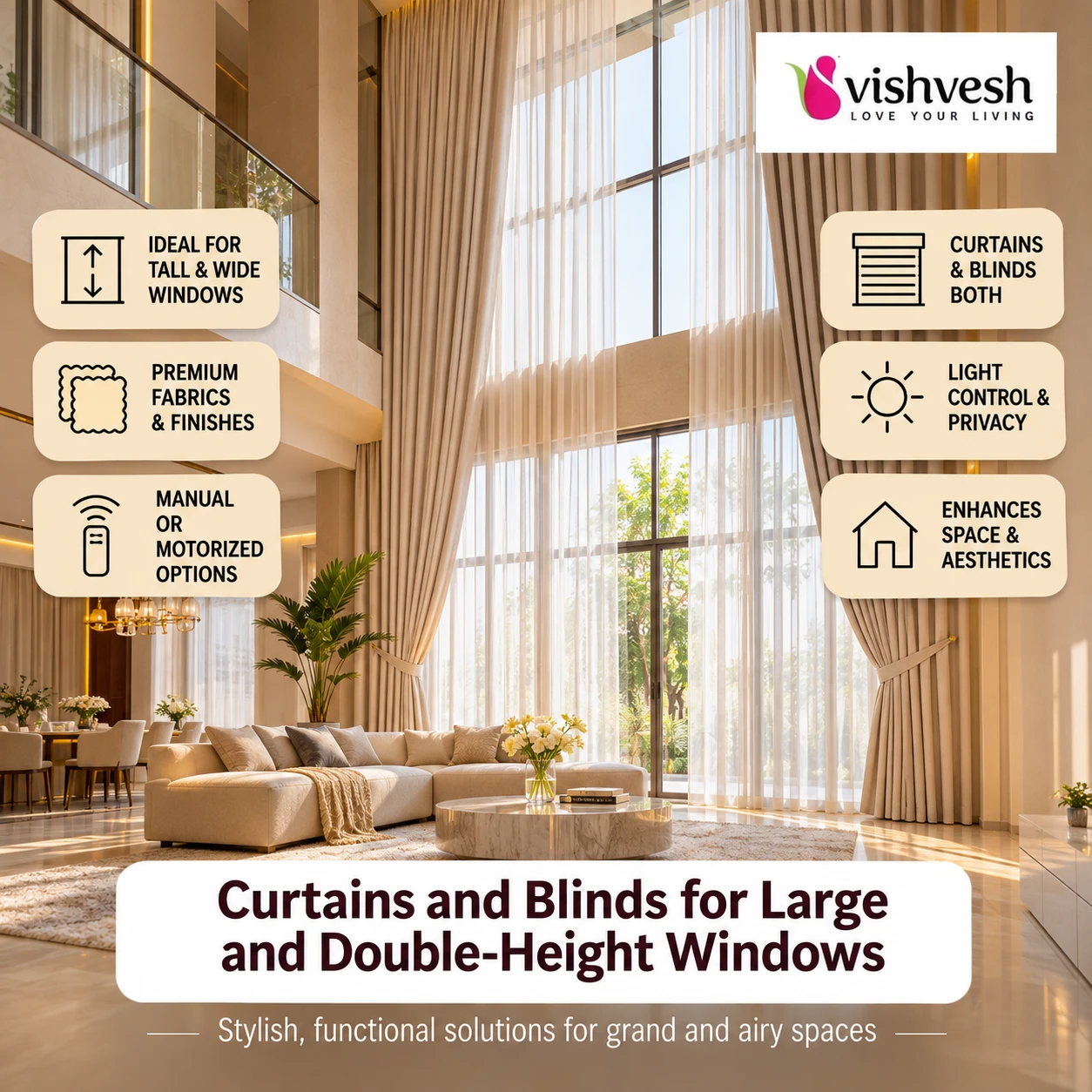
- Large and double-height windows: wave curtains on motorized tracks.
- Kids’ rooms: eyelet or tab top in washable fabrics.
- Sheers: wave, pencil pleat or rod pocket for soft, light folds.
- Offices and hospitality: box pleat or wave for a neat, uniform look.
Learn more about sheer curtains.
How fabric affects the heading
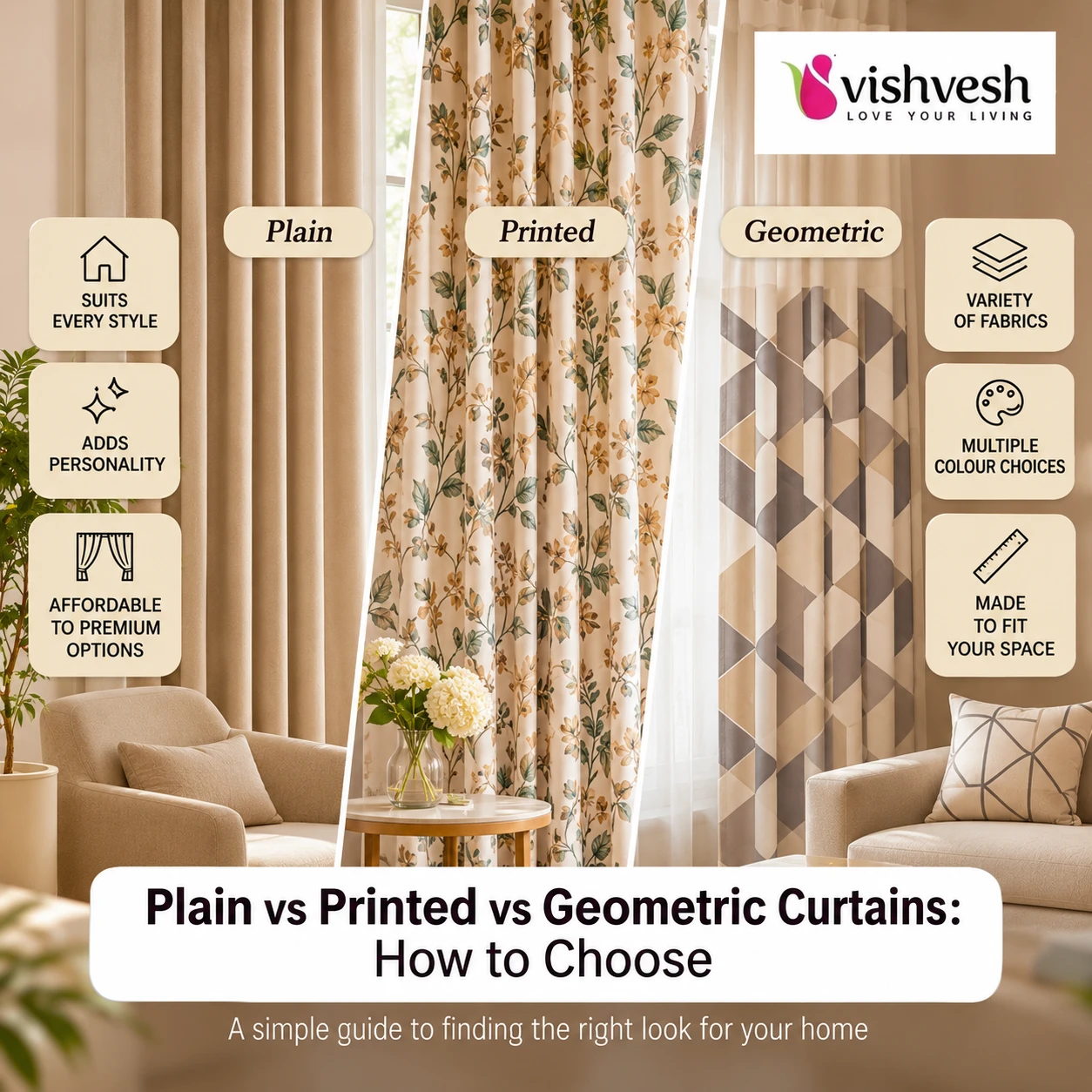
Heavy fabrics, such as velvet, hold structured pleats well. They suit pinch pleat, box pleat and goblet headings. Light fabrics, such as voile and linen sheers, suit soft headings like wave, pencil pleat and rod pocket. Patterned fabrics need careful planning so the pattern repeats line up across pleats.
You can also visit our curtain fabric shop to compare fabrics in person.
Linings and headings
Linings add weight and help pleats hold their shape. Blackout linings block light, and thermal linings help reduce heat from sun-facing windows. A lined pinch pleat curtain looks fuller and hangs straighter than an unlined one.
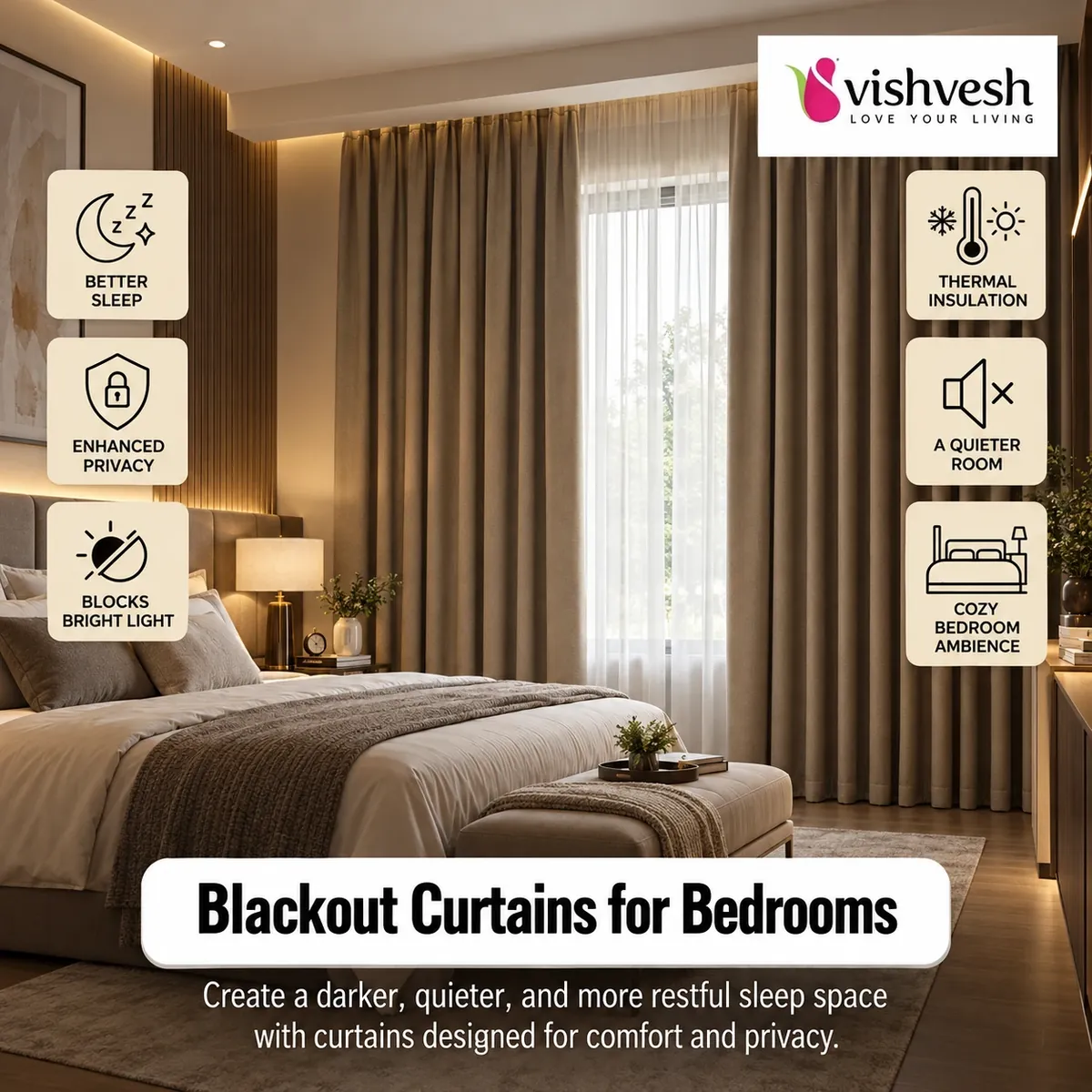
Learn more about blackout curtains for bedrooms.
Common mistakes when choosing a heading
- Choosing eyelet for a motorized track, which is not designed for it.
- Using too little fabric, so pleats look flat and stretched.
- Pairing heavy fabric with a light rod pocket heading.
- Ignoring stack space on narrow walls.
- Choosing a formal heading for a casual room, or the reverse.
Get custom curtains stitched in your chosen style
At the Vishvesh showroom on Cathedral Road, Chennai, you can see different heading styles and compare fabrics in person.
Learn more about custom vs ready-made curtains.
Book a curtain stitching consultation.
Questions before you visit? Contact us or call +91 99622 99699.
Address: 22A, Prince Arcade, Cathedral Road, next to Stella Maris College, Chennai 600086
Frequently Asked Questions
What are the different types of curtain pleats?
The most common curtain pleats and headings are pinch pleat, eyelet, wave or ripplefold, box pleat, pencil pleat, goblet pleat, tab top and rod pocket. Each creates a different fold pattern and suits different rooms and hardware.
Which curtain pleat looks most expensive?
Triple pinch pleat, goblet pleat and wave headings in a good fabric with a lining tend to look the most premium. Generous fullness and floor-length curtains on ceiling-mounted tracks add to the effect.
What is the difference between pinch pleat and eyelet curtains?
Pinch pleat curtains have stitched groups of folds and hang from a track or rings, giving a tailored look. Eyelet curtains thread onto a pole through metal rings, giving large, relaxed ripples and a more modern look.
What is the best curtain heading for motorized tracks?
Wave or ripplefold headings are the most widely used for motorized tracks. Their carriers keep folds evenly spaced, so the curtain moves smoothly and stacks neatly. Pinch pleat and box pleat can also work on suitable tracks.
How much fabric do I need for pinch pleat curtains?
Pinch pleat curtains usually need about two to two and a half times the track width in fabric. The exact amount depends on the fabric weight and the fullness you want, so measure your windows before ordering.
Which heading style is best for sheer curtains?
Wave, pencil pleat and rod pocket headings suit sheers, because they create soft, light folds. Wave headings are popular when sheers are layered with heavier curtains on double tracks.