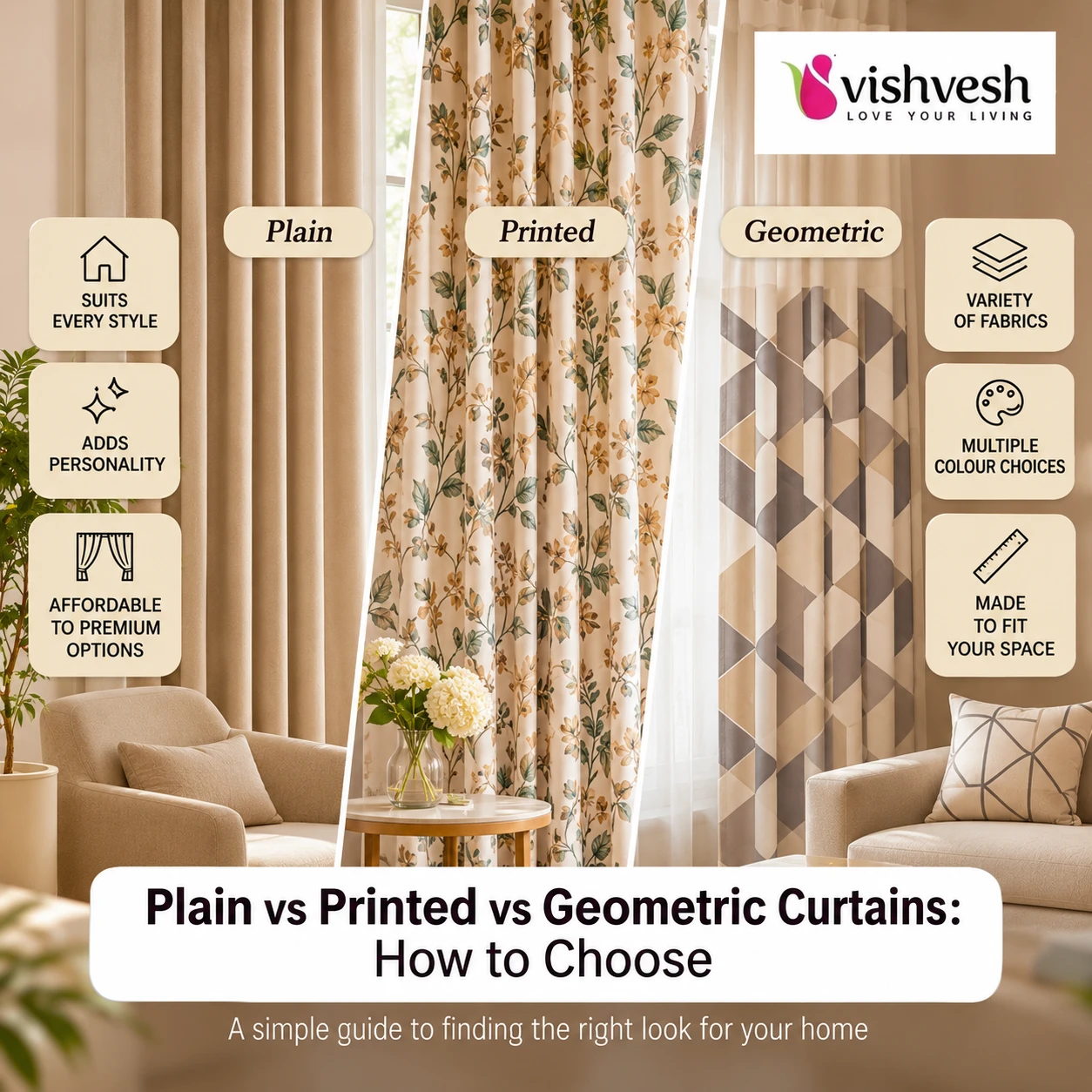
Curtains often cover more wall area than any painting or piece of art in a room. That makes the choice between plain, printed and geometric curtains one of the biggest design decisions in a home. The right choice can calm a busy room, add life to a quiet one, or turn a window into the focal point.
This guide compares the three styles side by side. It explains how each one behaves in different rooms, how to judge pattern scale, and how to pair curtains with your sofa, rug and walls. It also covers the practical side, including sun, humidity and maintenance in Chennai homes.
What is the difference between plain, printed and geometric curtains?
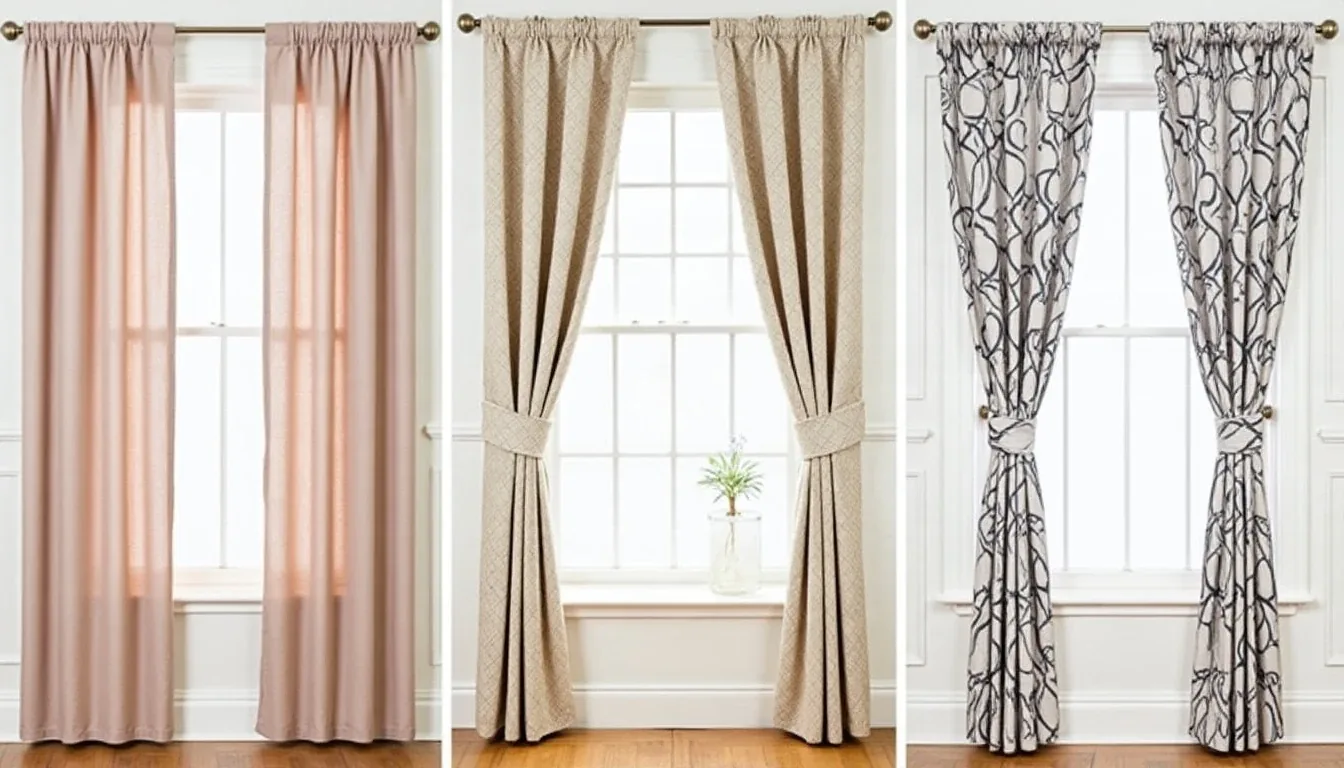
Plain curtains are made in a single colour with no pattern, so their character comes from texture and drape. Printed curtains have a design applied to the fabric surface, such as florals or abstracts. Geometric curtains carry patterns built from lines and shapes, such as stripes, chevrons and grids. Each style sets a different mood.
Plain curtains explained
Plain curtains, also called solid colour curtains, use one colour across the whole panel. They do not have a printed or woven motif. Their interest comes from the fabric itself: the slub of linen, the pile of velvet or the soft sheen of faux silk.
Plain curtains work as a backdrop. They let furniture, art and other textiles take centre stage. This makes them a safe and versatile choice for most rooms.
Strengths of plain curtains
- They pair easily with patterned rugs, cushions and upholstery.
- They create a calm, uncluttered room.
- They date slowly, so they suit long-term furnishing plans.
- Texture becomes visible, especially in natural fabrics like linen.
- They make small rooms feel larger when chosen in light tones.
Limitations of plain curtains
- A plain curtain in a plain room can feel flat.
- Deep colours can show sun fading on bright windows.
- They rarely act as the main design feature on their own.
Printed curtains explained
Printed curtains have their design applied to the surface of the fabric. Common methods include digital printing, screen printing and block printing. Printing allows fine detail and many colours in one design. It can create painterly florals, botanical scenes, abstract art and traditional motifs.
Printed curtains are often chosen to bring colour and personality into a room. A single printed curtain can link the colours of a sofa, rug and wall art.
Strengths of printed curtains
- They offer the widest range of designs and colours.
- They can introduce a theme, such as botanical, coastal or heritage.
- They tie together colours already present in the room.
- They suit rooms that need warmth and character.
Limitations of printed curtains
- Bold prints can compete with patterned upholstery or wallpaper.
- Strong sun can fade printed colours over time.
- Very trend-led prints may date faster than plain fabrics.
Geometric curtains explained
Geometric curtains feature patterns made from lines and shapes. Stripes, chevrons, zigzags, grids, diamonds, circles and hexagons are common examples. Geometric designs can be printed onto fabric or woven into it.
The repeating structure of a geometric pattern gives a sense of order. This makes geometric curtains a natural fit for modern, contemporary and minimal interiors.
Strengths of geometric curtains
- They add structure and rhythm to rooms with plain walls and furniture.
- Stripes can change how a room’s proportions feel.
- Tone-on-tone geometrics add pattern without visual noise.
- They suit modern apartments and contemporary homes.
Limitations of geometric curtains
- High-contrast geometrics can feel busy in small rooms.
- Pattern repeats must line up across panels, or the design looks broken.
- Bold geometrics can clash with other strong patterns.
Side-by-side comparison
| Factor | Plain curtains | Printed curtains | Geometric curtains |
|---|---|---|---|
| Visual effect | Calm, understated | Expressive, decorative | Structured, modern |
| Where interest comes from | Texture and colour | Motif and colour | Shape, line and repetition |
| Best interior styles | All styles | Classic, eclectic, traditional, coastal | Modern, contemporary, minimal |
| Pairs best with | Patterned rugs and upholstery | Plain or small-pattern furniture | Plain walls and furniture |
| Effect on small rooms | Opens up the space in light tones | Small prints work; large prints can crowd | Fine patterns work; bold contrast can crowd |
| Fading risk in strong sun | Visible in deep colours | Printed colours can fade | Depends on print or weave |
| Longevity of style | Very long | Varies with the print | Long for classic stripes and grids |
Which style suits each room?
Living rooms
Living rooms usually have the largest windows in the home. Large-scale prints or bold geometrics can create a focal point on a wide window. If the sofa or rug already carries a strong pattern, plain curtains in a textured fabric keep the room balanced.
Bedrooms
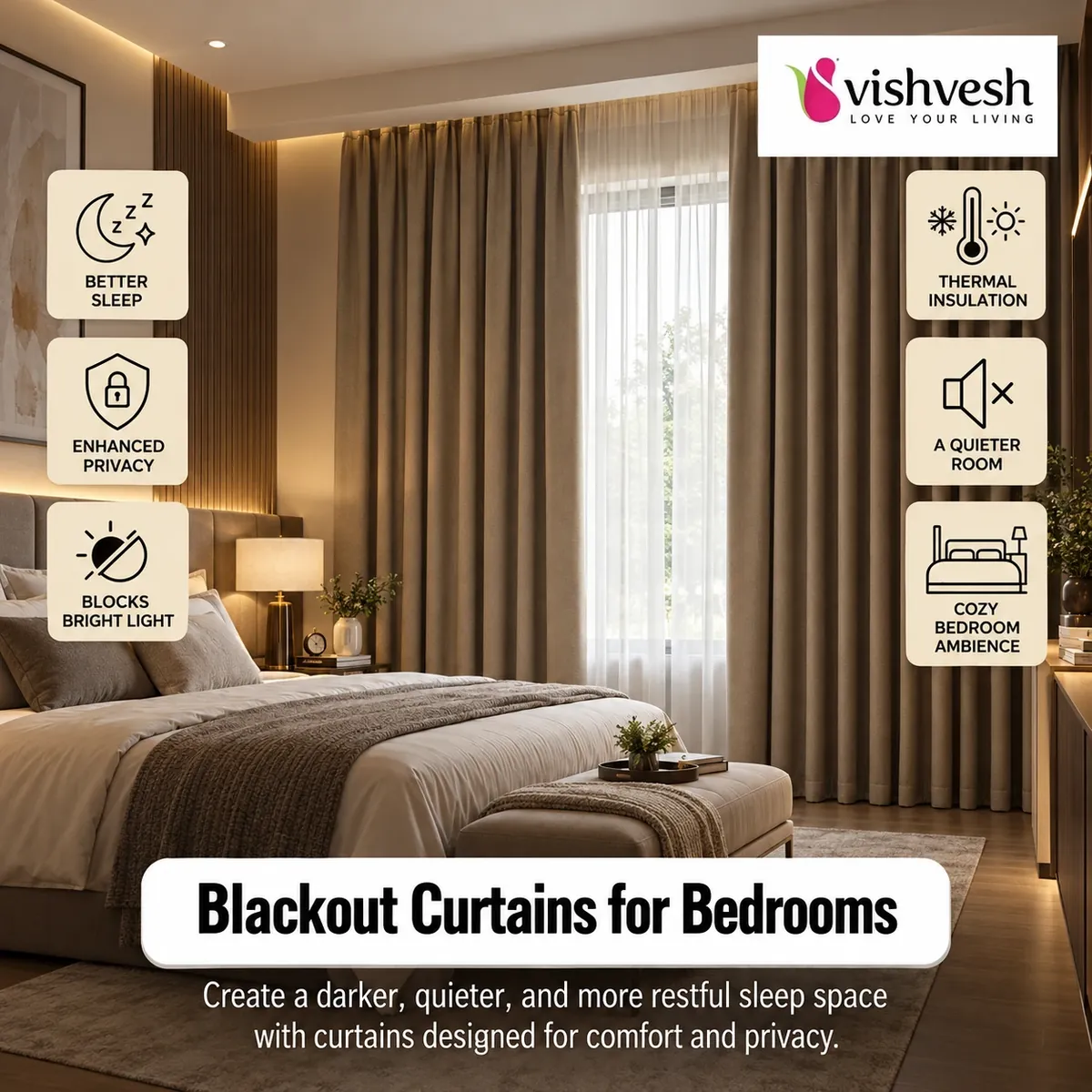
Bedrooms benefit from a restful look. Plain curtains, soft botanical prints or tonal geometrics work well here. Add a blackout lining to any of the three styles for better sleep.
Learn more about blackout curtains for bedrooms.
Dining rooms
Dining rooms can carry more drama. Classic printed motifs, such as damask or trellis, add a formal touch. Plain faux silk gives a soft sheen in evening light.
Kids' rooms
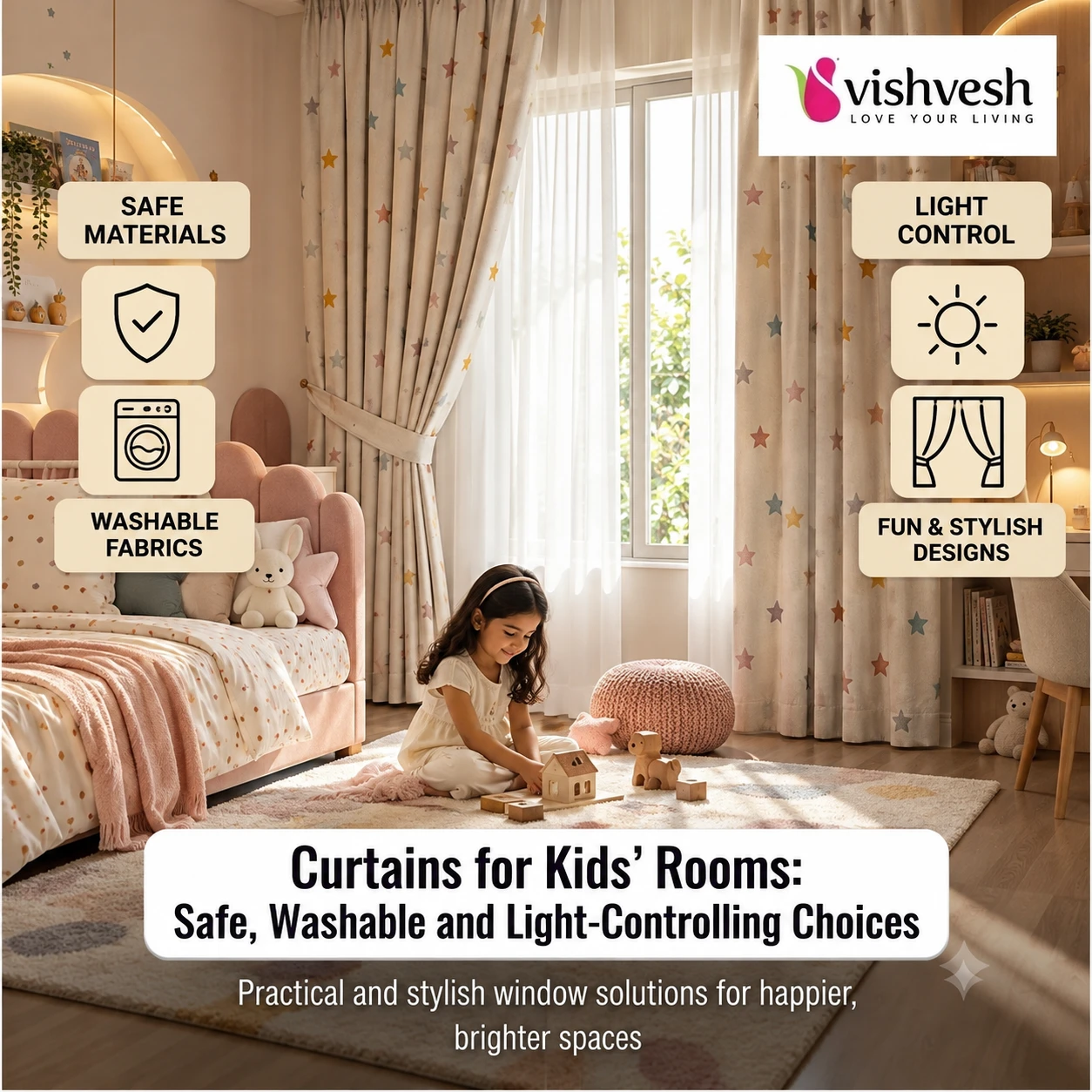
Printed and geometric curtains bring energy to children’s rooms. Playful chevrons, stars or illustrated prints suit younger children. Choose washable fabrics where possible.
Learn more about curtains for kids’ rooms.
Home offices
Fine stripes and grids keep a workspace structured and calm. Plain curtains in muted tones reduce visual distraction during long work hours.
How to judge pattern scale
Pattern scale is the size of the motif and the distance between repeats. It has a big effect on how a curtain reads in a room.
- Large-scale patterns suit tall, wide windows and spacious rooms, where the whole motif can be seen.
- Medium-scale patterns work in most living rooms and bedrooms.
- Small-scale patterns read as texture from a distance and suit compact rooms.
A useful test is to view a large sample from the distance you will normally sit. If the pattern looks busy from the sofa, consider a smaller or more tonal design.
How to pair curtains with other patterns in the room
Mixing patterns works when there is a clear plan. Designers often follow three simple rules.
- Vary the scale. Pair a large-pattern curtain with a small-pattern cushion or rug.
- Share a colour. Make sure every pattern in the room has at least one colour in common.
- Let one pattern lead. Choose one bold pattern and keep the others quieter.
If your room already has patterned wallpaper, plain curtains usually work best. If the walls and sofa are plain, a printed or geometric curtain can bring the room to life.
Using stripes to change room proportions
Striped curtains are the simplest geometric pattern, and they have a useful side effect. Vertical stripes draw the eye upward and make ceilings feel higher. Horizontal stripes draw the eye across and make narrow windows feel wider. For apartments with standard ceiling heights, vertical stripes on floor-length curtains can add a sense of height.
Colour and contrast
Colour choice matters as much as pattern. A high-contrast design, such as black and white, makes a strong statement. A tonal design, using two shades of one colour, adds interest more quietly.
Light neutrals keep rooms bright and open. Deep tones, such as navy, emerald and terracotta, add warmth and drama. In rooms with strong sun, lighter colours show fading less over time.
Learn more about popular curtain colours.
Practical considerations for Chennai homes
Chennai’s climate affects how curtains age and perform. A few practical points apply to all three styles.
- Strong sun: west-facing windows receive intense afternoon light. A lining protects printed and deep-coloured fabrics from fading.
- Humidity: keep rooms ventilated so fabric does not stay damp during the monsoon.
- Dust: gentle vacuuming every few weeks keeps patterns and colours looking fresh.
- Layering: sheers in front of patterned curtains reduce direct sun exposure and soften the pattern by day.
Learn more about sheer curtains.
Plain, printed or geometric: a quick decision guide
- Choose plain curtains if your room already has patterned upholstery, rugs or wallpaper, or if you want a calm, timeless look.
- Choose printed curtains if you want colour, warmth or a theme, and your furniture is mostly plain.
- Choose geometric curtains if your interior is modern or minimal and you want structure without florals.
Still unsure? Many homes combine styles. A printed curtain in the living room, plain curtains in bedrooms and a geometric design in the study can feel coherent when the colours connect.
How Vishvesh helps you choose
Pattern is easier to judge in person. At the Vishvesh showroom on Cathedral Road, Chennai, you can compare plain, printed and geometric curtain fabrics side by side. Our team helps you check pattern scale, colour and lining for each room, then stitches curtains to fit your windows.
Explore our plain curtains, printed curtains and geometric curtains collections, or browse all patterned curtains.
Learn more about custom curtain stitching.
Book a curtain consultation at our Cathedral Road showroom.
Questions before you visit? Contact us or call +91 99622 99699.
Address: 22A, Prince Arcade, Cathedral Road, next to Stella Maris College, Chennai 600086
Frequently Asked Questions
Are plain curtains better than patterned curtains?
Neither is better in every room. Plain curtains suit rooms that already contain patterned rugs, upholstery or wallpaper, and they create a calm look. Patterned curtains, whether printed or geometric, suit rooms with plain furniture where the window should become the focal point.
Can I mix plain and patterned curtains in the same home?
Yes. Many homes use patterned curtains in living areas and plain curtains in bedrooms. The home feels connected when colours repeat across rooms. For example, a printed living room curtain can share a colour with plain bedroom curtains.
Do geometric curtains suit traditional homes?
They can. Classic geometric patterns, such as trellis, diamond and fine stripes, sit comfortably in traditional interiors. Tone-on-tone geometrics are the easiest to blend in, because they add pattern without strong contrast.
Which curtain pattern makes a small room look bigger?
Light-coloured plain curtains or small-scale, tonal patterns make small rooms feel larger. Vertical stripes can also add a sense of height. Avoid large, high-contrast patterns, which can make a compact room feel crowded.
How do I match curtains with a patterned sofa?
Choose plain curtains or a much smaller pattern than the sofa fabric. Pick a curtain colour that appears in the sofa pattern. This keeps the room balanced and lets the sofa remain the main feature.
Do printed curtains fade faster than plain curtains?
Printed colours can fade with strong, direct sun, and deep plain colours can fade too. Fading depends on the dye, fabric and sun exposure. A lining and sheer layer reduce fading on west-facing windows.
What is the most timeless curtain style?
Plain curtains in natural textures, such as linen, and classic geometrics, such as simple stripes, tend to stay in style longest. Bold, trend-led prints can feel dated sooner.