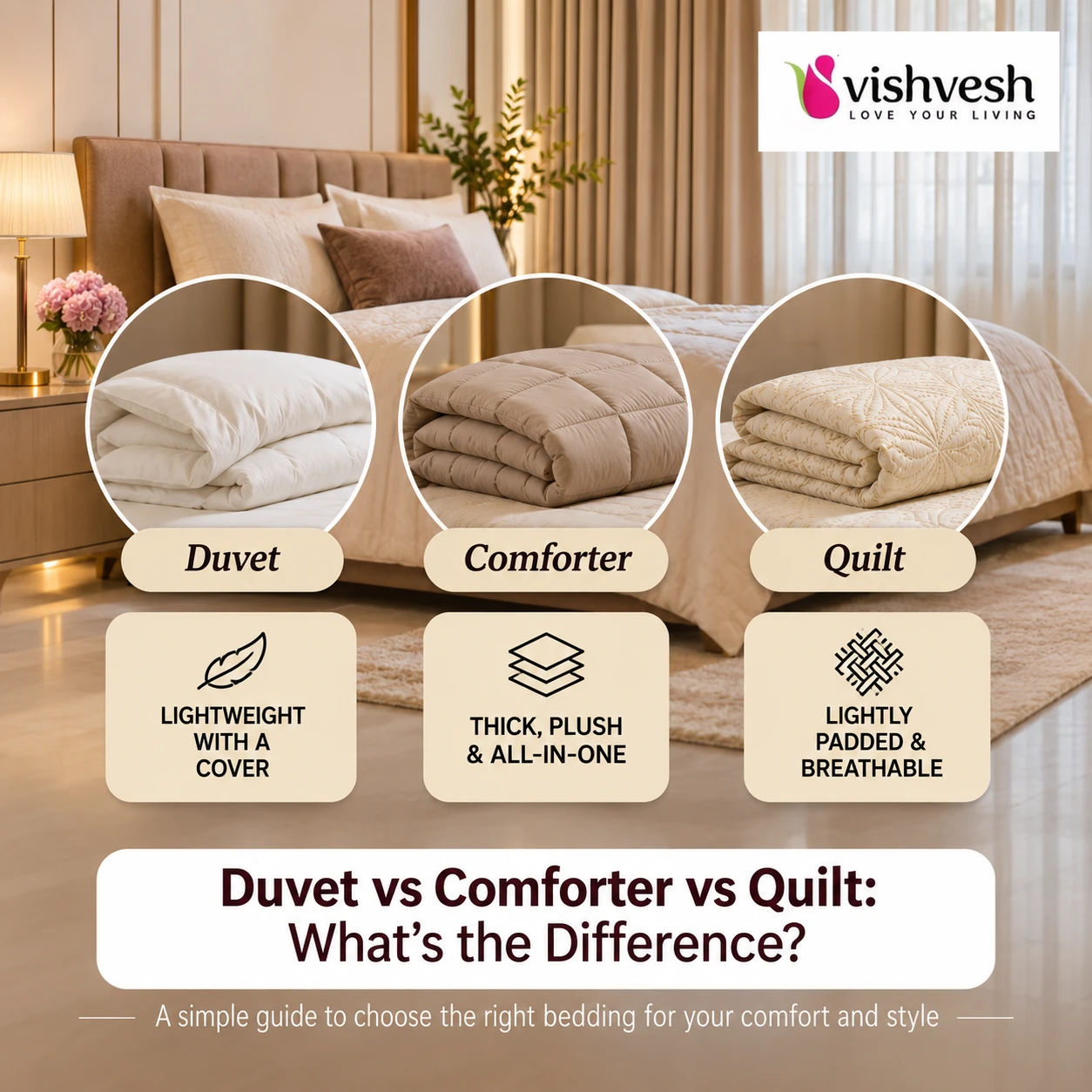
Duvets, comforters and quilts all keep you warm in bed, so the names are often used interchangeably. In fact, they are built differently. They also differ in how warm they feel, how you clean them and how they look on the bed.
This guide explains each one clearly, compares them side by side and helps you choose the right option for your bedroom. It also covers what works best in warm climates like Chennai, where many people sleep in air-conditioned rooms.
Learn more about home linen.
What is the difference between a duvet, a comforter and a quilt?
A duvet is a soft, filled insert that goes inside a removable cover. A comforter is a single, thick, stitched blanket with filling sealed inside, used without a cover. A quilt is a thinner blanket made of three layers stitched together in a pattern. Duvets suit easy cleaning, comforters suit simplicity and quilts suit lighter warmth.
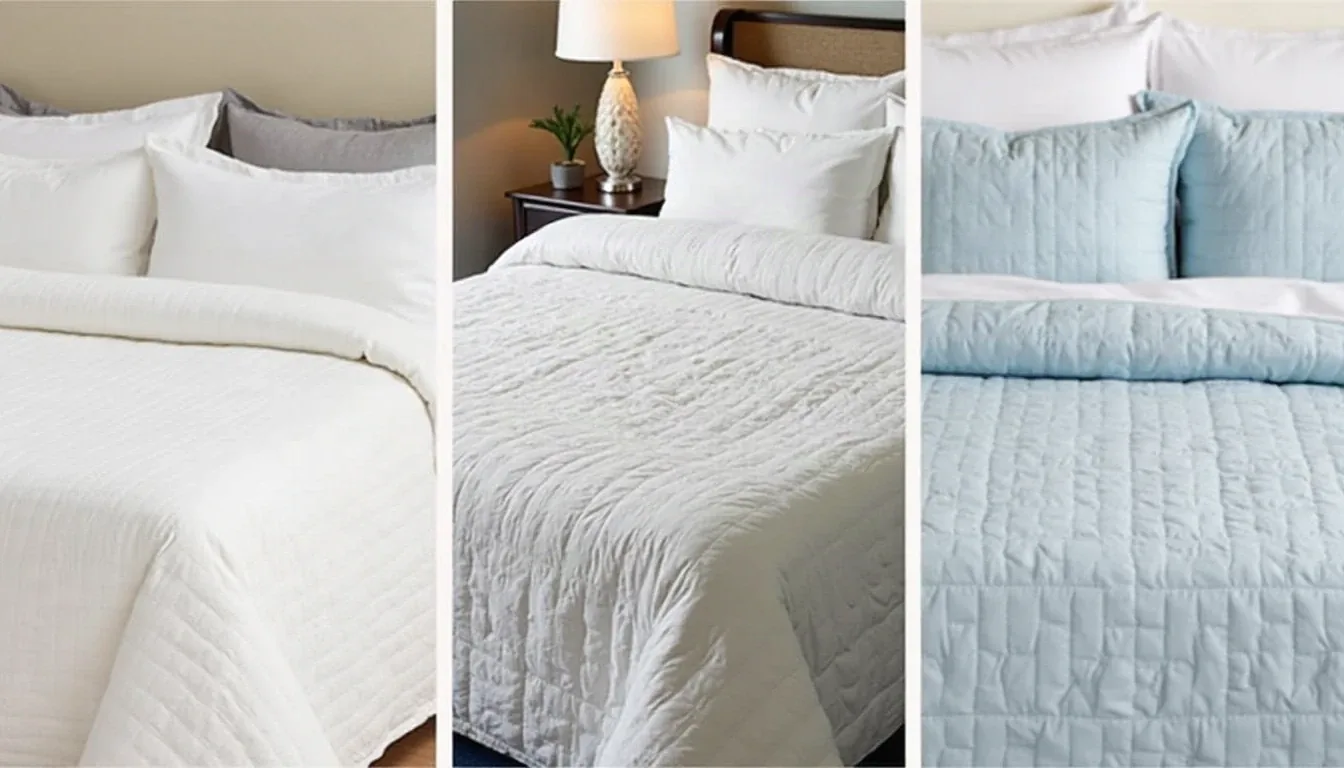
What is a duvet?
A duvet is a soft, flat bag filled with insulating material. Common fillings include down, feathers, wool and synthetic fibres such as microfibre. A duvet is almost always used inside a duvet cover, which works like a large pillowcase.
The cover protects the duvet and is the part you wash regularly. Changing the cover also changes the look of the bed, without buying a new duvet.
Key features of a duvet
- Filled insert used with a removable cover
- Fillings range from light to very warm
- Cover is easy to wash and change
- Fluffy, lofty look on the bed
Best for
Duvets suit people who want an easy-care bed and like to change the bedroom’s look often. They also suit AC bedrooms, where a light synthetic duvet adds comfort without overheating.
What is a comforter?
A comforter is a thick blanket with filling permanently sealed between two layers of fabric. Stitching across the surface keeps the filling evenly spread. Comforters are usually used on their own, without a separate cover, and often come in coordinated designs.
In some markets, the word “comforter” is used loosely for any thick bed covering. In this guide, it means a single stitched piece with built-in fabric and filling.
Key features of a comforter
- One-piece blanket with sealed filling
- No separate cover needed
- Often part of a matched bedding set
- Moderate to high warmth, depending on filling
Best for
Comforters suit people who want a finished, coordinated look with no assembly. They are a simple choice for guest rooms and kids’ rooms.
What is a quilt?
A quilt is made of three layers: a decorative top, a thin middle layer of batting and a backing fabric. The layers are stitched together, often in decorative patterns. Quilts are thinner and flatter than duvets and comforters.
In India, the quilt has a long tradition. The razai is a filled quilt used in cooler regions. The dohar is a light, layered cotton blanket that suits warmer weather.
Key features of a quilt
- Three stitched layers with thin batting
- Lighter and flatter than duvets and comforters
- Often decorative, with patterned stitching
- Works as a top layer or a light blanket
Best for
Quilts suit warm climates, light sleepers who overheat easily, and anyone who likes a tailored, flat bed. They also work as a decorative layer at the foot of the bed.
Side-by-side comparison
| Feature | Duvet | Comforter | Quilt |
|---|---|---|---|
| Construction | Filled insert inside a removable cover | Single piece with sealed filling | Three layers stitched together |
| Thickness | Medium to thick, lofty | Medium to thick | Thin and flat |
| Warmth | Light to very warm, by filling | Moderate to warm | Light |
| Cover needed | Yes | No | No |
| Cleaning | Wash the cover often; clean insert occasionally | Wash the whole piece | Wash the whole piece |
| Changing the look | Easy, swap the cover | Buy a new comforter | Buy a new quilt |
| Best climate | AC rooms, cooler months | AC rooms | Warm climates, light layering |
| Look on the bed | Fluffy, relaxed | Coordinated, finished | Flat, tailored |
Which is best for Chennai's climate?
For non-AC bedrooms in Chennai, a light cotton quilt or dohar is usually the most comfortable choice. For air-conditioned bedrooms, a light duvet with a breathable cotton cover or a lightweight comforter works well. Choose breathable fabrics and avoid heavy fillings, which can trap heat.
Non-AC bedrooms
Chennai stays warm for most of the year. In rooms without air conditioning, heavy bedding can feel uncomfortable. A thin cotton quilt or dohar gives light coverage without trapping heat.
AC bedrooms
Many people in Chennai sleep with the air conditioning on, which can feel cool by early morning. A light duvet or comforter adds comfort. Synthetic microfibre fillings are light and easy to maintain. Cotton covers keep the surface breathable.
Humidity and care
Humidity can make bedding feel damp if it stays folded in closed cupboards. Air quilts and comforters regularly. Wash duvet covers often, and sun-dry bedding when the weather allows, as per care labels.
Understanding fillings
| Filling | Feel | Warmth | Care |
|---|---|---|---|
| Down | Very soft, light, lofty | High | Specialist cleaning often needed |
| Feather | Heavier than down | Moderate to high | Specialist cleaning often needed |
| Microfibre and synthetic | Soft, light | Light to moderate | Often machine washable |
| Cotton | Natural, breathable | Light | Easy, but can compress over time |
| Wool | Breathable, regulates temperature | Moderate | Gentle cleaning required |
People with allergies to feathers often prefer synthetic or cotton fillings. Check the care label before buying, since cleaning needs vary.
Cover fabrics and thread count
The outer fabric affects comfort as much as the filling. Cotton is breathable and soft. Cotton sateen has a smooth, slight sheen. Percale feels crisp and cool, which suits warm nights. Linen is very breathable and has a relaxed texture.
Thread count measures how many threads are woven into a square inch of fabric. A higher thread count can feel smoother, but fibre quality and weave matter more than the number alone.
Learn more about linen curtains.
How to choose the right one for your bedroom
- Check your sleeping temperature. Do you sleep hot or cold, with or without AC?
- Decide how much care you want. Duvets with covers are easiest to keep fresh.
- Think about style. Fluffy duvet, coordinated comforter or tailored quilt?
- Consider who uses the room. Comforters suit guest rooms and kids’ rooms for simplicity.
- Choose the right size. Bedding should drape over the mattress edges on both sides.
Bedding sizes
Bedding sizes vary by brand. As a general rule, a duvet, comforter or quilt should be wider than the mattress so it covers the sides when you sleep.
Layering for a designer bed
You do not have to choose only one. Designers often layer bedding for comfort and style.
- A fitted sheet and flat sheet as the base
- A light quilt or duvet as the main layer
- A folded comforter or throw at the foot of the bed for cooler nights
- Decorative cushions in matching colours
Layering lets you adjust warmth through the night, which is useful in AC bedrooms.
Learn more about blackout curtains for bedrooms.
Learn more about wedding season home refresh.
Caring for your bedding
- Duvets: wash the cover every one to two weeks. Clean the insert as per its label, usually a few times a year.
- Comforters: wash or dry clean as per the label. Use a top sheet to reduce how often the comforter needs washing.
- Quilts: wash gently in cold water. Dry flat or in shade to protect colours.
- Storage: store clean and fully dry bedding in breathable bags, not plastic, to avoid dampness.
Explore bedding at Vishvesh
Compare fabrics and fillings in person, and match bedding with curtains and cushions for a coordinated room.
Learn more about bed linen store in Chennai.
Explore our home linen collection.
Questions before you visit? Contact us or call +91 99622 99699.
Address: 22A, Prince Arcade, Cathedral Road, next to Stella Maris College, Chennai 600086
Frequently Asked Questions
Is a duvet the same as a comforter?
No. A duvet is a filled insert that goes inside a removable cover. A comforter is a single piece with filling sealed inside, used without a cover. Duvets are easier to clean, while comforters are simpler to use straight away.
Which is lighter, a quilt or a comforter?
A quilt is usually lighter. It has a thin batting layer between two fabrics, while a comforter has a thicker filling. Quilts suit warm climates and people who sleep hot.
What is best for an AC room in Chennai?
A light duvet with a breathable cotton cover or a lightweight comforter works well in air-conditioned rooms. Microfibre fillings are light and easy to maintain. Layering a quilt on top lets you adjust warmth through the night.
Do I need a cover for a comforter?
No. Comforters are designed to be used on their own. Some people add a top sheet underneath to keep the comforter clean for longer, which reduces how often it needs washing.
What is the difference between a razai and a dohar?
A razai is a filled quilt used for warmth in cooler weather. A dohar is a light, layered cotton blanket, usually thinner, that suits warm weather and air-conditioned rooms.
How often should I wash a duvet?
Wash the duvet cover every one to two weeks. Clean the duvet insert a few times a year, following its care label. Using a cover keeps the insert fresh for longer.