How to Choose Curtains for Every Room in Your Home: A Complete Buying Guide
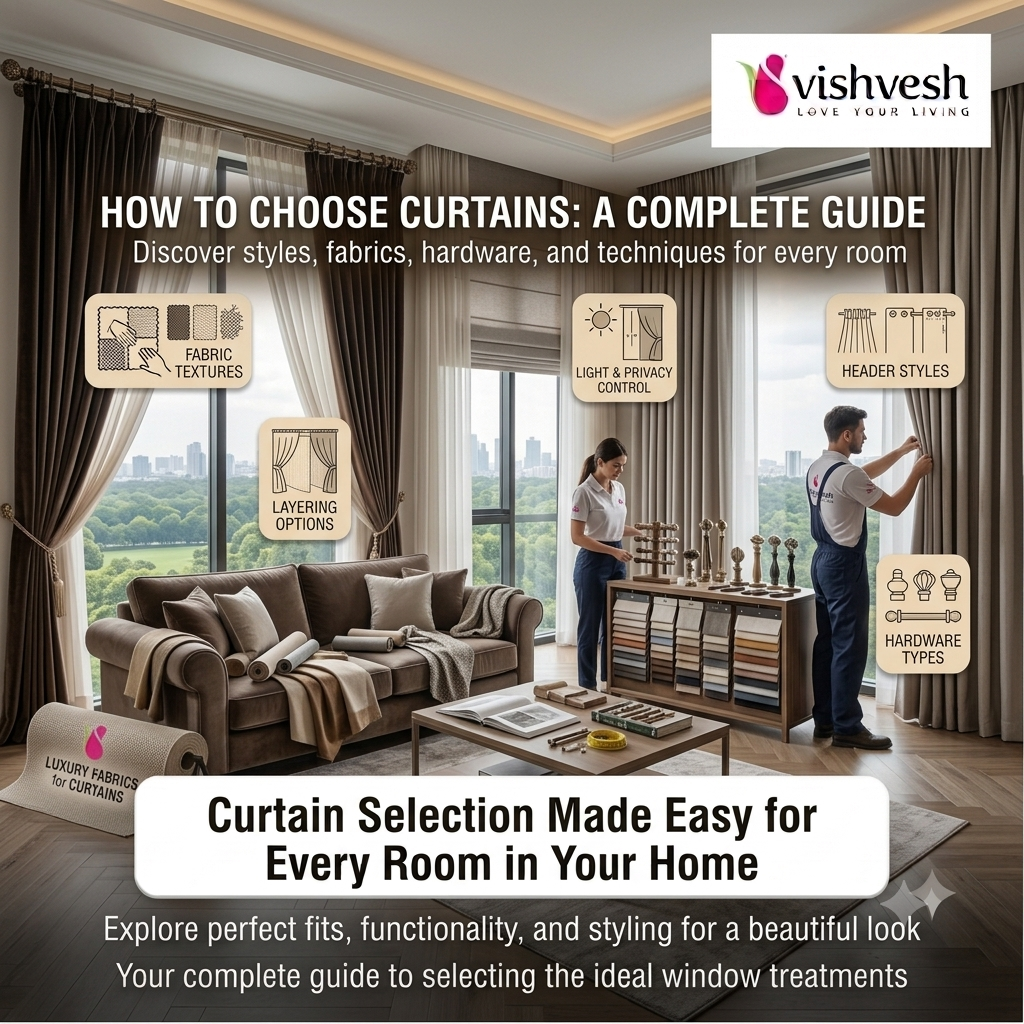
Choosing curtains for a room depends on three things: how much light control the room needs, the fabric weight suited to that light goal, and the room’s overall style. Living rooms often suit medium-weight fabrics, bedrooms benefit from blackout or heavier options, and bathrooms or balconies need moisture- or weather-considerate fabric choices.
Start With the Room’s Purpose, Not the Fabric
The right curtain for a room is decided by how much light control and privacy that room needs first, with fabric and style chosen to fit that requirement rather than the other way around. See our full curtain range once you know what each room needs.
Curtain Choices by Room
Living Room
Living rooms generally suit medium-weight fabrics that soften daylight without fully blocking it, balancing everyday brightness with some evening privacy. Our living room curtain design ideas cover this in more depth.
Bedroom
Bedrooms often benefit from blackout or heavier light-blocking fabric, particularly for better sleep quality in a naturally bright room.
Balcony and Sliding Doors
Balcony curtains need to handle more light and, in exposed areas, some weather resistance, while still working well with a sliding or French door mechanism. See our guide to choosing curtains for a balcony for a deeper look.
Kitchen
Kitchen curtains benefit from lighter, easy-clean fabrics given their proximity to cooking odours and moisture.
Home Office
A home office often benefits from a light-filtering fabric that reduces screen glare without making video calls look dim.
| Room | Light Control Priority | Suggested Fabric Weight | Style Consideration |
|---|---|---|---|
| Living Room | Balanced | Medium | Everyday use, some formality |
| Bedroom | High (blackout preferred) | Heavy or lined | Sleep quality first |
| Balcony/Sliding Door | Moderate | Medium, weather-considerate | Works with door mechanism |
| Kitchen | Low to moderate | Light, easy-clean | Practicality over formality |
| Home Office | Moderate, glare-reducing | Light to medium | Reduces video-call glare |
Fabric Weight and Light Control Explained
Curtain fabric weight is the single biggest factor in how much light a curtain blocks, more than colour or pattern, which is why two curtains in the same shade can behave very differently in a room.
Measuring Curtains Correctly
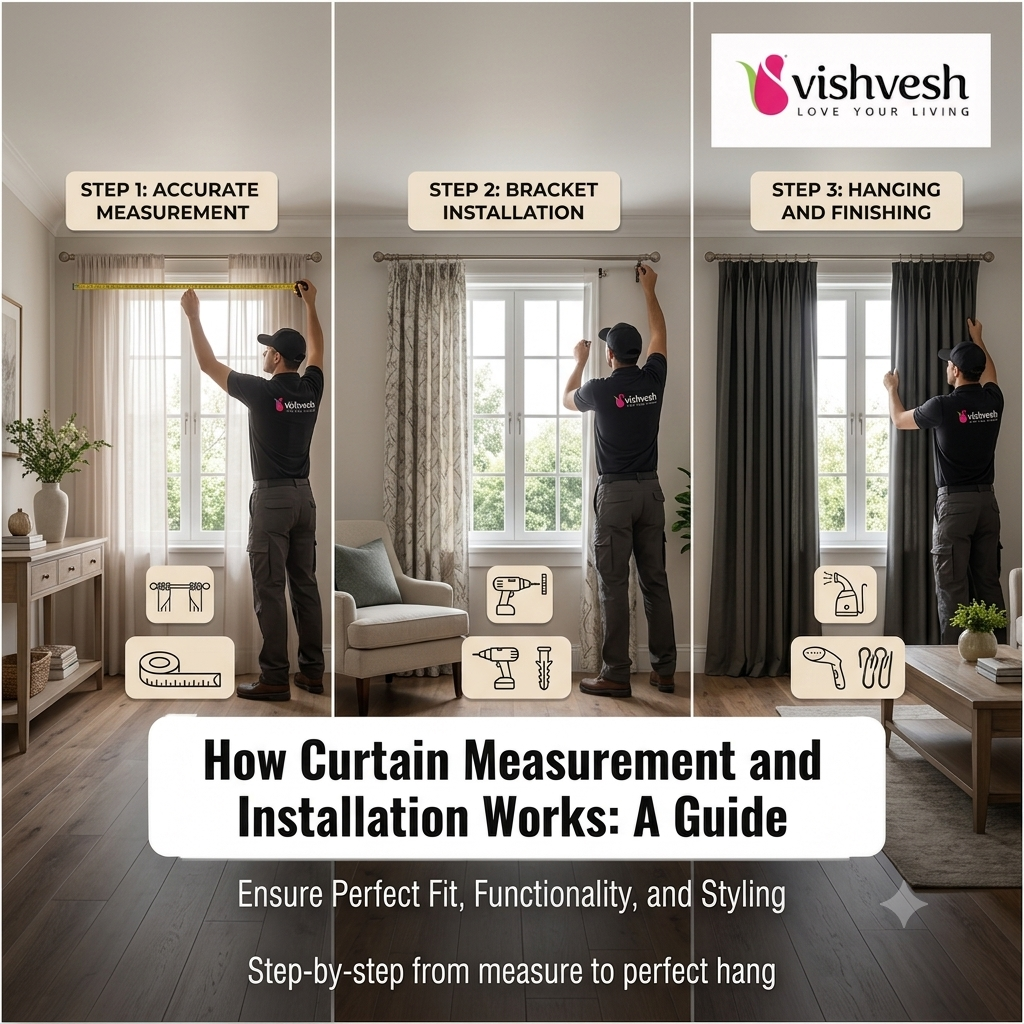
Curtains should generally be measured from just above the window frame to the desired length, allowing extra width so the curtain gathers properly rather than hanging flat when closed.
Curtain Length Guide
A curtain that just touches the floor gives a clean, tailored look, while a slightly longer, “puddled” length reads as more formal. Shorter curtains that stop above a windowsill suit smaller or more casual spaces.
Choosing Curtain Style: Solid or Patterned
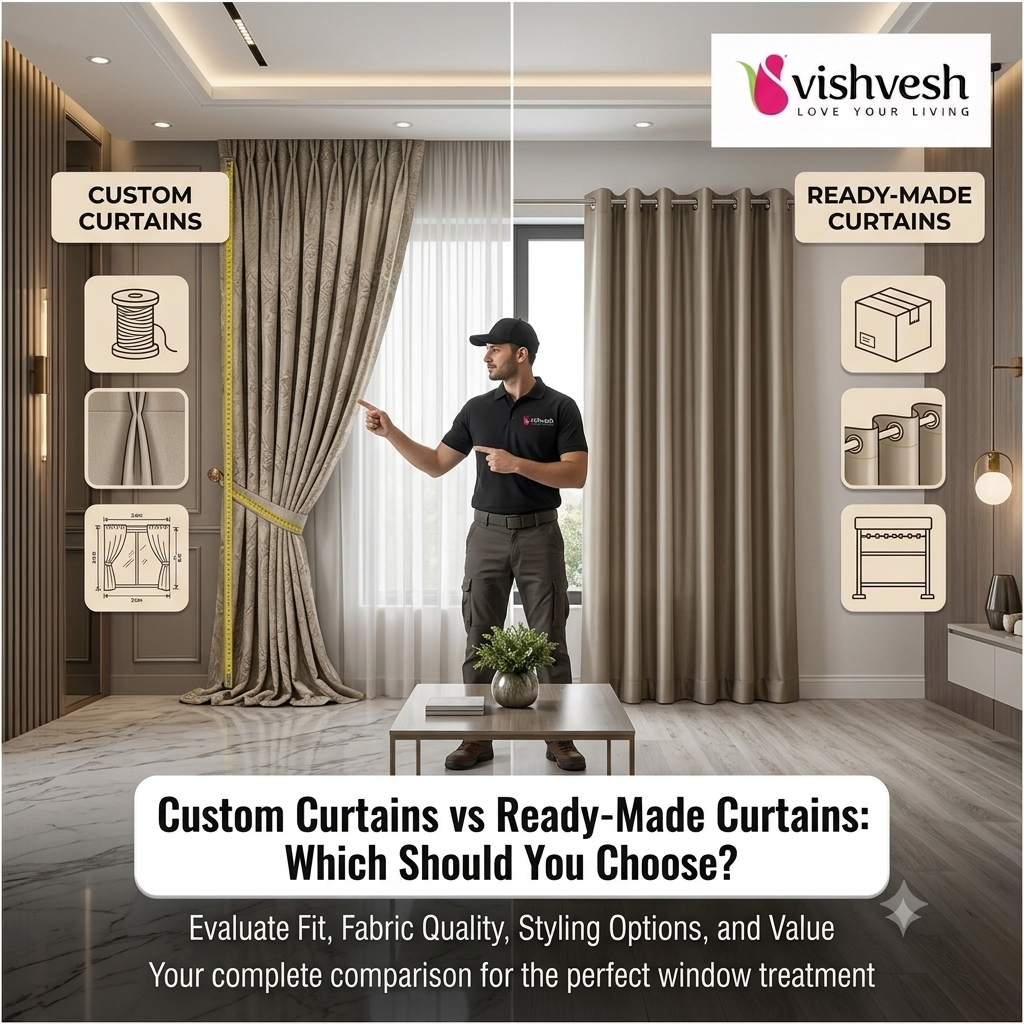
Once fabric weight and length are decided, style becomes a matter of preference. Plain or solid curtains suit rooms with other patterned furnishings, while a bold pattern can act as a room’s main design statement in an otherwise simple space. Explore our curtain colour choices for more on this.
Bringing It All Together: A Simple Decision Order
- Decide how much light control the room needs.
- Choose a fabric weight that matches that light goal.
- Decide on curtain length and hanging style.
- Choose colour and pattern last, once the practical decisions are made.
Book a curtain consultation to get a room-by-room recommendation for fabric, length and style across your home.
FAQs
Start with how much light control the room needs, then choose a fabric weight and length that match, and decide on colour and pattern last.
Blackout or heavier light-blocking fabric is generally best for bedrooms, particularly to support better sleep quality in a naturally bright room.
Generally yes. Living rooms usually suit medium-weight, balanced-light fabric, while bedrooms benefit more from heavier or blackout options.
Curtains are typically measured from just above the window frame to the desired length, with extra width added so the fabric gathers properly.
Floor-length curtains give a clean, tailored look, while a longer “puddled” length feels more formal, and shorter curtains suit smaller or casual spaces.
This depends on the room. Plain curtains suit spaces with other patterned furnishings, while a bold pattern can act as a room’s main design statement in an otherwise simple space.
Medium-weight, weather-considerate fabric generally works best for balconies and sliding doors, balancing light control with the door’s mechanism.