How should upholstery fabric be cared for in a humid climate?
Upholstery fabric in a humid climate benefits from light, regular cleaning, vacuuming and spot-cleaning, to prevent moisture and dust buildup, with fabric-specific guidance varying by material. Velvet and leather generally need more careful, often professional cleaning than cotton or linen, and good ventilation around upholstered furniture helps reduce the risk of mildew.
Upholstered furniture works harder in Chennai than it does in a drier climate. Humidity affects how quickly fabric collects dust, how it dries after cleaning, and how likely it is to develop mildew if left damp. This guide covers care for the five most common upholstery fabric types Vishvesh works with, cotton, linen, velvet, leather and viscose, along with everyday habits that extend any upholstery fabric’s life in a humid environment. To see the current range, explore our upholstery fabric range.
How Humidity Affects Upholstery Fabric
Light, regular cleaning, vacuuming and spot-cleaning, is generally recommended more frequently in humid climates to prevent moisture and dust buildup, since airborne dust tends to settle and stick more readily in humid air than in a drier environment. Fabric that stays even slightly damp for extended periods, from spilled liquid, high ambient humidity, or furniture placed too close to an exterior wall, is more prone to developing a musty smell or mildew over time.
Direct, prolonged sunlight can also fade upholstery fabric over time regardless of material, so furniture placed near an uncovered window may benefit from a sheer curtain or blind to soften the light it receives, protecting both colour and fibre integrity.
Care by Fabric Type
Cotton
Cotton upholstery fabric is breathable and relatively easy to clean, making it a practical everyday choice. Regular vacuuming and prompt spot-cleaning of spills are generally sufficient for cotton, and it tends to dry reasonably quickly after a light clean, which reduces the window of opportunity for mildew to develop.
Linen
Linen upholstery fabric has a natural, textured look and breathes well, which suits Chennai’s warm climate, though it can be more prone to wrinkling and staining than tightly woven synthetic blends. Blotting spills immediately rather than rubbing them helps prevent staining from setting into linen’s more open weave.
Velvet
Velvet upholstery fabric has a soft, dense pile that adds a rich, premium look to furniture, but it generally requires more careful cleaning than cotton or linen, since incorrect home cleaning methods can damage the pile or finish. A soft brush used in the direction of the nap helps lift dust without flattening the texture, but deeper cleaning is usually best left to a professional upholstery cleaning service.
Leather
Leather upholstery is durable and easy to wipe clean, and it tends to age well with use. In a humid climate, leather benefits from occasional conditioning to prevent the material from drying out between humid and drier periods, and from being kept out of prolonged direct sun, which can dry and crack the surface over time.
Viscose
Viscose-blend upholstery fabrics offer a silk-like sheen at a different price and durability point than pure silk. Viscose is generally more sensitive to moisture than cotton or synthetic blends, so spills should be blotted immediately, and professional cleaning is usually the safer option for anything beyond light dusting. To learn more, read about the advantages of viscose upholstery fabric.
Everyday Cleaning Tips
Vacuuming upholstered furniture weekly, using an upholstery attachment rather than a standard floor head, helps prevent dust and grit from working into the fabric’s weave, which is a common cause of premature wear in Chennai’s dustier conditions.
Blotting rather than rubbing any spill is a simple habit that prevents most stains from setting, regardless of fabric type. Keeping upholstered furniture a small distance away from exterior-facing walls, where ambient dampness during monsoon season tends to be highest, is another practical way to reduce moisture exposure without any special cleaning products.
Consider a family living room sofa in daily use, positioned near a window that gets afternoon sun. Weekly vacuuming, prompt spill blotting, and a sheer curtain to soften the direct light together cover most of what that piece of furniture needs to stay in good condition through Chennai’s humid months, without requiring anything beyond routine home care.
When to Call a Professional
Velvet and leather typically require more careful, often professional cleaning compared to cotton or linen, since incorrect home cleaning methods can damage the pile or finish permanently. Any stain that does not lift with light home cleaning, or any furniture that has developed a musty smell suggesting trapped moisture, is generally a sign that professional cleaning is the safer next step rather than continuing to try home remedies.
Vishvesh’s showroom team can advise on care instructions specific to the exact fabric a customer has purchased, since the right approach genuinely differs by material, and following generic advice for the wrong fabric type is one of the more common ways home cleaning attempts go wrong.
Preventing Problems Before They Start
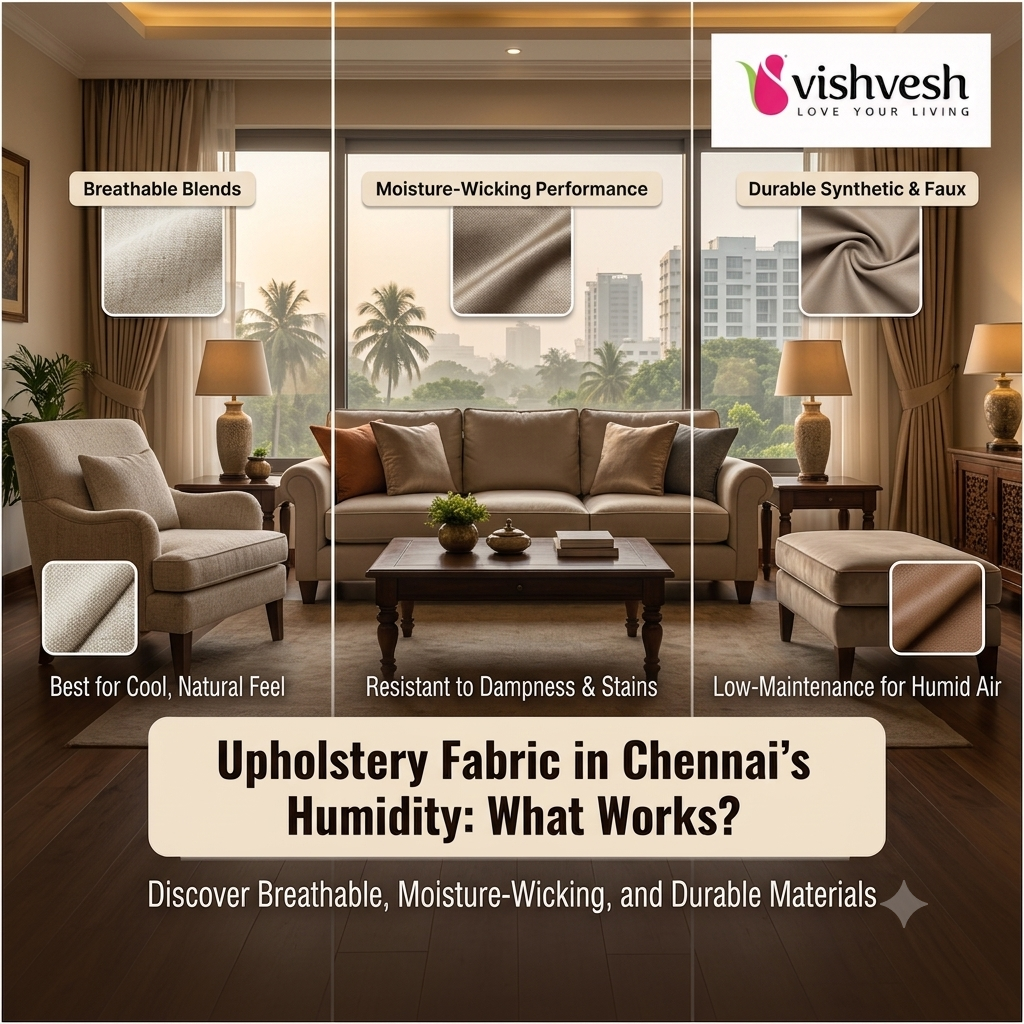
Choosing fabric with actual household use in mind, rather than appearance alone, prevents many care problems before they begin. A family’s main sofa, used daily, generally benefits from a more durable, easier-to-clean fabric such as cotton, a synthetic blend, or leather, reserving delicate fabrics like velvet or viscose for lower-traffic, occasional-use furniture.
Discussing expected household use honestly during the initial fabric selection consultation, rather than choosing purely on colour or texture, is one of the simplest ways to avoid a maintenance mismatch that only becomes obvious months after purchase.
Rotating cushions periodically, where the design allows, helps even out wear and sun exposure across a piece of furniture rather than concentrating it in one spot. Keeping upholstered furniture a small distance away from exterior-facing walls, where ambient dampness during monsoon season tends to be highest, further reduces moisture exposure without any special products or routines.
Building a Simple Seasonal Care Routine
A light weekly vacuum, prompt spill blotting, and an occasional check for any musty smell or visible dampness cover most of what upholstery fabric needs day to day, regardless of which of the five main fabric types is involved.
During Chennai’s wettest monsoon weeks, it is worth paying slightly closer attention to furniture positioned near exterior walls or windows, since this is when ambient humidity peaks and the risk of trapped moisture is highest. A brief seasonal check, rather than a major cleaning overhaul, is usually enough to catch any early signs of a problem before it becomes significant.
Households that follow this kind of simple, consistent routine, light weekly cleaning, prompt spill response, and a seasonal check during the wettest months, generally see noticeably better long-term results from any upholstery fabric than households that only clean reactively once a problem is already visible.
None of this requires specialist equipment or products; a vacuum with an upholstery attachment, a clean cloth for blotting, and periodic professional cleaning for velvet, leather or viscose pieces covers the great majority of what a Chennai household needs to keep upholstered furniture looking good for years.
What Professional Upholstery Cleaning Involves
Professional upholstery cleaning generally begins with an assessment of the fabric type and any specific staining or wear present, since the cleaning method used for velvet differs meaningfully from the method used for leather or a synthetic blend. A professional cleaner working from this assessment reduces the risk of a cleaning method that looks fine immediately but damages the fabric over time.
Most professional cleaning services can be arranged without needing to remove furniture from the home, with a technician treating the fabric on-site using equipment and products suited to the specific material. This is generally more practical for large pieces like sofas than attempting to transport them for cleaning elsewhere.
The frequency of professional cleaning needed varies by fabric type and household use; unspecified pending confirmation as an exact schedule, though velvet, leather and viscose pieces in daily use generally benefit from more frequent professional attention than an occasional-use cotton or linen piece.
Extending Upholstery Life Through Smart Room Design
Positioning upholstered furniture away from direct airflow paths, such as directly under an air conditioning vent, can help prevent uneven drying and the temperature fluctuations that contribute to fabric stress over time, particularly for natural fibres like linen and cotton.
Using furniture throws or slipcovers on high-contact areas, such as armrests and the front edge of a seat cushion, is a simple way to protect the most heavily used parts of a sofa or chair without covering the entire piece, extending the life of the underlying fabric in the areas that wear fastest.
Coordinating upholstery choice with the room’s curtains and rugs during the initial consultation, discussed in more detail on the main upholstery fabric page, also has a practical care dimension: fabrics chosen to work well together aesthetically are often chosen with compatible care needs in mind too, simplifying the household’s overall maintenance routine. To complete the room, browse home linen to complete the room.
How Fabric Choice at Purchase Affects Long-Term Care
The care burden a household takes on is largely determined at the point of purchase, not afterward. Choosing velvet for a heavily used family sofa commits a household to more frequent professional cleaning than choosing a durable synthetic blend would, regardless of how diligent the household is about everyday maintenance.
This does not mean delicate fabrics should be avoided entirely; it means the decision should be made with full awareness of the ongoing care commitment involved, ideally discussed openly during the fabric selection consultation rather than discovered as a surprise months after the furniture arrives.
Households that value a specific fabric’s look enough to accept the higher care requirement, a velvet accent chair in a formal sitting room, for example, generally report satisfaction with the trade-off, since the piece is used in a way that matches the fabric’s practical limits rather than fighting against them.
Regional Considerations for Chennai Households
Chennai’s monsoon season, typically bringing the most concentrated period of high humidity across the year, is worth planning around specifically rather than treating upholstery care as a uniform, year-round routine. Furniture care habits that are perfectly adequate in the drier months may need to tighten up, more frequent airing, closer attention to any musty smell, during the wettest weeks.
Coastal humidity in Chennai tends to be more persistent than in drier inland cities, which is part of why the fabric-type guidance in this article leans toward breathable, moisture-tolerant materials as the generally safer default choice for daily-use furniture, reserving more delicate fabrics for lower-traffic, better-ventilated rooms.
Households relocating to Chennai from a drier climate sometimes find that furniture care habits that worked well previously need adjusting, since a fabric that required minimal attention in a low-humidity environment can behave differently once it is living through Chennai’s seasonal humidity swings for the first time. Allowing a short adjustment period to observe how existing furniture responds to the new climate, rather than assuming previous habits will transfer directly, is a sensible approach for any household new to the city.
Whatever the fabric type or household situation, the underlying principle stays the same throughout this guide: light, consistent care prevents far more problems than intensive, occasional cleaning ever fixes, and that is as true for upholstery fabric in Chennai’s humidity as it is for almost any textile in a demanding climate.
Key takeaways
Cotton and linen generally tolerate home cleaning well, while velvet, leather and viscose usually need more careful or professional care.
Keeping upholstered furniture away from exterior-facing walls and direct sunlight reduces both moisture exposure and fading over time.
A musty smell or a stain that will not lift with light cleaning is generally a sign to call a professional rather than continue home cleaning attempts.
Frequently asked questions
How often should upholstery fabric be cleaned in a humid climate?
Light, regular cleaning, vacuuming and spot-cleaning, is generally recommended more frequently in humid climates to prevent moisture and dust buildup, with fabric-specific guidance varying by material.
Which fabric type resists humidity best?
Cotton and linen generally offer better breathability and easier home cleaning in a humid climate than velvet or leather, which need more careful, often professional care.
Can I clean velvet or leather upholstery myself?
Light dusting is generally fine for both, but deeper cleaning is usually best left to a professional, since incorrect home cleaning methods can damage velvet’s pile or leather’s finish.
What causes mildew on upholstered furniture?
Fabric that stays damp for extended periods, from spills, high ambient humidity, or furniture placed too close to an exterior wall, is more prone to developing mildew over time.
Is viscose upholstery hard to maintain?
Viscose is generally more sensitive to moisture than cotton or synthetic blends, so spills should be blotted immediately, and professional cleaning is usually the safer option for anything beyond light dusting.
Does sunlight affect upholstery fabric?
Yes, direct, prolonged sunlight can fade upholstery fabric over time regardless of material, so furniture near an uncovered window may benefit from a sheer curtain or blind.
Which fabric is best for a family sofa used daily?
A durable, easier-to-clean fabric such as cotton, a synthetic blend, or leather generally suits daily-use furniture better than delicate fabrics like velvet or viscose, which are better reserved for occasional-use pieces.
How can I prevent mildew on upholstered furniture during monsoon season?
Keeping furniture a small distance away from exterior-facing walls, ensuring good room ventilation, and drying spills promptly all help reduce the moisture exposure that leads to mildew developing on upholstered furniture over time.
What does professional upholstery cleaning typically involve?
Professional cleaning generally begins with an assessment of the fabric type and any staining present, followed by on-site treatment using equipment and products suited to that specific material, without needing to remove the furniture.
Do throws or slipcovers actually help protect upholstery fabric?
Yes, using a throw or slipcover on high-contact areas such as armrests and the front seat edge is a simple way to protect the most heavily used parts of a piece of furniture without covering it entirely.
Should Chennai households adjust care routines during monsoon season?
Yes, monsoon season typically brings the most concentrated period of high humidity, so tightening routines, more frequent airing and closer attention to any musty smell, during the wettest weeks is generally worthwhile.
Is it worth choosing a delicate fabric knowing it needs more care?
This depends on how the furniture will be used; a delicate fabric like velvet can be a satisfying choice for a lower-traffic, formal piece, provided the household accepts the higher care commitment involved from the outset rather than being surprised by it later.