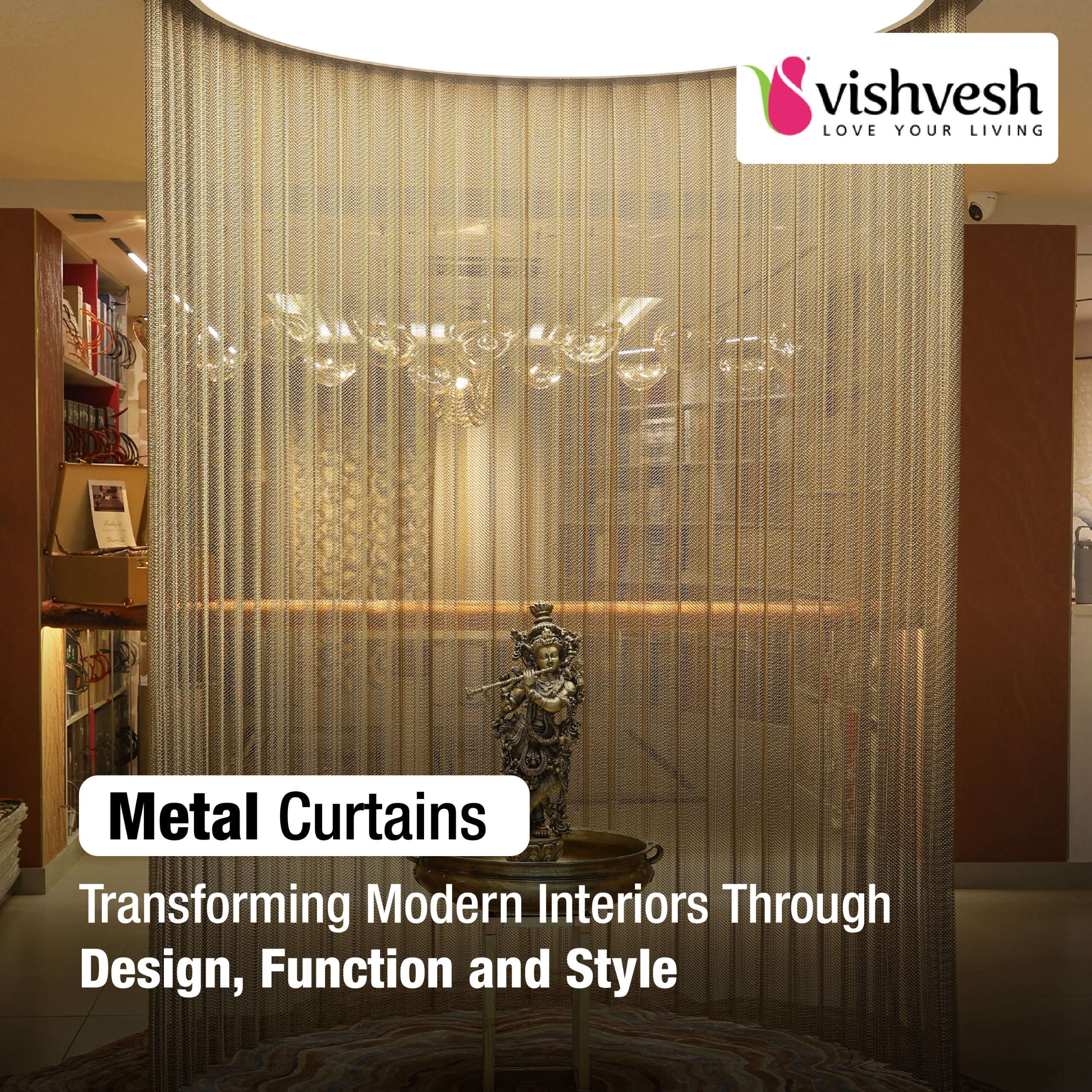
Enter a room and your eyes do not go to the furniture, the light, or even the walls, yet something draws your attention. It moves. It reflects light. It is contemporary, sleek and effortlessly luxurious. It is the strength of metal curtains.
Unlike traditional curtains, they do not just hang quietly, they command attention. The movement they create draws our attention to it.
Traditional curtains serve a purpose. Metal curtains create a presence.
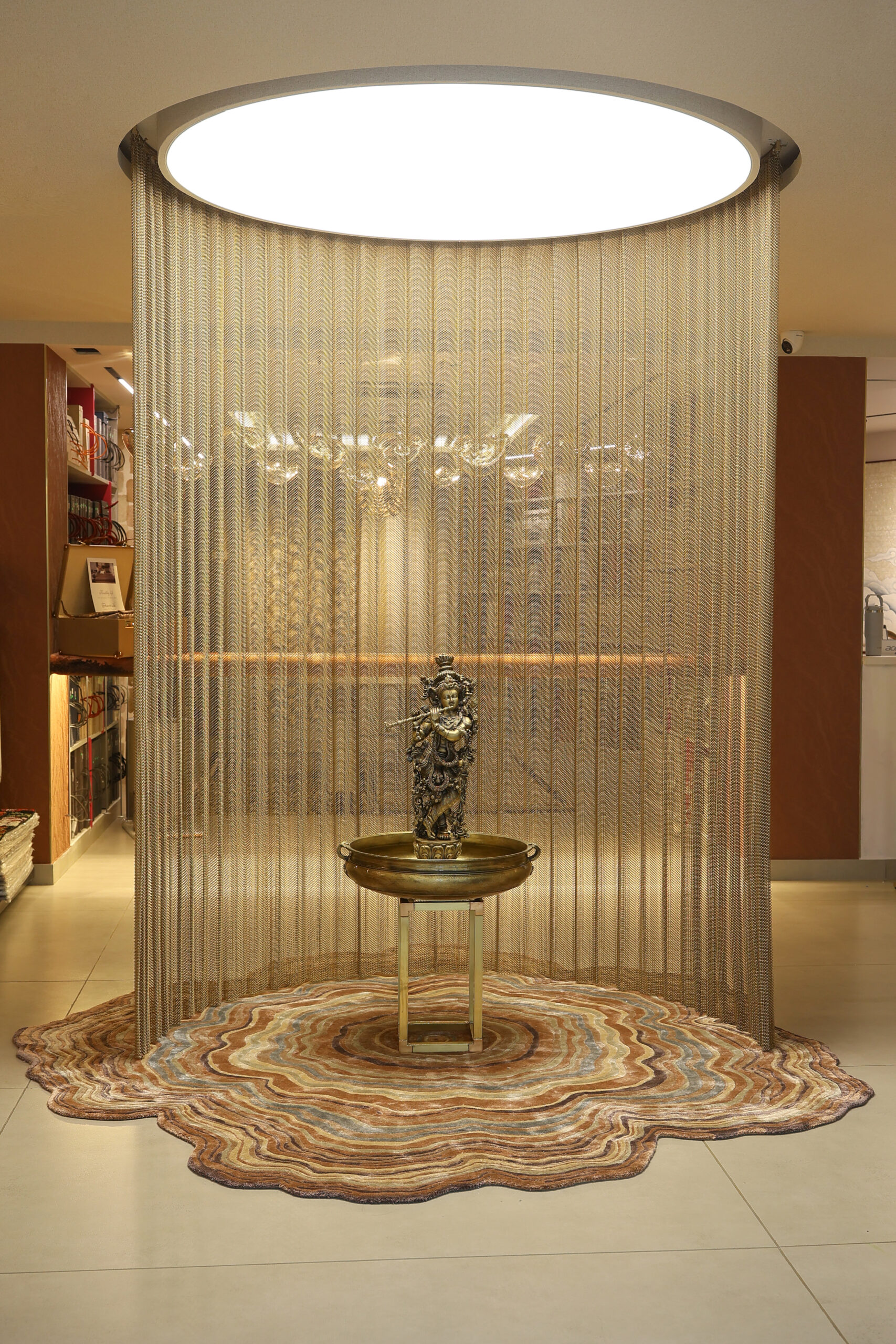
As light touches their surface, they respond — reflecting, shimmering, and bringing the entire space to life. Whether it’s a bold matte black for a modern edge or a brushed steel finish that feels architectural, metal curtains instantly elevate the atmosphere. They add personality without overwhelming the design. They don’t decorate the space. They define it.
Metal curtains are not just visually stunning — they are built to last. Unlike fabric, they do not fade, tear, or lose their form. They withstand time, movement, and daily use while retaining their finish and elegance. Their durability makes them ideal for both residential and high-traffic commercial environments.
They bring in movement where there is stillness. They eliminate emptiness. They turn simple interiors into memorable ones.
Because metal curtains bring modern elegance — and the future of interior design.
What Are Metal Curtains?
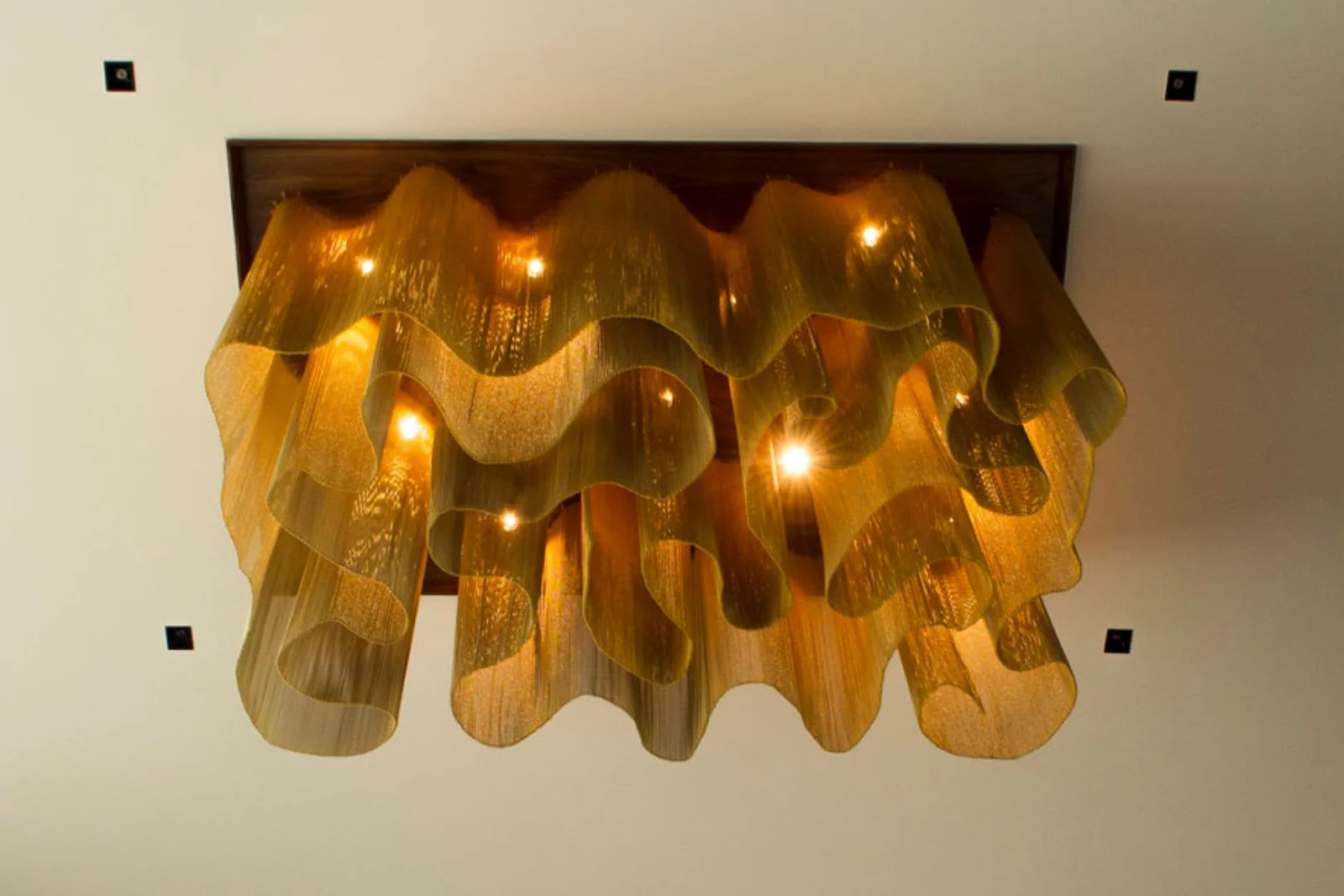
Metal curtains are architectural soft dividers crafted from interlinked metal chains, mesh, or fine metallic strands. Unlike conventional fabric drapes, they combine structure and fluidity.
They function as:
Room dividers
Feature partitions
Decorative backdrops
Window treatments
Space separators in open-plan layouts
Their defining characteristic is movement with structure — flexible yet strong.
Unlike rigid partitions, metal curtains maintain openness while still creating subtle separation.
Why Metal Curtains Are Rising in Modern Design
Interior design trends are increasingly moving toward materials that feel tactile, layered, and expressive. Metal curtains fit seamlessly into this direction.
They work because they offer:
1. Architectural Light Play
Metal surfaces interact with lighting in dynamic ways. Natural light, warm ambient lighting, or spotlighting transforms their appearance throughout the day.
2. Sculptural Movement
Even the slightest airflow causes gentle motion. This movement creates visual rhythm within a space.
3. Contemporary Minimalism
Metal curtains align beautifully with:
Industrial interiors
Urban apartments
Luxury retail environments
Modern hospitality design
They add edge without clutter.
Durability: Built for Long-Term Impact
One of the strongest advantages of metal curtains is longevity.
They:
Do not fade like fabric
Resist tearing
Maintain structural integrity
Require minimal maintenance
Withstand humidity and climate changes
This makes them ideal for:
High-traffic commercial spaces
Restaurants and lounges
Hotels and event spaces
Modern residences
They perform as beautifully as they look.
Maintenance and Care
Metal curtains are low maintenance.
To maintain shine and finish:
Dust regularly
Wipe with soft cloth
Avoid harsh chemical cleaners
Check mounting periodically
Unlike fabric, they do not require washing or dry cleaning.
Their durability is one of their strongest selling points.
Sustainability Factor
Metal is recyclable and long-lasting. Unlike fabric curtains that may be replaced every few years, metal curtains remain relevant over decades.
Long lifecycle = reduced waste.
Modern sustainability isn’t only about materials — it’s about longevity.
Emotional Impact of Metal Curtains
Beyond structure and durability, metal curtains deliver emotional effect.
They:
Capture curiosity
Introduce motion
Reflect personality
Create memorable experiences
Interior design today is not only about function — it is about feeling.
Metal curtains transform spaces from static to dynamic.
Light Interaction: The Secret Ingredient
Metal curtains respond to light unlike any other interior element.
Morning light produces softness.
Evening artificial light produces glow.
Spotlights produce shimmer.
The reflection creates subtle movement even when the curtain is still.
This interaction makes interiors feel alive.
Acoustic and Spatial Benefits
While not full soundproofing systems, metal curtains help soften echoes slightly in large open environments due to their layered structure.
More importantly, they:
Reduce visual emptiness
Create subtle privacy
Add dimension to flat walls
Enhance perceived depth
They bring rhythm into static architecture.
The Future of Interior Design
Interior design is evolving toward materials that blur boundaries between architecture and décor.
Metal curtains represent this shift.
They are:
Structural yet fluid
Functional yet sculptural
Minimal yet expressive
They don’t decorate the space.
They define it.
And that is why metal curtains are not just a trend — they are part of the future of modern interiors.
Frequently Asked Questions (FAQ)
Q1:What are metal curtains made of?
A: Metal curtains are typically made from aluminium, stainless steel, or chain-linked metallic strands designed to create flexible partitions or decorative features.
Q2: Are metal curtains suitable for homes?
A: Yes. While popular in commercial environments, they are increasingly used in modern residential interiors as room dividers and feature elements
Q3: Do metal curtains block light?
A: They filter and reflect light rather than fully block it. Density and design determine how much visibility they allow.
Q4: Are metal curtains durable?
A: Yes. They are highly durable, resistant to fading, tearing, and environmental damage compared to traditional fabric curtains.